
Smoke Over a Garrison Town
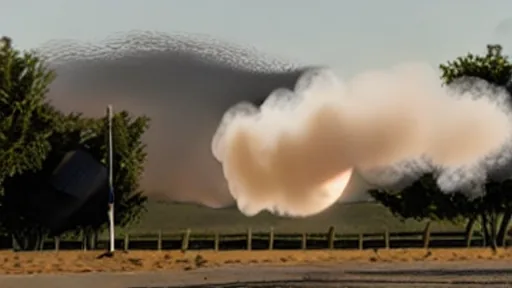
Footage shared on social media showed clouds of smoke rising from a military base in Santa Rosa del Sur, a small town in the foothills of the San Lucas mountain range, after three explosions, with soldiers taking cover in shelters made of sandbags.
Drones modified to carry explosive devices struck a military base in Santa Rosa del Sur, killing three soldiers and wounding at least 16, the armed forces said in a statement on Saturday. [1] The army’s First Division described the strike as a serious violation of international humanitarian law and human rights — the body of law that governs conduct in wartime. It asked the public to pass on information that could help authorities anticipate and prevent further violence against civilians and members of the security forces, and pointed citizens to the country’s anti-terrorism hotline. No group has claimed the attack. The authorities have not named who they believe carried it out. What the army did publish was a method: drones modified to carry explosive devices, and a toll counted in soldiers.
The delivery is not in dispute — drones modified to carry explosive devices rather than cameras — and no armed group has claimed responsibility for ordering the strike.
The Santa Rosa del Sur strike is one entry in a run of them. Last week a military base in Tolima province was hit with missiles made from gas canisters; four civilians were killed, including a two-month-old baby. Police in the border city of Cúcuta have been attacked several times with remotely activated bombs. State forces and illegal armed groups carried out 34 attacks with bombs or explosives in Colombia in the four weeks to October 16, a 9 percent increase on last year’s four-week average, according to ACLED, a group that monitors armed conflicts.
Where Gold Outlasts the Ceasefire
The ground beneath Santa Rosa del Sur is rich in gold mines, and that is the first fact of its politics. The area has long been disputed by rebel armed groups: the Gulf Clan, the National Liberation Army, and smaller outfits led by former members of the Revolutionary Armed Forces of Colombia.
The government’s account of how the groups became so entrenched is a claim about incentives, and it should be read as a claim rather than a finding. The administration of President de la Espriella argues that armed groups used ceasefires granted by the previous government to consolidate their grip on rural areas, where they tax local businesses and profit from the drug trade. On that reading, a ceasefire is less a pause in the fighting than a period in which authority is built — a tax office that collects in cash, a monopoly on protection, a revenue stream that does not require winning a war.
The longer history explains the fragmentation. A 2016 peace deal with the FARC led to the demobilisation — the formal disbanding of fighters under a peace agreement — of more than 14,000 fighters. What followed was not an empty space but a contested one: smaller groups have since fought over the territory the rebels left behind. One large armed bureaucracy left the field, and several smaller ones moved in to compete for the same revenues and the same ground. The victim of that competition is whoever lives on the land being divided.
A President Trades Talks for Air Strikes
Since de la Espriella, a conservative, took office in August, violence has intensified in several rural areas. His response has been confrontation rather than negotiation: he cancelled peace talks with rebel groups, ordered more air strikes, deployed more troops in some cities, and created joint task forces — mixed units assembled around a single objective — to defend strategic assets such as the pipeline that runs from the Caribbean coast to central Colombia.
His public answer to the Santa Rosa del Sur attack was a promise with no name attached to it. Writing on X, he said: “Those who were behind this attack… will have nowhere to hide.” [1] He added: “Every attack against our soldiers strengthens our resolve to defend Colombia.” [1] It is also what makes it difficult to test: resolve is not a quantity that can be checked against a number the following week.
The government’s case contains a paradox that resolves in one direction and opens in another. The government’s case is that ceasefires let armed groups tax and entrench; the confrontational alternative has coincided with a rise in explosive attacks, and nothing in the record establishes which way the causation runs. What the record does establish is the shape of the violence: a contested hillside that happens to sit on gold. The new paradox may be that both sides count the same thing from opposite ends — the state counts attacks to show the groups are dangerous, and the groups stage attacks to show the state cannot protect.