A Silence at the Barrier’s Edge
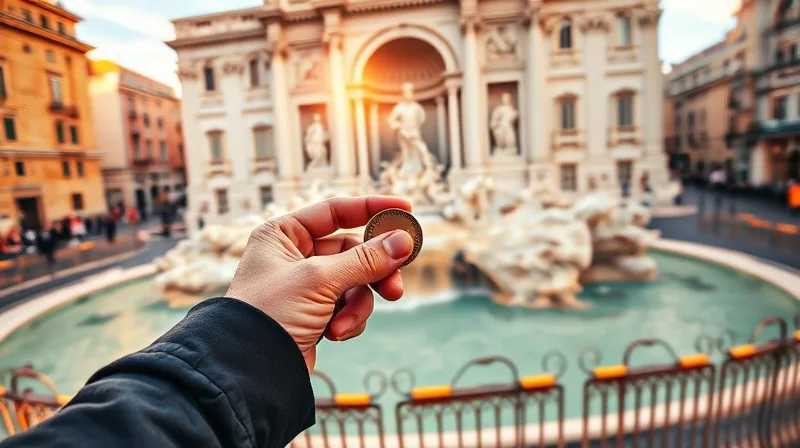
Jeff Clinton, an American visiting Rome with his wife for the first time, found a US one-cent coin on a street close to Termini train station and knew precisely what he was going to do with it: throw it into the Trevi fountain. He held the copper coin in his palm while the two of them admired the landmark, aware of the tradition of tossing a coin over the shoulder into the water, a ritual fabled to ensure a return visit to the city or make other dreams come true. What held him back was the distance: the steps towards the fountain’s sunken basin are separated by a low barrier. He considered asking someone in the basin area to throw the coin on his behalf, but in the end slipped it back into his pocket.
That silence now has a posted price. Since February 2026 a low barrier has separated the steps from the fountain’s sunken basin, and during the day the water is reachable only by Rome’s residents or by visitors who pay €2, about £1.64. A team of stewards staff the ticketing system and monitor the flow of the crowd in the basin area. The initiative was introduced to curb overcrowding at the monument and to raise money for the upkeep of the fountain and other monuments in the city.
Rome’s council generated €435,194 from the access fee within the first month of its inception. No further figures have been published, but with 4.4 million tourists flocking to the Trevi in 2025, the fee had been forecast to generate a tidy income for the council each year.
Where the Coins Went
Caritas Roma, the church-run charity that sweeps them up, normally brings in more than €1.4 million a year and channels the proceeds into food banks and other welfare projects. Between January and September, the charity registered a shortfall of about £200,000 against the same period in 2025.
Giustino Trincia, the director of Caritas Roma, named the barrier as one possible reason, telling Il Messaggero: “The closure of the direct access to the Trevi fountain might be a factor.” [1] A spokesperson for Caritas Rome told the Guardian that the collection so far this year did not take into account foreign currency coins, so the hit might not be so bad. [1].
A second explanation does not involve the barrier at all. Nicolas Romero, who does shifts of seven or eight hours, said people quite often asked him for change in order to throw a coin. “But many don’t even seem to know about the tradition,” he said. “This might also explain the decline.” [1]
The Ritual Needs an Audience
The gesture is believed to have its origins in an ancient pagan ritual offering to the water gods, although the custom of throwing coins only really took off globally after the 1954 romantic comedy film, Three Coins in the Fountain.
Alan and Ying, visiting Rome from Australia, did pay the fee. While they had heard that throwing coins “is what people do”, they decided not to indulge because “nobody else was really doing it”. “I always carry cash with me because you never know when you might need it,” said Ying. “But we didn’t see anyone else doing it, so we didn’t either.” Eric and Patty, a young couple from New York, said they might have thrown a coin, but did not have any change. Neither did they want to pay the €2 fee to get close to the basin. “It’s such a breathtaking monument, we’re happy just to take it in from here,” said Patty as they posed for selfies. [1].
The shift towards contactless payments and mobile phone wallets is also believed to have eroded Caritas’s collections, a second force at work on the coins that never reach the water.