Loneliness Is Now an Economic Problem: Why Young People in England Are Rebuilding Friendship by Hand
New research from the Institute for Public Policy Research shows that loneliness among young people in England is no longer a private misfortune but a measurable social trend. The number of young people in England with no close friends has risen fivefold since 2014. [1] One in 20 now reports having none at all. [1]
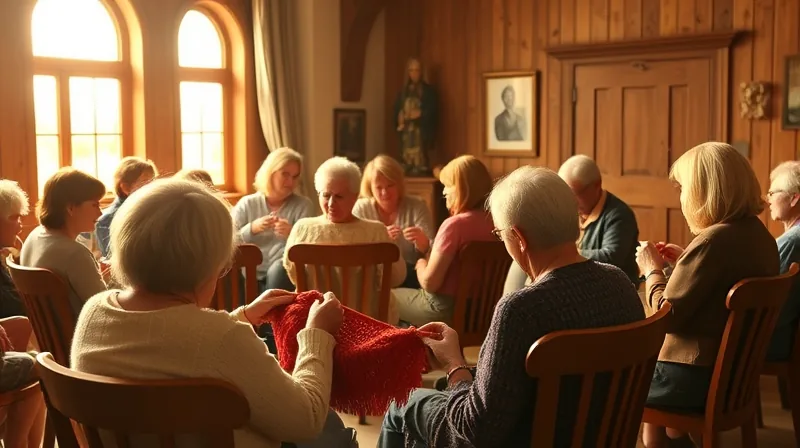
In Mayfield, a village in East Sussex, a weekly knitting and crochet group meets. A handful of women sit in a circle, needles clicking, yarn unspooling. One of them is Rhiannon, a 35-year-old professional writer who writes for other people under their names and who joined in February. She had started crocheting only a month earlier. She was “absolutely terrified” the others would judge her for being a beginner. “But they didn’t care,” she says. That small moment of acceptance mattered to her.
The group, called the Yarners, meets once a week. For Rhiannon, it has become “a lifeline” after separating from her husband, moving a few towns away, and finding it harder to maintain old connections. “No matter what is happening at home, I know for two hours a week I can just sit in a calm and supportive space with people who share my hobby,” she says. [5] “It’s more than just a group. It’s a real community.”
The practical benefit is local friends she can call on. “If I needed something, if I was in trouble in some way, I’ve now got people I could actually call and say: Hey, can you help me?” Her comment captures the shift from passive isolation to active reliance. A phone number is a small thing. It is also the difference between being alone and being connected.
The Numbers Behind the Silence
The fivefold rise in friendlessness is concentrated among the young, who report the highest rates of isolation in the IPPR data.
That figure sits alongside a broader cultural shift. The people interviewed for this research did not describe a single catastrophic event. They described moves, separations, remote work, and the slow erosion of casual daily contact. Rhiannon lost her local network when her marriage ended. Rebecca, a 31-year-old administrative officer supporting projects for the National Health Service in Bristol, lost hers when working from home removed the office banter she had taken for granted. They described the quiet disappearance of places where friendship used to happen by accident.
What replaces a WhatsApp group, a Facebook page, or a noticeboard flyer for a games night. Some replace those places with a WhatsApp group, a Facebook page, or a noticeboard flyer for a games night. Ria, 27, moved from Mumbai to London five years ago, then to Reading. She found it harder to keep the friendships she had made in the capital. “I faced acute loneliness,” she says. “When people move away from their home, it gets tough at this age to make friends.” In May, she created a WhatsApp group to bring her London friends together. It soon expanded through friends of friends and Instagram. “It just blew up,” she says. “There are 70 people in the group now.” [5]
Coffee Clubs and the Mechanics of Meeting
The London Coffee
Club holds meetups in cafes for groups of five to 10 people. Ria, who is slightly introverted, prefers the smaller size. “It’s a relaxed vibe,” she says. “There’s no agenda. The group does not require anyone to be outgoing or sociable. Attendees show up and order a coffee.
Rebecca took a different route. A few months ago, she joined exercise classes at her local public sports facility “as a way to make friends”. Although she was terrified at first, she now attends exercise classes focused on strength, flexibility, and overall fitness about three times a week. “Even though you’re doing an exercise class, there’s that informal aspect where you are having a bit of a joke and a laugh,” she says. “Working from home, you don’t get that sort of office banter. To me, this is my new equivalent.” She also met a new friend through Bristol Girls, a local Facebook group, and encouraged her to join the classes. “She’s helping me, and I’m helping her,” she says.
For Rebecca, friendship is a two-way exchange, built one class at a time, one coffee at a time, one shared joke at a time. None of these people joined a formal programme. They joined something and kept showing up.
Stages, Board Games, and a Safe Social Space Away from Home and Work
Ben, 35, left his job as a primary school teacher and suddenly had more free time. He thought he would use it to “meet new people” and get back into stage performance. “It was something I loved at school and at university,” says Ben, who lives in Gateshead and works in education. In 2017, he joined the People’s Theatre in Newcastle upon Tyne, a non-professional community theatre company. [4] He has since performed in about 20 productions. “The first year was non-stop as I jumped from play to play and met so many fantastic people,” he says. “It’s been nearly a decade, and I count some people, even people I only met less than a year ago, as some of my closest friends.” The friendships now extend well beyond rehearsals, with regular social gatherings. “It’s a huge community, and everyone involved, whether it’s performing, set building, or costume design, does it for the love of it,” he says. “It’s so inspiring.”
Chris, 32, says a combination of growing older, the isolation of Covid and having no similarly aged peers at work led to a point where he “essentially had no local friends any more”. The systems manager from Kent decided to revive his interest in board and card games. He found a local games shop holding three-pound-a-session games evenings. Although he was terrified before his first event, he “couldn’t have asked for a better environment”. “I feel like it’s not the impossible feat I thought it was to make new friends as an adult on your own,” he says. “The joy it brings me to be able to take part in a fun activity while getting to know people and enjoying good humour is priceless.” He adds: “I think it’s vital for mental health for people to have a safe third space where they can develop relationships, skills and experiences without being dependent on work or partners to fill that void.”
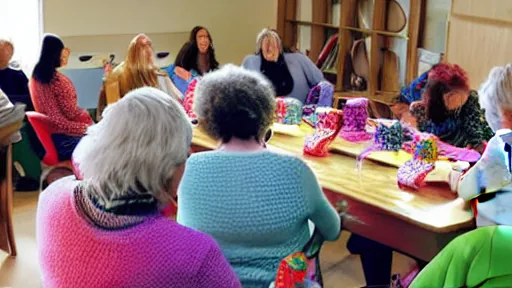
Chloe, 27, moved back to Hertfordshire after living in the Midlands. The change left her feeling lonely. But instead of joining a group, she created one. “All I wanted was just a friend to go for coffee or go to the cinema with,” she says. “I thought: there’s nothing for local women to make local friends. It’s so important to have that community.” With this in mind, Chloe, a content creator, and her friend Sarah, 30, a nail technician, created the Girls Collective, organising activities where women can meet while trying something new, from keyring making to line dancing. They posted content on social media to drum up interest. “We had 65 people for our first event just from our TikTok videos,” she says. [5] The group now has 500 women in its community chat, and more than 250 have attended events. “They’ve made their own friendships and hang out outside of us too, which is brilliant,” says Sarah. Chloe adds: “I had thought having to move back was the worst thing. But now I’m like, no, because it’s brought me this amazing community.” In 2014, the number of young people in England with no close friends was one-fifth of what it is now. [1] The direction of travel is not ambiguous. The response, so far, is small groups of people choosing to show up — to a knitting circle, a coffee club, a theatre rehearsal, a games night. Whether that is enough to reverse a decade-long trend is the question the data leaves open.
Sources
1. Institute for Public Policy Research — Organisation (Startseite)
2. Campaign to End Loneliness — Organisation (Startseite)
3. National Health Service — Organisation (Startseite)