
French School Protests Collide With Austerity Budget
The Cracked Ceiling Children See First
The protests began with conditions inside the classroom. Students across France have demonstrated against class cancellations, overcrowded classrooms and run-down school buildings.
For almost two weeks, students across France have protested, angered by class cancellations, overcrowded classrooms and run-down school buildings. The demonstrations have increasingly been overshadowed by serious clashes with police. The government accuses the left-wing party La France Insoumise (LFI) of exploiting the protests for political purposes and of fuelling the blockades.
On Friday, Education Minister Edouard Geffray tried to ease the tension by meeting student representatives. The meeting was unsuccessful. Instead, a nationwide day of protest took place on Tuesday. On Sunday evening, the prime minister took charge of the crisis. In a letter to several ministers, Sebastien Lecornu called for concrete proposals on three points: class cancellations should be addressed more quickly, school buildings should be upgraded to cope with hotter summers, and the controversial French national university admissions platform “Parcoursup” should become more transparent. Initial decisions, together with funding and a timetable, are expected to be announced this month.
That list is a list of costs. Faster replacement of absent teachers costs money. Cooling and renovating old schools costs money. Rewriting an admissions system costs money and political capital. And here is the trap: Lecornu has to promise young people more government support while his government is imposing an austerity budget (a budget based on spending cuts) on the entire country.
More Money, Fewer Pupils, Louder Anger
The education budget is not being cut. It is set to increase by around €1.2 billion in 2027, while the government expects around 1.7 million fewer schoolchildren by 2035. The envelope grows while the number of pupils it must cover shrinks.

For Eileen Keller of the Franco-German Institute (dfi) in Ludwigsburg, this contradiction shows that money is only part of the problem. Public dissatisfaction, she argues, is linked to what she calls priorities and the fundamental direction of the education system, including the transition from school to higher education.
The wider fiscal picture is what turns a school dispute into a national test. The government submitted its 2027 budget proposal to parliament last Thursday. The budget deficit is expected to fall from a projected 5.4 % of economic output (gross domestic product, the total value of goods and services produced) this year to 5 % in 2027. France is already subject to an EU excessive deficit procedure — a formal Brussels process requiring a member state to reduce an excessive budget deficit — and is expected to bring its budget gap back toward the 3% limit set by the European Union.
To close the gap, Paris plans cuts across the state itself, local and regional authorities, and the social sector (public services such as welfare, healthcare and pensions). Overall the government aims to reduce spending by around €54 billion ($60.8 billion) compared with previously projected plans. [1] Pensions alone are expected to make savings of around €5.5 billion, and further cuts are planned in healthcare.
Whether the budget will actually be passed in its current form is still wide open. Lecornu’s government does not have a parliamentary majority and relies on opposition votes, and with presidential elections coming next spring, an austerity budget is even less attractive to the opposition than it would otherwise be.
The Bond Market Reads the Manifestos
That is the part of the story the protests in the schoolyards rarely reach. The €54 billion in planned savings are meant to demonstrate fiscal seriousness. The roughly €74 billion interest bill is what the money now has to cover first if borrowing costs are not to climb further. According to Finance Minister Roland Lescure, interest payments already consume more than half of the overall budget deficit. Eileen Keller stresses that it is crucial France continues to be seen by investors as a “credible debtor.” [1] These days, however, that credibility depends on more than just economic data.
What else it depends on is politics. In spring 2027, the French will elect a new president. “The election campaign, which is now gaining intensity, is being watched by the financial markets,” Keller says. In an analysis for the dfi, she puts the need for fiscal consolidation at between €75 billion and €160 billion, depending on the calculation. [1] From the markets’ perspective, political consensus on the need for the nation to tighten its belt would be helpful. But at present there is no sign of clarity, and how the burden will be shared is likely to become a central issue in the election campaign.
France is an especially acute case, but it is not an isolated one. Many other European countries are grappling with the same consolidation problem and the same question of how to finance the state. Europe wants to spend more on defence, on modernising its infrastructure and on the transition to renewable energy. At the same time, citizens still expect a certain standard of education, pensions and healthcare.
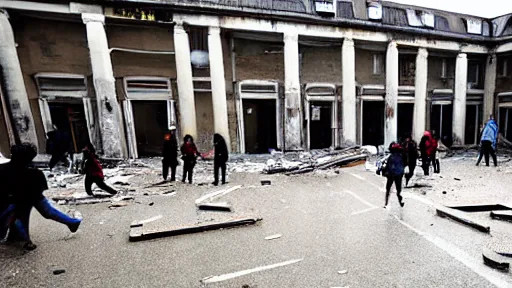
In France this conflict can be observed almost in real time. The issue is not only whether the government can respond to the demands of young people, but also whether it can avoid further violence. In Paris, many are wary of the prospect of a new broad-based social movement, like the Yellow Vests protests of the past. For Prime Minister Sebastien Lecornu, the coming days will be a major test.