Dyno Tests Send 36 Illegal Electric Bikes To Crusher
What a Dyno Machine Made Visible
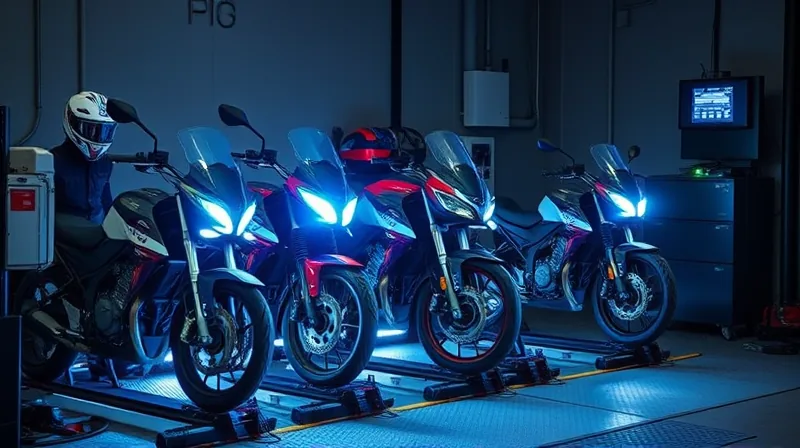
The speed was never printed on the frame. That is how 36 e-bikes ended up in police custody on Sydney’s northern beaches. One of them belonged to a 14-year-old boy from Warriewood, and NSW Police said the machine was capable of reaching speeds above 90 km/h. Police said the operation followed a series of incidents involving illegal, dangerous and reckless e-bike use.
The instrument that turns hidden power into evidence is a portable dyno the state government paid for to measure an e-bike’s power output. One of the devices was on the northern beaches for the operation, according to Josh Murray, the head of Transport for New South Wales. David Driver, a senior New South Wales police officer, described the test in plain terms: “We can put an ebike on a machine and test its power and speed very quickly.” He added what the machine showed: “When they did that yesterday, the bike showed that just by clicking the throttle it could go over 40km/h.”
The number that decides legality is far smaller than either of those readings. The state’s upgraded rules allow police to seize e-bikes whose motor support does not cut out at 25 km/h. [1]
The Window Before Destruction
The authority behind those seizures is new. In late August 2025, New South Wales police were granted powers to destroy e-bikes capable of exceeding the legal speed limit. [1] The northern beaches operation was part of a coordinated push with the New South Wales government to ensure people ride only legal e-bikes that have not been modified to reach high speeds.
Then comes the deadline that converts a seizure into a total loss. An owner has 14 days to tell police whether the bike was stolen and was being used by someone else when it was taken. After that two-week window closes, the government says, the bikes will be “crushed”. The stated end of the process is destruction of the machine — not a fine, and not a repair order that returns it to the road.
Driver signalled that the northern beaches figure is a beginning, not a total. He said police would launch more operations across the state in the coming weeks. He paired that with a distinction between the many and the few: “Most ebike riders do the right thing and comply with the rules; however, police will enforce the new legislation if people ride vehicles that do not meet the legal rules.”
What the Injury Numbers Already Counted
The case for crushing bikes rests on numbers that predate the new powers. The same machines have come with a cost.
New South Wales recorded 226 injuries related to e-bikes in 2024. [1] In just the first seven months of 2025, that had already surged to 233 injuries plus four deaths. Seven months of one year had therefore passed a full previous year on injuries alone, before the destruction powers even existed.
The deaths were not abstract. In March 2025, a 16-year-old boy and a 15-year-old girl were killed in an e-bike crash in Logan, south of Brisbane, after colliding with a motorcycle. In April 2025, a 15-year-old boy died in Victoria after a collision between an unregistered e-bike and two cars in Melbourne; Victoria Police said the child was a passenger on the bike and was not wearing a helmet. In July 2025, a 59-year-old woman died on Hamilton Island in Queensland after crashing an e-bike into a tree. Three fatal events, three places, one shared category of vehicle.
For scale, New South Wales has recorded 165 deaths this year among people driving or riding as a passenger in a car, against a full-year total of 209 in 2024 and 208 a year earlier. E-bike deaths are the newest line in that ledger, not the largest one. Murray said most people were legally using e-bikes, but a small group ignoring the rules endangered other people using roads. That small group is what the portable speed-testing devices, the 14-day window and the crusher are aimed at.
The practical question is what exactly a given bike is capable of. If a throttle can push it past 25 km/h, the state now has the power to take it, and after two weeks it does not come back.