A Corvette Sinks in Benghazi Harbour
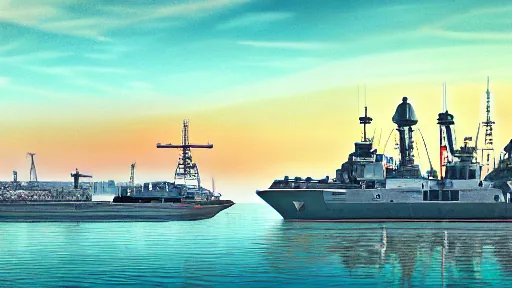
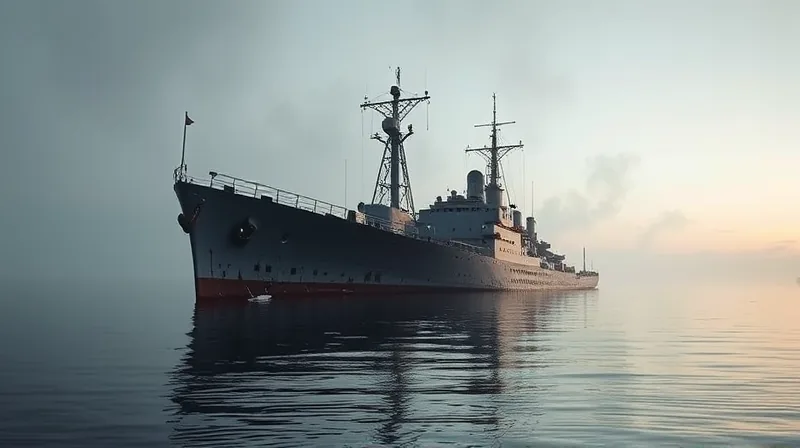
Early on a Sunday, residents in Benghazi heard loud explosions and saw flames at the naval base. Residents heard loud explosions and saw flames at the naval base. Civil defence units rushed to the site and put the fire out. Satellite imagery afterwards showed that most of the Russian corvette Merkury had capsized and sunk, with only its bow still above the waterline. A corvette is a small, fast warship, the kind of hull a navy uses for patrol and escort duty rather than for fleet actions. The ship was one of Russia’s newest vessels, commissioned in 2023, a year after Moscow launched its 2022 invasion of its neighbour. It had docked at Benghazi to refuel. That is a routine harbour call, and it placed the ship roughly 2,400 kilometres from the front line in eastern Ukraine. President Volodymyr Zelenskyy confirmed the sinking on the Monday. He also supplied the detail that no satellite picture would have handed him: a Russian Kamov Ka-27 military helicopter was destroyed in the same operation.
Zelenskyy’s account on X was specific about the instrument. “It all took place off the coast of Libya. Our warriors deployed seven Ukrainian-made naval drones.” [1] A naval drone is an uncrewed surface vessel: no crew to risk, no pilot to train. Seven of them, sent against a warship sitting in its berth, measure the distance between a country without a blue-water fleet and a navy that can still lose hulls in harbour. The second target was a cargo ship. “Our second target was the Russian dry cargo vessel MV ANGARA, which the enemy used to transport weapons. Result: target hit.” [1] He called the operation “exemplary”. He also wrote that “the targets we set were achieved”. The doctrine came in a single line: “We continue our operations in designated waters. We are responding to Russia’s aggression. We are developing Ukrainian weapons.” [1] Designated waters, on that definition, are wherever a Russian hull with a military or an economic function can be reached. Zelenskyy said Ukraine has hit Russian oil refineries as far away as western Siberia and Russian warships in the Mediterranean. It has also hit energy infrastructure and vessels linked to Moscow’s so-called shadow fleet — the tankers and bulk carriers that help Russia circumvent Western sanctions. In June last year, drones launched from trucks struck over 40 aircraft parked near air bases across Russia, an operation known as Operation Spiderweb. Along the roughly 1,250-kilometre front line that snakes through eastern and southern Ukraine, Kyiv’s drones and ground robots help a smaller army hold a larger one.
The Libyan chapter did not begin this month. According to Libyan officials, Ukrainian forces were operating in western Libya under a covert deal endorsed by the West, using the country’s territory to strike a Russian tanker in the Mediterranean in March. Most of them were drone specialists, working mainly from an air base in the coastal city of Misrata and from other military facilities in the capital Tripoli and in the coastal town of Zawiya. In March, a Russian tanker carrying liquefied natural gas sank off Libya’s coast after an attack Moscow blamed on Ukraine. In December 2025, Ukraine claimed responsibility for striking a Russian-linked oil tanker in the Mediterranean. In September, Libya denied reports by CNN that it had allowed Ukraine to use a military base in the northwest of the country to launch drones against vessels from Russia’s shadow fleet. Those denials now sit beside a Ukrainian president describing, in his own words, a seven-drone raid on a Libyan port. Libya is not a bystander that happened to lie next to the war; it is a state with two rival administrations and two readings of the same explosion. The origin of Sunday’s attack is still not confirmed, even though the Ukrainian claim is public and detailed.
The Gulf Where Two Fleets Touch
One day earlier, the same method had been used against a different ship, in a sea with a different set of neighbours. The Russian cargo vessel Sparta II was struck by drones in the Gulf of Finland. It caught fire and drifted into Finnish waters. All 16 crew members were evacuated. One of them was slightly injured. Finland’s military assessed that the vessel was likely struck by Ukraine. Kyiv has not publicly claimed responsibility for that attack. The Finnish military had also reported detecting a strike on a Russian warship in the Gulf of Finland during Ukrainian drone attacks the previous week. The pattern carries more weight than any single hull: a war that began on land in 2022 now has a maritime front in the Mediterranean and another in the Gulf of Finland.
The Gulf of Finland is not the Mediterranean, and the difference is geography. Alexey D Muraviev, senior research fellow in defence and strategic studies at Edith Cowan University, points at the water itself. Russian and NATO forces operate within reach of one another. His assessment is blunt: “In my personal view, it is an area where a possible clash between Russia and NATO is quite possible.”.” He also argues that the loss of the Merkury would weaken Russia’s naval capabilities. A corvette is not a capital ship, but it is a hull a navy counts. What makes the northern theatre different is not the weapon but the neighbourhood.
While the drones flew south and north, Russia’s bombs fell on Ukraine. A Russian strike on a five-storey apartment block in a village near Kyiv killed 11 people. Rescue services pulled a 7-year-old child and a 79-year-old woman from the rubble after the Sunday morning attack. Russia’s strategic bombing has devastated Ukraine’s power grid ahead of winter and damaged civilian buildings. Russia has used ballistic missiles, drones and guided bombs against energy facilities, bridges, Black Sea ports and other civilian infrastructure in Ukraine. Ukraine has answered by attacking Russian energy sites. That is the trade at the centre of this war: each side reaching for the other’s infrastructure. Zelenskyy carried the argument to Berlin, telling a live video address to the NATO Parliamentary Assembly that Ukraine hits Russian assets from Siberia to Libya. His summary of the exchange was short: “We keep finding ways to get back on our feet after every Russian attack.”
Ports That Belong to Nobody’s War
The harbour, unlike the ships, has a government behind it. Libya’s eastern administration condemned the attack as a violation of its sovereignty. It said it had requested an international investigation through the United Nations. Its statement drew the line plainly: “The Libyan government will not allow Libyan ports, territory or territorial waters to be turned into an arena for settling scores or exporting international conflicts.” Saddam Haftar, son of the commander Khalifa Haftar, wrote on Facebook that Libya’s security and sovereignty are a “national responsibility that cannot tolerate political posturing or the exploitation of incidents to promote accusations and stir up fears”. He added that the matter “requires prioritising the national interest and dealing responsibly with everything that affects our country’s security and stability”. The statement is about permission rather than about the identity of the attackers. Who allowed a foreign war to use a Libyan berth is the question that lands on a government already fighting for legitimacy.
The rival, UN-recognised government in Tripoli said it was concerned by “risks posed by involving civilian ports and facilities in activities linked to external conflicts”. Two administrations, one coastline, and a shared objection to being used. The UN Support Mission in Libya expressed “serious concern” over the attacks. It called for “an immediate, independent and transparent investigation”. Its post on X closed with a sentence aimed at every party in this war: “Libya cannot afford and must not become a battleground for foreign conflicts.” The country has been divided between the government in Tripoli and a rival administration in the east since the overthrow of Muammar Gaddafi in 2011. It is also why a single explosion is condemned in two different idioms, and why the question of who allowed the drones to use Libyan territory matters alongside the question of who flew them.
For Muraviev, the Mediterranean is no longer background. “The Mediterranean has firmly become an external theatre of operations, particularly maritime operations.” The vessels targeted off Libya and in Finnish waters, he argues, were likely transporting military equipment or other supplies to Africa. That traffic may be supporting Russia’s Africa Corps, which operates alongside Moscow-aligned governments. Ukrainian forces have confronted Russian security personnel in Africa before. His conclusion on that point is careful and still far-reaching: “Even in this sense, there have been cases when the war in Ukraine effectively extended onto the African continent.” Global shipping already faces heightened security threats around the Strait of Hormuz and Bab al-Mandeb. Two more contested waters do not replace those risks; they stack on top of them. The attacks, in Muraviev’s words, “just add additional risks to marine operators from across the world”. A ship’s master on the bridge does not read the war’s geography the way a capital does; for the vessel there is no theatre, only the next port and whether it is open. The harbour at Benghazi supplied a berth and a fuel line; the argument that followed belonged to somebody else. The sea, the same water off Libya as in the Gulf of Finland, recognises no such thing as “designated” waters”.