The Invisible Layer Under the Machine
Robots are tested before they are trusted. That sentence sounds like a truism, but it describes an infrastructure so ordinary that almost no one outside a robotics team ever thinks about it: the software that trains models, the simulators that rehearse behavior, the validation tools that decide whether a machine is fit to leave the lab. This layer is invisible in the way plumbing is invisible — present in every building, considered by no one until it fails.
Recently, that layer has a new occupant. VicOne, a Physical AI cybersecurity company that protects vehicles and robots from threats capable of altering behavior, used AI-assisted research to uncover an initial set of 28 zero-day findings in less than two days across software and tools supporting the Physical AI ecosystem. [1] The projects involved include work developed or maintained by Google, NVIDIA, and Meta, among others. All 28 findings were classified as zero-day vulnerabilities based on initial validation, though the count may change following vendor and vulnerability-authority review, and some findings do not yet carry CVE tracking numbers. IEEE Spectrum The number itself is not the story. The story is what the number does to the relationship between evidence and belief — and who is paying for the research that produced it. The findings come from a sponsored article published by VicOne, a company that sells the tools it recommends for the problem it describes.
What a Zero-Day Actually Withholds
A zero-day is a weakness that was previously unknown and has no available fix. That definition contains a quiet trap. When discovery is slow, teams have time — not comfort, but time — to learn that a flaw exists, to ask whether they use the affected software, to work out what an attacker could reach or change. When discovery accelerates, that interval collapses. The vulnerability arrives already urgent.
VicOne’s findings create two simultaneous demands for robotics teams: responding as AI helps uncover weaknesses faster, and assessing how each individual finding could affect robot safety and operations. Neither demand can wait for the other. A team that patches without assessing may deploy a fix that breaks intended behavior; a team that assesses without patching leaves an open door.
Here the first deception appears, and it is not the machine’s. Speed feels like progress. A tool that surfaces 28 weaknesses in less than two days appears to be doing more security work than a human team could do in a season. But discovery is only the first movement of a longer piece. Vulnerability discovery involves examining code, tracing how systems communicate, and testing whether a suspected weakness can actually be exploited. AI can accelerate parts of this work, helping researchers analyze more software in less time. Attackers could use similar capabilities. The Robot Report Faster finding is a capability, not an outcome. The gap between the two is where this story lives.
The Stage Before the Robot Exists
VicOne’s findings span three stages of the robotics lifecycle: development and training, simulation and validation, and deployment and runtime. Weaknesses at each stage could affect what a robot learns, how it is tested, and how it is controlled. In this research set, 75% of findings involved development, training, simulation, or validation tools — risks that arise before a robot is ever deployed.
Consider what happens when a team downloads a pretrained model to adapt for its robot. Loading a malicious file could give an attacker access to the training system, allowing changes to training data or to the model itself. A manipulated model could behave normally during routine testing but respond incorrectly to a particular object, scene, or command after deployment. The risk enters through a tool the team trusts, before anyone attacks the robot directly.
This is deception in its purest mechanical form: the model does not lie about what it is. It performs exactly as tested. The test simply never asked the question that mattered. A robot that passes every check while carrying a conditional fault is not a robot that has been verified — it is a robot that has been flattered.
The Simulator That Certifies the Wrong Thing
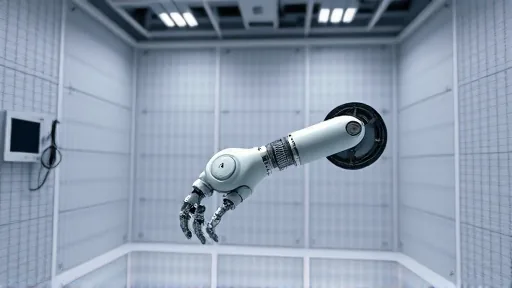
The second stage sharpens the problem. Importing a compromised scene or robot model could give an attacker access to the simulation environment. With sufficient control, that attacker could alter simulated sensor readings, physical conditions, or test results. A robot could then appear to pass tests that should have exposed unsafe behavior, leading the team to approve it for real-world use on the basis of misleading evidence.
Read that sequence again, because it inverts the usual direction of trust. Simulation exists to catch what real-world testing is too slow, too expensive, or too dangerous to catch. It is the rehearsal space where failure is supposed to be cheap. When the rehearsal space itself is compromised, failure becomes expensive in the worst way — it is deferred, then paid in full at deployment.
A passing test is not a fact about the robot. It is a fact about the test. The 75% figure matters precisely because it locates most of the risk in the phase where evidence is manufactured rather than observed. Teams treat validation output as ground truth because, until now, the alternative was unthinkable. The findings make the alternative thinkable.
Losing the Ability to Stop
In a separate demonstration, VicOne researchers demonstrated a vulnerability that prevented a robot’s remote-stop command from working. [1] The case shows why teams need to test whether safeguards remain effective when the software supporting them is compromised.
This is the clearest illustration of the gap between appearance and function. A remote-stop command is a promise: press this, and the machine halts. The operator sees the interface, trusts the interface, and the interface no longer connects to the outcome it advertises. Nothing on the screen announces the failure. The safeguard is present in form and absent in effect.
At the deployment and runtime stage, similar weaknesses take several shapes. An attacker could change files that influence motion planning, or send malicious map data that crashes the operator’s monitoring display. Compromising a remote-operation computer could put the instructions sent to the robot at risk. Depending on the system and its safeguards, these weaknesses could alter robot movement or leave operators unable to see what is happening and respond promptly.
VicOne is careful about the limits of its own claims, and that care is worth preserving. These are potential consequences, not demonstrated outcomes for every finding. Actual effects depend on the attacker’s access, the system’s design, and whether other safeguards prevent the changes from reaching physical behavior. That caution is worth preserving, and it makes the demonstrated remote-stop case more significant, not less: one concrete proof of a broken safeguard outweighs any number of hypotheticals.
The Patch That Arrives With Its Own Questions
Suppose a maintainer releases a fix. The deception does not end there. A robotics team still needs to determine whether the patch is safe to deploy — identifying affected systems, checking compatibility, and verifying that the update preserves intended behavior. An earlier successful test remains useful evidence, but a newly discovered weakness may reveal conditions that test never examined.
That last point deserves its own paragraph. A patch is itself a change to a system that was validated in its previous form. The evidence that supported deployment no longer describes the thing being deployed. Teams that treat patching as the end of the incident are making the same category error as teams that treat a passing simulation as proof of safety: confusing a past result with a present guarantee.
When immediate updating is impractical, teams may need temporary safeguards, such as restricting access to an affected service, while a validated fix is prepared. This is unglamorous work. It does not produce a headline number. It is, however, where the difference between a vulnerability and an incident is actually decided.
What the Machine Cannot Tell You
AI-assisted discovery has a structural blind spot, and it is not a flaw in the models. The tool can find the weakness. It cannot tell you what the weakness means for a machine that moves through the world near people. That judgment requires knowing which systems run the affected code, what those systems control, and whether the safeguards around them would hold under manipulation.

VicOne frames the next step plainly: as details from the 28 findings become available through coordinated disclosure, robotics manufacturers must connect each finding to its potential effect on development, deployment, and robot behavior. [1] That work also requires understanding how threats could affect robot behavior and how to protect systems already in operation.
The company’s own tooling reflects that two-part structure: one product for identifying potential zero-day vulnerabilities and evaluating model and system security in simulation before deployment, another for threat detection and response within approved policies during operation. That framing is also the sales pitch, and readers should weigh it as such.
The Consequence Nobody Draws
Faster vulnerability discovery matters only when teams can turn findings into action: identify what needs attention, verify that safeguards still hold, and confirm that a fix does not introduce new risks.
That sentence is modest, and it hides an uncomfortable implication. If AI can find 28 zero-days in two days, then the bottleneck of security has moved. It is no longer discovery. It is verification — the slow, human, unautomatable work of deciding whether a system still does what its evidence claims. Every acceleration upstream increases pressure downstream. A pipeline that produces findings faster than a team can assess them does not make anyone safer; it produces a backlog of unexamined risk dressed as diligence.
The final consequence, the one almost no one states because it leads too far, is this: the credibility of robot safety testing now depends on the integrity of tools that most teams never audit. The simulator, the training pipeline, the monitoring display — these are the witnesses. If a witness can be compromised, then a clean report is not evidence of safety. It is evidence that no one has yet looked closely enough at the witness.
That is the deception at the center of this research, and it is not the kind AI commits. It is the kind we commit when we accept a passing grade from a system we have not checked, about a machine we are about to trust with the physical world — and when we accept a security narrative from the company selling the security tools.