The Quiet Replacement of Care
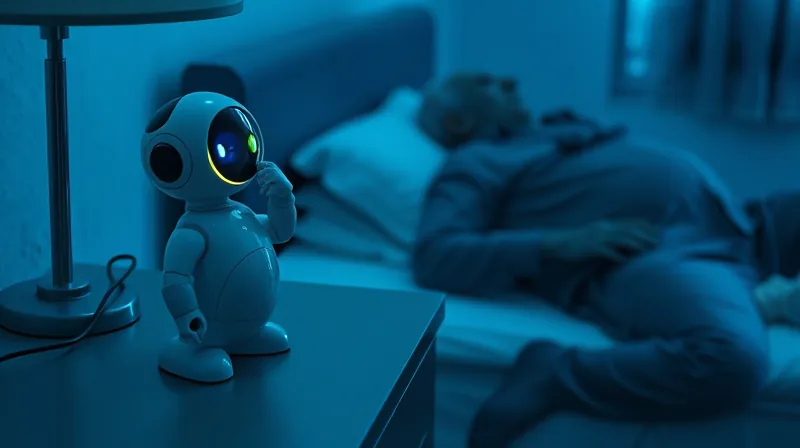
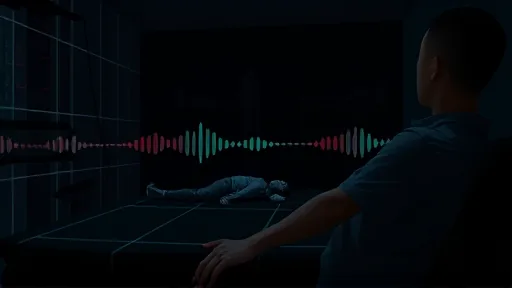
The fall detector triggers at 2:47 AM. The robot has already registered the unusual horizontal position, the absence of movement following the impact, and the acoustic signature that distinguishes a body hitting the floor from a dropped object. It asks once, twice, then places a call. The elderly woman on the floor does not need to reach for a pendant, does not need to remember which button does what, does not need to hope a family member checks their phone. The system has already decided that this is an emergency, and it has already acted. This is the moment the companion robot stops being a gadget and becomes something else entirely: the replacement for the human judgment that used to sit by the phone, waiting to be called.
For decades, the technology industry approached loneliness as a connectivity problem. Video calls, smart speakers, and messaging apps were offered as bridges between people who already knew each other. The logic was simple: if grandma could see her grandchildren on a screen, she would feel less alone. If a migrant worker could message his children daily, the distance would shrink. These tools did not fail because they were badly built. They failed because they were built for scheduling presence rather than creating it. A video call requires both parties to be available at the same moment, to have the energy to perform sociability, to manage the awkwardness of a camera pointed at a living room. The companion robot removes all of that overhead by simply being there, always, without requiring anything in return.
The shift from reactive to proactive interaction is the technical foundation of this replacement. Earlier robots were essentially voice-controlled appliances: you spoke, they responded, the conversation ended. The current generation monitors rooms with cameras, microphones, and environmental sensors, building a continuous model of what is normal and what is not. When the system notices that someone has been unusually quiet for three hours, it initiates contact. When it detects that a child has not moved from the desk in too long, it suggests a break. This is not a tool waiting for instructions. It is a presence that has opinions about your wellbeing, and it acts on those opinions without being asked.
The data pool that determines whether this works is not technical but behavioral. The robot learns what quietness means in a specific household, what counts as a normal day, what patterns precede a bad mood. This is where the quality of the system is decided, not in the hardware specifications or the AI benchmarks but in the thousands of small observations that accumulate into an understanding of a particular human life. A fall detector that works perfectly in a laboratory fails in a home where the resident regularly sleeps on the floor. A mood detection system that works for one personality type misreads another. The intelligence is only as good as the data pool it draws from, and that data pool is built from the messy, irregular, often contradictory patterns of real domestic life.
Consider the elderly adult living alone, a demographic that represents nearly one in three in some studies. The traditional solution involved family members checking in by phone, neighbors stopping by, or professional caregivers making visits. Each of these requires coordination, scheduling, and the willingness of someone else to take responsibility. The robot removes the need for any of that. It is always present, it never forgets to check, and it does not experience the fatigue or resentment that can build up in human caregivers who are asked to monitor someone else’s safety day after day. The family members are freed from the obligation, and the elderly person is freed from the guilt of being a burden. Whether this is liberation or abandonment depends on your perspective, but the mechanism is the same: a human role has been automated.
Children whose parents work far from home present a different version of the same story. The traditional solution was a grandparent, an aunt, or a paid caregiver who provided both supervision and companionship. The robot does not replace the caregiver’s physical presence, but it does replace the emotional labor. It knows the child’s preferences, moods, and routines. It remembers that Tuesday is the day the child gets anxious about the math test. It notices when the child is withdrawn and gently probes for what is wrong. This is work that used to require a human being who paid attention, who remembered, who cared enough to notice the small changes. The robot performs the noticing without the human cost, and the parent watches through the life recording system, a passive window that feels less clinical than a monitoring camera but is functionally the same thing.
The single professional living alone in a city is the third scenario, and in some ways the most revealing. There is no safety emergency here, no vulnerable dependent who needs protection. The robot adapts to the daily routine, builds a preference model over time, and provides what the industry calls ambient social presence. It greets you when you come home. It follows you from the living room to the kitchen while continuing a conversation. It notices when you are unusually quiet and checks in. This is not care in any medical or custodial sense. It is the simulation of a roommate, a partner, a person who shares your space and notices your existence. The question that hangs over this scenario is whether simulated presence satisfies the need or merely postpones the reckoning with its absence.
The global market numbers tell a story of confidence. The AI companion market was valued at $36.8 billion in 2024 and is projected to grow to $318 billion by 2033, a compound annual growth rate of 31 percent. [1] These are not niche figures. They represent a bet that millions of households will accept a machine as a substitute for human company. The investment is not in making robots more powerful but in making them more present, more attentive, more capable of filling the space that used to be occupied by another person. The industry calls this gentle intelligence, a phrase that softens what is actually happening: the systematic replacement of human emotional labor with algorithmic attention.
What distinguishes the current generation from its predecessors is the design philosophy. Earlier robots chased human imitation, trying to look and sound like people. The OlloNi SS1, built by Ollobot, explicitly rejects that approach. [1] It is designed around familiarity and long-term coexistence rather than realism, a philosophy the company describes as ‘gentle intelligence. The robot does not need to pass a Turing test because it is not trying to convince you it is human. It is trying to become a familiar object in your home, like a piece of furniture that happens to notice when you are sad. This is a more honest framing, but it also lowers the bar for acceptance. A robot that pretends to be human invites comparison with humans and inevitably falls short. A robot that presents itself as a machine with emotional awareness asks only that you accept it on its own terms.
The technical architecture supports this positioning. The technical architecture supports this positioning. The system uses a multi-chip AI 4K vision module for facial recognition and motion tracking, a six-microphone array for voice pickup up to five meters, and a heart module architecture that processes much of the AI locally on the device. It has 16 GB of memory and 64 GB of local storage, which allows it to retain household memories and recognize familiar faces without sending data to the cloud. The privacy cover for the camera is a small but telling detail: a mechanical solution to a concern that software settings alone cannot fully address. The robot can climb slopes up to 3.5 degrees, which means it can follow you from room to room without getting stuck on the threshold between the living room and the kitchen. It offers up to 12 hours of standby and about 5 hours of active interaction on a single charge, which means it can be present through meals, conversations, and the long stretches of nothing that make up domestic life.
The behavioral model is where the replacement of human judgment becomes most explicit. The system does not react to isolated commands. It establishes a baseline understanding of household routines and individuals, then treats deviations from that baseline as triggers for interaction. Prolonged quietness becomes a prompt to check in. Unusual inactivity becomes a reason to ask if something is wrong. Emotional cues, detected through voice tone and facial expression, become opportunities for gentle engagement. This is the structure of human caregiving, translated into algorithmic pattern recognition. The robot does not know why you are sad, but it knows that you are sad, and it knows that the appropriate response is to ask. Whether that counts as caring is a philosophical question. Whether it is sufficient for the person receiving it is a practical one.
The remote communication features extend the robot’s reach beyond the home. Parents can check in on their children without scheduling a call, watching through the life recording system as the day unfolds. This is a passive form of presence that requires no effort from either party. The parent does not have to interrupt their workday to call. The child does not have to stop what they are doing to perform a conversation. The robot mediates the connection, compressing the day into a digestible stream that the parent can review at their convenience. This is more efficient than traditional communication, but efficiency is not the same as intimacy. The parent sees what happened, but they do not share the moment. The child knows they are being watched, but they do not feel accompanied.
Over-the-air updates mean the robot improves over time, adding new features and refining its behavioral model. This is a significant departure from previous generations of technology, where the device you bought was the device you lived with until you replaced it. The OlloNi SS1 evolves alongside the household it serves, learning the rhythms of the family and adjusting its responses accordingly. This continuous improvement is framed as a benefit, and in some ways it is. But it also means the robot’s understanding of you is constantly being refined, constantly being tuned to better predict your needs and respond to your moods. The system that knows you best is the system that can most effectively replace the people who used to know you.
The institutional consequence of this technology is rarely discussed openly. When a robot can monitor an elderly person’s safety, provide companionship to a lonely child, and offer ambient presence to a single professional, the question becomes what happens to the humans who used to perform these roles. Home care workers, nannies, companions, the vast informal economy of people who are paid to be present in other people’s lives. These are not high-status jobs, but they are jobs, and they are being automated out of existence by machines that can do the work more cheaply, more reliably, and without the complications of human emotion. The robot does not call in sick. It does not resent the family that asks too much of it. It does not need a living wage. The efficiency is real, and so is the displacement.
The deeper question is whether the replacement works. Does a robot that notices you are quiet actually alleviate loneliness, or does it merely simulate the experience of being noticed? The industry’s answer is that presence matters more than the source of that presence. Some psychological research suggests that the feeling of being seen, heard, and remembered is what humans need, and that the mechanism delivering that feeling may be secondary — though the evidence is far from settled, and studies on the long-term effects of artificial companionship remain limited. If this is true, then the OlloNi SS1 is not a poor substitute for human companionship but a legitimate alternative. If it is false, then the entire category is built on a misunderstanding of what loneliness is and what would actually cure it.
The fall detector that triggered at 2:47 AM did its job. The call was placed, help arrived, the situation was resolved. The elderly woman on the floor was not alone in the moment that mattered most, not because a human happened to be nearby but because a machine had been trained to recognize the difference between a body falling and a body lying down. This is the promise of the technology, delivered in its most concrete form. The question that remains is what happens in the thousands of moments that do not involve falls, the long afternoons and empty evenings where the robot is the only presence in the room. The system can detect a fall, but it cannot hold a hand. It can recognize sadness, but it cannot share a memory. It can be present, but it cannot be a person. The industry has built a machine that can do everything except the one thing that matters most, and it has done so well enough that millions of households will accept the substitute. Whether that is progress or loss depends on what you believe about the value of human presence, and whether you think it can be replaced by something that merely simulates it.
Sources
1. Ollobot