Quiet Gap Between AI Research and Products
A Panel, a Question, and the Fog That Rolled In
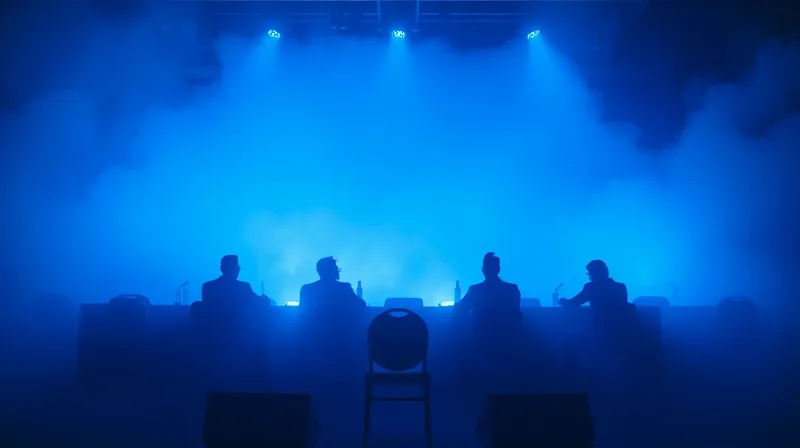
The most revealing moment at a recent conference panel on world models did not arrive through a breakthrough announcement or a live demo. It came when a journalist asked a simple question: what product is your company actually building? The answer, delivered politely but firmly, was that the company would discuss it when it was ready. The panel moved on. The fog stayed.
That exchange captures something worth examining. World models — AI systems that build internal representations of physical space, enabling machines to navigate, manipulate, and predict — sit at the center of some of the best-funded research operations in the field. Yann LeCun’s AMI Labs and Fei-Fei Li’s World Labs have drawn serious capital and serious attention (AMI Labs; World Labs). What they have not drawn is a clear public account of what they intend to sell, to whom, or when. The gap between the promise and the product is not a bug in their communication strategy. It is the strategy.
The Dark Forest, Translated for the Boardroom
Cixin Liu’s dark forest theory holds that in a universe of unknown actors, the safest move is silence. Any signal you broadcast reveals your position to competitors who might be stronger, faster, or simply better funded. The logic maps cleanly onto the current state of world-model research. As long as fundraising remains easy, there is no commercial pressure to declare a target market. The moment a lab announces it has built a humanoid control system or a next-generation rendering pipeline, every other lab in the space — plus the larger AI companies watching from the sidelines — suddenly knows exactly where to point its own engineers.
That is the deception, though it is not the kind most people imagine when they hear the phrase “AI deceiving us.” No one is lying about capabilities. No demo is faked. The concealment is structural: the industry’s leading players are deliberately withholding the one piece of information that would let outsiders judge whether the technology actually works at scale — namely, what it is being asked to do. A model that can generate a navigable environment from a few minutes of video footage is impressive. Whether it can do so reliably enough to ship inside a product is a different question, and that question remains unanswerable because no product exists to answer it.

The Suppliers Who Cannot See the Factory
The secrecy extends further than the labs themselves. A data supplier for the world-model business told a reporter at the same conference that he knows his data has been useful but has no idea what it is being used to build. “I wish they would tell us more,” he said. “We could build more useful data if we knew what they were working on.” (TechCrunch) This is not an anecdote about poor communication. It is a structural feature of an industry where the supply chain is kept deliberately blind to the end product.
That blindness has consequences. When a data vendor cannot see the application, they cannot optimize for it. When a component maker cannot see the system, they cannot anticipate its failure modes. The concealment that protects a lab from competition also starves its own infrastructure of the feedback it needs to improve. The dark forest is not just quiet; it is dark for everyone inside it.
The Versatility That Becomes a Trap
Part of what makes world models so difficult to pin down is that the underlying technology is genuinely versatile. The same modeling approach that helps a self-driving car weave through traffic can help a humanoid robot carry boxes, or turn a few minutes of footage into an explorable environment. AMI Labs has already touched manufacturing, biomedicine, robotics, and clinical software through a partnership (AMI Labs). It will not pursue all of these. But as long as it pursues none of them publicly, it preserves the option to pivot toward whichever one turns out to be easiest to commercialize.
This is rational behavior for a research lab. It is also a form of deception by omission. Investors funding the company are not told which market the technology will serve, because the company itself may not know. The public sees demos that demonstrate capability without demonstrating utility. The gap between “this works” and “this works for something” remains unbridged, and that gap is where the mystique lives.
What the Demos Do Not Show

The most fully developed product in the world-model space — World Labs’ Marble — offers demos that range from straightforward media creation to explorable game environments to CGI effects (World Labs). There are robotics use cases as well. But the platform appears designed to demonstrate what is possible rather than to serve a specific customer with a specific need. A demo is a proof of concept. A product is a proof of value. The distance between the two is measured in reliability, cost, and integration — none of which a demo can reveal.
When a demo works, it works because someone chose the inputs carefully. When a product works, it works because it survives the inputs nobody chose. The world-model industry has produced an impressive collection of the former. It has produced very few of the latter. That asymmetry is not accidental. It is the natural result of a field where the technology is real but the market is still hypothetical, and where acknowledging that gap would slow the fundraising that keeps the lights on.
The Moment When the Fog Lifts
The clarity does not arrive as a solution. It arrives as a recognition: the secrecy in world modeling is not a temporary phase before commercialization. It is the commercialization strategy. The labs are not hiding products that already exist. They are hiding the absence of products, because the absence is easier to fund than a specific bet that might fail. The dark forest is not merely a metaphor for competition. It is a description of how the technology is being built — quietly, broadly, and without a declared destination.
Sources
1. Yann LeCun’s AMI Labs — Organisation (Startseite)