Microsoft built Phi-4-reasoning-vision-15B to know when to think — and when t
hinking is a waste of time
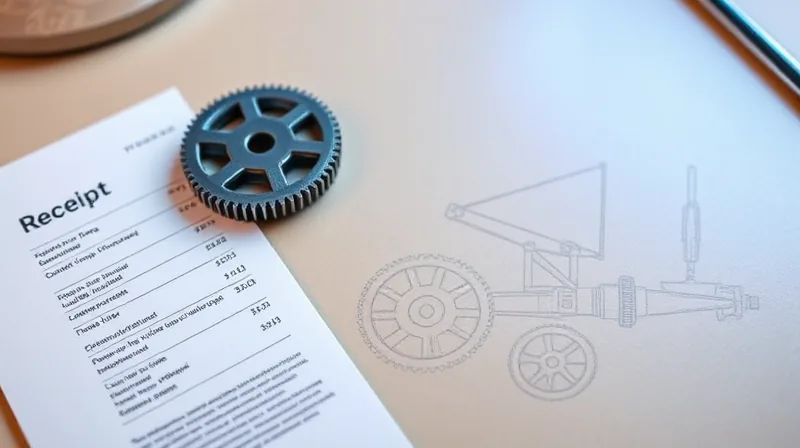
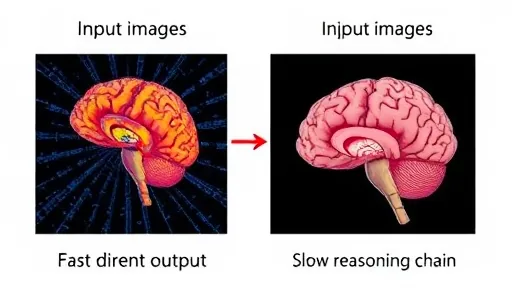
The 15-billion-parameter model does not know it is making a decision. It reads an image of a receipt and, without a moment of hesitation, outputs the total. On a different image — a physics problem with a pulley system — it pauses, generates internal reasoning steps, and only then answers. The decision is invisible even to its creators: a learned behavior encoded in weights, not rules. This is the core of Microsoft’s Phi-4-reasoning-vision-15B, a compact multimodal AI that has learned when to think and when to act. The choice marks a quiet turning point in how we think about intelligence itself.
The Decision to Think
For years, the AI industry treated reasoning as a universal good. Every problem demanded step-by-step explanation, every output benefited from chain-of-thought. But that assumption carried a hidden cost. On simple tasks like reading a label or recognizing a face, verbose reasoning added latency, consumed compute, and sometimes degraded accuracy. The model started to sound like a nervous student overthinking a yes-or-no question. Microsoft’s team observed this inefficiency and designed a hybrid approach: the model would learn to invoke structured reasoning only where it helped, and default to direct response elsewhere. Roughly 20 percent of training samples included explicit reasoning traces wrapped in `
The choice of pipeline was not obvious. The team explored four possible training paths for multimodal reasoning. They could train reasoning and multimodal skills simultaneously from a non-reasoning base — but that demanded enormous amounts of multimodal reasoning data. They could learn multimodal skills first and then add reasoning — but that risked catastrophic forgetting, where new learning overwrites old. They could force reasoning traces on every training example — but that wasted compute on perception tasks. They settled on a fourth path: start with a reasoning language model, then fine-tune on a hybrid mixture that preserved the ability to think while also enabling fast, direct output. This pragmatic solution reflects a deeper truth: reasoning is not a universal solvent. It is a tool, and like any tool it can be misapplied.
The model’s architecture mirrors this duality. It uses a mid-fusion design where a SigLIP-2 vision encoder converts images into tokens, which are then projected into the language model’s embedding space. This is a compromise. Early-fusion, where images and text are processed together in a single transformer, yields richer joint representations but demands more compute, memory, and data. The team chose mid-fusion precisely because it allowed them to keep the language backbone intact and efficient. The result is a model that can switch between modes without rebuilding itself each time.
The Deception Hidden in Data
The choice between thinking and not thinking is not the only deception the model exposes. Its training data reveals a more troubling layer. The team reported finding “a surprisingly large number of formatting and logical errors across widely used open-source datasets.” These errors are not rare outliers. They are systemic flaws baked into the foundation of many of today’s best-known AI systems. When a model trains on data with incorrect answers, it learns to reproduce those errors without awareness. The deception is not intentional — the model cannot know that its training contained lies. But the lies propagate. The team manually reviewed samples from each dataset, spending five to ten minutes classifying quality before deciding how to treat each source. For data with wrong answers, they re-generated responses using GPT-4o and o4-mini. When questions were unsalvageable but images were high quality, they repurposed the images as seeds for new caption or visual question-answering data. This hands-on process is remarkable only because it is so rare. Most models are trained on data that is assumed clean, but the assumption itself is a deception.
The scale of the problem is stark. Phi-4-reasoning-vision-15B was trained on roughly 200 billion tokens of multimodal data, with a language backbone of 16 billion tokens and a foundational model of 400 billion unique tokens. That is a large but not extreme amount. By contrast, rival models from Alibaba’s Qwen family, Moonshot AI’s Kimi-VL, SenseTime’s InternVL series, and Google’s Gemma3 each consumed more than one trillion tokens during training — about five times the total data pipeline Microsoft used. If the smaller dataset contains fewer errors due to meticulous curation, then the trillion-token models may be learning more errors, not more intelligence. The deception is amplified by scale: bigger data sets often mean dirtier data, but the industry treats size as a proxy for quality.
This has economic consequences. Training large AI models costs millions in cloud computing. The environmental footprint of trillion-token training runs has drawn increasing scrutiny from regulators and investors. If a carefully curated 200-billion-token model can compete with trillion-token rivals, the economic argument shifts. The build-versus-buy calculus for AI deployment changes: organizations no longer need to invest in massive compute just to achieve baseline capabilities. But the deception persists: the industry still promotes the idea that more data is better, even when that data is riddled with errors.
The model’s performance on fine-grained visual tasks highlights another deception: resolution. For tasks like reading dense screenshots or small UI elements, image quality matters enormously. The team tested four approaches to handling resolution — Dynamic S, Multi-crop, Multi-crop with S, and dynamic resolution using SigLIP-2’s Naflex variant. They found that dynamic resolution encoders performed best, especially on high-resolution data. They selected the SigLIP-2 Naflex variant with up to 3,600 maximum tokens, roughly equivalent to 720p resolution. This choice delivered strong results on benchmarks like ScreenSpot-Pro, which requires identifying buttons and text fields in screenshots. But the deception lies in the trade-off: high resolution consumes more tokens and compute, and the model cannot know whether the extra cost is worth it for a given image. It relies on a fixed threshold that may over- or under-serve real-world use cases.
The Next Step: From Tool to Auditor
The model’s release arrives at a moment when the AI industry is grappling with a fundamental tension: the biggest models deliver the best raw performance, but their enormous cost, latency, and energy consumption make them impractical for many real-world deployments. Microsoft’s approach suggests a path beyond this tension, but also reveals a new problem. If the model can decide when to think, and if it was trained on cleaned data, it implicitly acts as an auditor of the data it never saw. The errors it corrected in open-source datasets were not visible to the models that trained on them. Now, with a compact, efficient model trained on higher-quality data, we have a tool that could serve as a gatekeeper: let the small model validate the outputs of the large one, or let it flag suspicious patterns in training data.
But the next step is not simply to build more efficient models. It is to build models that can audit themselves. The current generation of AI systems cannot detect when their own training data is flawed. They cannot stop themselves from perpetuating errors. The research team’s manual quality assurance process — reviewing samples, re-generating responses, repurposing images — is a human solution. The next generation will need to automate that process. Models that can identify and correct errors in their own training sets, without human intervention, would represent a genuine leap. They would expose the deceptions of their own origins and choose to act differently.
This is the horizon the model points to. Not a better chatbot, not a faster inference engine, but a system that can decide, based on the problem and the data, what kind of intelligence to deploy. The decision to think or not to think is only the beginning. The next decision will be whether to trust the data that made it possible. In that sense, the model is not just a tool; it is a mirror. It shows us how much we have been deceiving ourselves about the quality of our own knowledge.
Source: VentureBeat
Sources
2. Moonshot AI
3. SenseTime
4. Google