
GraphRAG Evidence Shows When It Beats Vector RAG
The Fragile Confidence of the Chunk
A compliance officer reviews the output of a question-answering system that has just summarized a year of incident reports. The summary reads smoothly and cites a single report that matches the query almost word for word. The officer hesitates anyway, because the summary misses the pattern that three other reports establish when read together.
That hesitation is the boundary where human judgment meets machine recommendation. The machine was not wrong; it was incomplete in a way that only a human could detect.
Standard retrieval-augmented generation creates this situation by design. It chops documents into chunks, embeds them into a vector space, retrieves the top few that look similar to the question, and hands them to the model. For fact lookup, the design is adequate. For synthesis, it fails silently.
The failure has three structural causes, and none of them can be fixed with better embeddings. The first is that isolated chunks cannot reveal links between facts that live in different passages. The second is that global questions, which demand the whole corpus, receive only the handful of chunks that superficially resemble the query. The third is that chunking severs the hierarchy and relationships that complex reasoning depends on.
Microsoft Research named this problem directly when it introduced GraphRAG: baseline RAG “struggles to connect the dots” and performs poorly when asked to “holistically understand summarized semantic concepts over large data collections.” [1] The evidence behind that claim is assembled in the VentureBeat review. VentureBeat
The consequences show up in ordinary work. A support team asks what customers are complaining about, and the system returns complaints but not themes. A legal team asks how a regulation evolved, and the system returns paragraphs but not the progression. These are not exotic questions. They are the questions that justify building a retrieval system in the first place.
The Architecture of the Lift
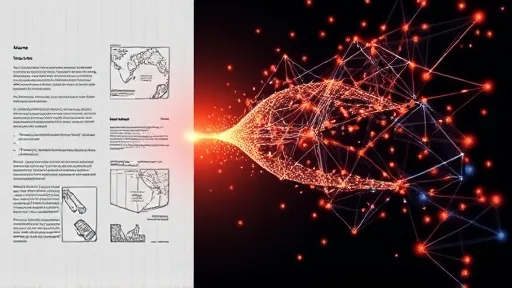
GraphRAG changes the sequence. Before anyone asks a question, a language model reads every chunk and extracts entities, relationships, and claims, then assembles them into a weighted knowledge graph. A second step runs community detection to cluster the graph into a hierarchy of related topics, and the system pre-writes a natural-language summary for each community.
At query time, the summaries do the heavy lifting. Each relevant community drafts a partial answer, the partials are ranked and merged, and the model synthesizes a final response grounded in structure rather than in a few cherry-picked snippets.
Variants take different routes. HippoRAG walks the graph with a Personalized PageRank to locate the right passages, but the core idea is identical: let relationships, not cosine similarity, decide what context the model sees.
The evidence that this lift is real is visible in Microsoft’s GraphRAG design for million-token datasets. GraphRAG is designed to answer global questions across three axes: comprehensiveness, diversity, and empowerment. GraphRAG’s community summaries are designed to provide comprehensive and diverse coverage of global questions. Its highest-level summaries provide a compact representation of the source text.
Those are not rounding errors. They are the difference between a system that fits in a budget and one that does not.
Retrieval quality benefits from the same design. As reported in VentureBeat, graph-guided retrieval improves retrieval quality on multi-hop questions. [1] The biggest gains appear on the hardest cross-document sets. HippoRAG, as reported in VentureBeat, offers a more efficient approach to multi-hop QA.
These are the kind of numbers that change a product decision.
Then comes the nuance. A 2025 study from Michigan State and Meta, as reported in VentureBeat, examined four GraphRAG families under one unified protocol, with identical chunking, embeddings, and generation. [1] No single winner emerged. [2] On single-hop factual lookup, plain RAG remains a strong choice.
The graph does not make the vector store obsolete. It makes it honest about its limits. If the question is a lookup, the chunk is enough. If the question is a synthesis, the chunk is a trap.
The Institutional Drag
This is where the story stops being technical and becomes organizational. The evidence has been public since 2024, yet in 2026 the default architecture in production remains naive chunking. VentureBeat’s reporting makes the same point: the tools are available, and the practices have not moved. VentureBeat
Several institutional reasons explain the lag. Graph indexing is expensive, because a language model must read every chunk, extract entities, and validate relationships, and that cost is paid before the first question is answered.
Budgets are easier to justify for inference, which maps to visible usage, than for indexing, which produces invisible infrastructure. The same logic that pushed companies to outsource their infrastructure now tells them not to rebuild a pipeline that already answers the easy questions.
There is also a cultural dimension. Teams measure retrieval systems by latency and recall on a handful of test questions, and those tests rarely include global synthesis questions. What cannot be measured in a quarterly review is systematically underbuilt.
The expertise required to deploy GraphRAG is different from the expertise required to deploy vector search. Community detection, graph tuning, and summary evaluation are not skills every machine learning team has in house.
So the lift exists, but it is distributed unevenly. Teams with research budgets and evaluation maturity capture it; teams under delivery pressure do not. That asymmetry is the institutional dimension that slows technological progress, and it is a choice, not a constraint.
The Distance from Promise
Consider what happens in an actual deployment when a graph is built over a messy corpus of emails, PDFs, and chat logs. The language model extracts entities and relationships, but it also extracts noise, because documents contain contradictions, duplicates, and boilerplate.
The community summaries that look so clean in benchmark evaluations are only as clean as the underlying extraction. The benchmarks use curated corpora; practice uses whatever the company has.
One detail captures the gap: the Microsoft evaluation used an LLM as judge, which is itself a recommendation system that humans must learn to distrust. The measurement of the lift depends on the very technology being measured.
The graph helps, but it does not remove the human from the loop. It relocates the human to a more tractable position, where judgment applies to themes and structures rather than to individual chunks.
That relocation is the lift. It is not a miracle, and it is not universal.
GraphRAG does not make AI superfluous, and it does not make humans superfluous. It makes the boundary between them more honest. The system handles the synthesis that naive retrieval could not, and the human handles the verification that no retriever can provide.
The promise was that retrieval-augmented generation would ground language models in evidence. The practice shows that grounding is not enough; the evidence must be connected.
For lookup questions, the chunk remains the right unit. For everything else, the graph is the difference between a tool that returns fragments and a tool that returns understanding.
The officer at the dashboard still hesitates. But now the hesitation is informed, because the system has done what it can do, and the remaining doubt is genuinely human.
Sources
1. VentureBeat
3. Meta