China AI models thrive on good enough standard
The most uncomfortable question about Chinese AI models is not whether they can match American ones. It is whether they need to.
A study from Georgetown’s Center for Security and Emerging Technology, cited by TechCrunch, quietly undermines the entire premise of the current debate. Researcher Sam Bresnick asked what happens when the standard for usefulness is not the frontier — but the floor. The answer, buried in the data, is that most users stop caring about model superiority once a system reaches a threshold of reliability. They do not need the best. They need good enough.
This finding contradicts everything the Trump administration’s internal battle assumes. The White House wants tighter controls on Chinese AI, fearing distillation attacks that let labs like Moonshot copy American models. [2] The Commerce Department considers those restrictions unworkable. Neither side questions the central article of faith: that American AI must remain the benchmark. But what if the benchmark itself is shifting?
The Distillation Paradox
Distillation sounds like theft. It is, in practice, something more ambiguous.
When Moonshot AI lab released Kimi K3 last week, the White House announced it had been developed by distilling Anthropic’s Claude model. Treasury Secretary Scott Bessent called this ‘IP theft’ and threatened sanctions. The Commerce Department, led by Howard Lutnick, viewed the same act as a predictable consequence of market dynamics.
The paradox is that distillation only works if the original model is genuinely superior. You cannot distill mediocrity into excellence. What Moonshot did was take something that worked and make it cheaper, faster, and more accessible. They did not steal the frontier. They copied it, then distributed it to anyone who wanted it.
This is where the standard shifts. For Anthropic and OpenAI, the value of their models depends on scarcity. The capital they spent training Claude and GPT requires a return on investment that only closed systems can guarantee. Open-weight models, running on independent infrastructure, undercut that entire business model. As Braden Hancock of Snorkel AI told TechCrunch, “Strong, frontier-caliber open source models will place a squeeze on the margins.”
The squeeze is not about quality. It is about access.
The Guardrail Debate
The White
House has another concern beyond market share. Earlier this month, Anthropic’s Claude models were flagged for their ability to find vulnerabilities in government systems and critical infrastructure. The administration worried about Chinese models that lacked safeguards against hacking.
But here the logic breaks down. David Sacks, the venture capitalist and Trump adviser, has documented cases where U.S. companies turned to Chinese LLMs precisely because American models refused to perform certain tasks. The guardrails meant to protect government systems were making those systems more vulnerable, because companies could not use American AI to close security gaps.
This is not an argument for or against regulation. It is an argument that the standard of “safe” is itself contested. What the White House calls a safeguard, a security engineer calls a limitation. What the Commerce Department calls unworkable, a startup calls an opportunity.
Whether Chinese models have fewer guardrails is not the issue. It is whether those guardrails serve the people who need them, or the companies that built them.
The Open Weight Squeeze
Some AI researchers have argued publicly that the U.S. government should create ‘regulatory fear, uncertainty, and distrust’ around open-weight models. Others, like Yann LeCun and Martin Casado, have pushed back against such measures. But the retraction did not change the underlying logic.
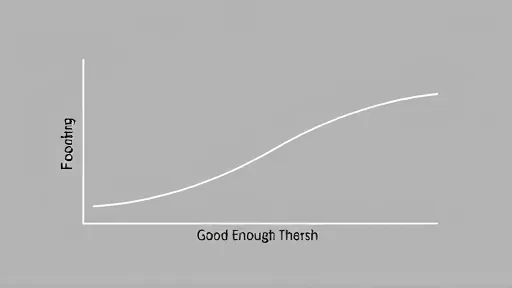
Ball understood something that the Commerce Department is only beginning to articulate. Open-weight models do not need to be better than closed ones. They only need to be good enough that users stop paying for the premium. Once that threshold is crossed, the entire investment thesis of the frontier labs collapses. Why spend billions training a model that can be copied and distributed for free?
The Commerce Department’s counter-proposal is revealing. Lutnick has discussed creating incentives for U.S. labs to release their own open-weight models, as a way to counterbalance China. This is not a defense of the current system. It is an admission that the system cannot hold. If the only way to compete with open models is to release open models, then the frontier was never the real advantage.
The Data Question
The standard shifts again when you consider data security. Critics argue that Chinese models could leak U.S. data back to Beijing. The concern mirrors the ban on Chinese EVs, which was justified by fears of data gathering.
But experts quoted in TechCrunch note that open-weight models running on U.S. servers are unlikely to transmit data to China. The risk is not inherent to the model. It depends on how the model is deployed. A Chinese model hosted on American infrastructure, audited by American engineers, poses a different threat than a Chinese model running on Chinese servers.
The same ambiguity applies to bias. Chinese models may have implicit bias toward the PRC, but what does that mean for coding tasks? For mathematical proofs? For the kinds of work that most users actually need AI to do? The standard of neutrality is itself a political choice. Every model has a worldview. The question is whose worldview counts as neutral.
The Unspoken Sentence
The room has been full of arguments for months. The White House wants controls. The Commerce Department wants incentives. Anthropic wants protection. OpenAI wants market dominance. Moonshot wants access. The debate is not about technology alone.
But there is a sentence that no one has said aloud. It sits in the Georgetown study, in the TechCrunch analysis, in the quiet admission from Lutnick’s office. It is the sentence that makes everyone uncomfortable.
The sentence is this: American AI does not need to be the best. It only needs to be good enough. And if Chinese models are already good enough, then the entire debate about controls and restrictions and distillation attacks is not about security or innovation or national competitiveness. It is about something simpler. It is about who gets to decide what good enough means.
The White House assumes the answer is the government. The Commerce Department assumes the answer is the market. Anthropic and OpenAI assume the answer is their shareholders. But the users, the ones running Chinese models on American servers, the ones turning to open-weight systems because closed ones refuse to help, have already made their choice.
Good enough is not a technical standard. It is a political one. And the people who decide it are not in Washington. They are at their desks, clicking download, and moving on.
Sources
1. Georgetown’s Center for Security and Emerging Technology
2. White House
3. Moonshot AI
4. Anthropic
6. Snorkel AI