
Anthropic custom chips signal AI hardware shift
Artificial intelligence has reached a point where the models are no longer the limiting factor. The algorithms have advanced to a stage where the hardware running them determines how fast users get answers, how much energy the systems consume, and ultimately who can afford to use them at all. The chips that power today’s AI were originally built for graphics and gaming, and they happened to be good enough for neural networks. That workaround is now reaching its limits.
Anthropic’s decision to build its own custom silicon team is the clearest signal yet that the AI industry has reached a stage where software alone cannot deliver the improvements users actually feel. When Claude responds faster, when a complex reasoning task completes in seconds instead of minutes, when energy costs drop enough that smaller companies can afford serious AI use, those gains will come from hardware designed in lockstep with the models themselves Anthropic. This is the concrete lift that matters, and it is finally being taken seriously.
The company has stated its intention plainly: co-design hardware and models so that everything runs faster and more efficiently. That sentence sounds technical, but its meaning is practical. Today’s chips are generalists. They handle everything from video rendering to database queries, and AI workloads are just one more task in their portfolio. A custom chip can be a specialist. It can be built around the specific mathematical operations that language models perform, eliminating wasted steps and wasted energy at every turn. The difference is not academic. It is the difference between waiting for an answer and having it arrive before you finish forming the question.
Anthropic is not entering this field alone. OpenAI unveiled its own inference-focused chip, built with Broadcom, while Google DeepMind has relied on its TPU accelerators for years, and Meta continues developing its MTIA hardware Broadcom. Each of these efforts represents the same realization: the companies that control their hardware will control their user experience Anthropic. The scramble is not about prestige. It is about the fundamental economics of running AI at scale, where every millisecond of latency and every watt of power translates directly into cost, and ultimately into who can afford to use these systems at all.
What makes this shift genuinely important is not the chip itself, but what it represents for the people on the other side of the screen. Consider a medical researcher using AI to analyze patient records for patterns that humans might miss. Every second saved on each query means more questions can be asked in a day. Consider a small business owner using an AI assistant to handle customer service. Cheaper inference means the service becomes affordable, not a luxury reserved for enterprises with dedicated IT budgets. The hardware is invisible, but its effects ripple outward into every practical application, determining who gets access and who gets left behind.
The deeper issue here is one that no amount of engineering can fully resolve. As AI systems become faster and more efficient, they also become more demanding of the infrastructure that supports them. Anthropic has already partnered with AWS, Google, Nvidia, and AMD to secure computing access, and those partnerships remain essential AWS. But building custom chips signals a shift from renting capability to owning it. That change carries an ethical dimension that is rarely discussed in technical circles: when a handful of companies control both the models and the hardware they run on, the concentration of power grows. The efficiency gains are real, but they come bundled with questions about who shapes the future of this technology and whose interests are served first.
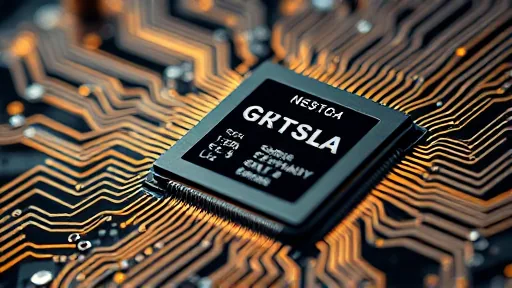
The practical effect of this shift is already visible in how AI services are priced and delivered. When hardware costs drop, providers can offer more generous usage limits, faster response times, and lower subscription fees. That means a startup can build its product on AI without burning through its seed funding, and a non-profit can use language models to process documents that would otherwise require a team of human readers. The hardware is invisible, but its effects ripple outward into every practical application, determining who gets access and who gets left behind.
The direction is set. Custom silicon will make AI faster, cheaper, and more accessible in the coming years. The companies building these chips are making a bet that integration beats flexibility, and the early evidence supports them. For the people using these systems, the result will be measured in seconds saved, costs reduced, and questions answered. That is the lift that matters, and it is arriving through hardware most users will never see.
Sources
1. Anthropic
2. Broadcom

4. Meta
5. AWS
6. Google
7. Nvidia
8. AMD
9. Apple
10. IBM