AI Solved Math Problem But Left Human Behind
In September 2025, a professor at New York University named Tristan Buckmaster was close to what he believed would be the defining result of his career. Before he could finish, OpenAI let it be known that its AI agents had solved the same problem in theoretical mathematics, as The Washington Post reported The gap between what the machine produced and what the human understood is where the real story lives.
What Actually Happened
Buckmaster had spent years working on one of the most complex open problems in his field. The kind of problem that carries a seven-figure prize and a permanent place in the history of mathematics. When he learned that OpenAI had solved the same question, he did not immediately assume he had lost. He assumed the machine would need what every mathematician needs: the accumulated insight of people who had thought about the problem before.
His concern is not that AI solved something. It is whether the AI agents were fed on his work and then produced a solution that carried no trace of where the understanding came from.
The Gain Is Real
Here is what makes this more than a priority dispute. The AI produced a solution that may be verifiable, replicable, and extendable. That matters because mathematical proof is not a matter of opinion. A proof either holds or it does not. If an AI agent produced a valid proof of a major open problem, that proof belongs to everyone. The knowledge is real regardless of who or what found it.
This is the concrete gain: a problem that had resisted human effort was cracked by the machine. The solution can now be checked, taught, and built upon. Every mathematician working in that subfield wakes up to a new starting line.
The Cost Is Also Real
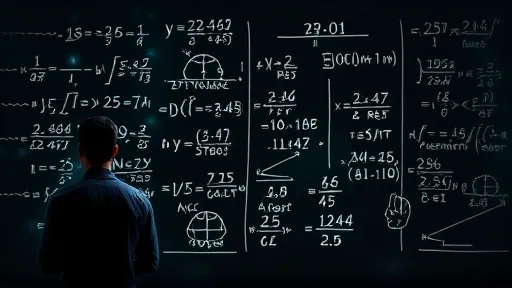
The cost is that the person who was closest to the answer may never be able to prove he was on the right track. Buckmaster’s question is not about credit in the ordinary sense. It is about provenance. If his unpublished work was used to train or prompt the AI, then the machine’s solution is partly his solution — but the record will not show that. The proof will stand. The process that produced it will remain opaque.
This is not a new problem in mathematics. Priority disputes are as old as the field. Newton and Leibniz fought over calculus for decades. What is new is the asymmetry: the human cannot inspect the machine’s training data, cannot cross-examine its reasoning, cannot point to a specific insight and say “that was mine.” The machine does not cite. It does not remember. It does not owe.
Why This Is Harder Than It Looks
The obvious fix — require AI companies to disclose their training data — runs into a wall. Much of the most valuable mathematical knowledge is never published. It lives in notebooks, in email threads, in chalk talks that no one records. You cannot disclose what was never written down. You cannot trace influence through a conversation that left no trace.
A second fix — give mathematicians the right to opt out of training — assumes they know their work is being used. Buckmaster did not know until OpenAI announced its result. By then, the training was done. The solution existed. The only remedy left was reputational, and reputation is not a proof.
What the Machine Cannot Do
The machine produced the solution without understanding the problem. It did not spend years circling an idea, abandoning it, returning to it, seeing it from a new angle at 3 a.m. It did not experience the specific frustration of being close and not knowing how close. That experience is not a prerequisite for the proof. But it is a prerequisite for the next proof — the one that builds on this one, that asks the question no one has asked yet.
Buckmaster’s loss is not that the answer exists. It is that the answer arrived without the struggle that makes the next question visible. The machine can close a problem. It cannot yet open one.
The Image That Stays
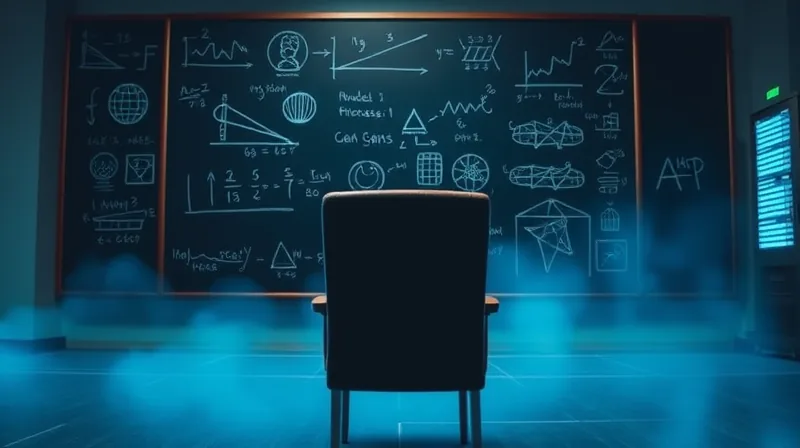
Picture a chalkboard in an office at NYU: years of partial results, crossed-out lines, arrows pointing to dead ends. Next to it, a printout of the AI’s solution — clean, complete, correct. The chalkboard is where the understanding lives. The printout is where the answer lives. They are not the same thing, and no one has figured out how to make them the same thing.
That is the problem AI has not solved, and may never solve. Until it does, every breakthrough it delivers will arrive with a shadow: the person who was almost there, whose work may have lit the way, and who will never be able to prove it.
Sources
2. OpenAI