AI Entertainment Sells a Lie You Already Believe
The Promise and the Theft
Chen
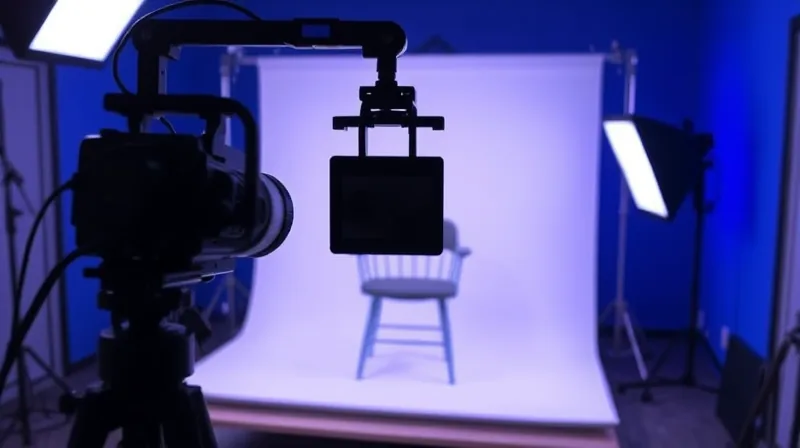
Yilong sits in front of a camera and performs for no one. A neutral stare. An angry glare. A look of surprise. The director prompts him, and he delivers each expression into the lens, knowing that his face will soon belong to a machine. The 38-year-old actor signed a contract in August to license his likeness to a Chinese production studio, trading his physical presence for a digital avatar that will star in films he will never actually appear in.
“If you can’t beat it, join it,” he says.
That resignation carries more truth than any marketing pitch about AI’s creative potential. Chen is not embracing a new art form. He is surrendering to an economic reality that has already arrived in China and is now crossing the Pacific, dressed up as innovation but functioning as something closer to a bait-and-switch. The technology promises to democratize entertainment, to let anyone with a laptop become a filmmaker. What it actually delivers is a hall of mirrors where faces are borrowed without permission, actors are replaced by their own digitized ghosts, and audiences are served performances by performers who never showed up.
The Numbers That Hide the Problem
The China Netcasting Services Assn. reports that Chinese-made micro dramas surged to 128,000 in the first three months of 2025, and more than 95% of them were made with AI. [7] That figure sounds like a triumph of efficiency, a testament to how quickly an industry can adapt. Look closer, and it becomes something else entirely: a measure of how many productions have severed the connection between a human being and the face on screen.
Micro dramas — one or two minutes long, consumed at breakfast, on commutes, during lunch breaks — are the perfect vehicle for this deception. They are “more of a snack than a meal,” as the industry puts it, fleeting enough that viewers do not demand top-notch acting or high resolution. The format’s very disposability makes it ideal for AI-generated content because nobody expects to remember what they watched. The stakes are low. The scrutiny is minimal. And that is precisely the point.
The cost of producing these videos has been cut drastically through software developed by Kuaishou Technology and ByteDance, TikTok’s global owner. [1] What used to require a cast, a crew, and a budget now requires a prompt and a few minutes of processing time. The savings are real. So is what gets lost in the transaction.
A Town Built for Actors, Now Empty of Them
Hengdian World Studios in Zhejiang province has long been known as “China’s Hollywood.” [3] Its lavish sets and backdrops once drew thousands of actors hoping for a break, a role, a moment on screen. Now those same streets attract more tourists than working performers.
About 10,000 extras show up each day looking for work. [3] Only about 800 get hired. [3] The number of short-drama productions hosted there has fallen by at least half from a year earlier. Chen estimates that many actors have lost work this year.
The explanation offered is that viewers have moved to shorter videos, that “the pace of life has become faster” and people no longer have time for movies or television dramas. That is true as far as it goes. But it skips the more uncomfortable observation: the audience did not abandon actors. The industry abandoned them, and then used AI to fill the gap with something that looks close enough to human.
The Face That Was Not Borrowed, Only Stolen
Not everyone is losing work because of AI. Fan Baile, an entertainment lawyer in Beijing, is busier than ever. His celebrity clients are taking legal action against filmmakers who have “stolen” their faces to create digital avatars without permission.
The technology is racing ahead of regulation, Fan says, leaving Chinese judges ill-equipped to handle the flood of cases involving face protections and digital infringement. The old rules were simple: using an unauthorized face constituted infringement. Now AI can preserve much of a person’s likeness while altering minor features, making it far more complicated to assess what counts as theft.
In April 2025, popular Chinese actor Jackson Yee made headlines when his studio issued a public statement that his face was being misused by AI drama producers. [7] Barely a week later, actor Dilraba Dilmura revealed she had sued and won a court case against the producer and distributor of an AI micro drama featuring an actor with a striking resemblance to her. [7]
Even nonactors get dragged in. One commercial model discovered that photos she had posted on social media appeared to have been used to create a villain in a popular AI micro drama. She had never been on set. She had never been asked. Her face had simply been taken.
The Whack-a-Mole Problem
Policing facial infringement is like playing whack-a-mole, Fan says. He once watched multiple AI micro drama series for clients, searching frame by frame for a fleeting appearance of their faces. The labor is enormous. The payoff is uncertain. And the violations keep coming.
Some film producers deliberately make AI characters resemble stars, Fan notes, using the notoriety that results from fans’ anger to generate viewership. The infringement is not a bug. It is a feature. The controversy itself becomes marketing, and the celebrity whose face was stolen becomes an unwitting participant in someone else’s promotional campaign.
This is where the gap between AI’s claims and its actual function becomes most visible. The technology is marketed as a tool for creation. In practice, it often operates as a tool for appropriation, taking what does not belong to it and repackaging it as something new.
The Studio That Decided to Ask First
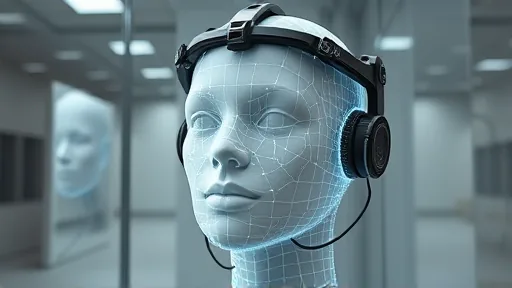
Sun Wei founded Feixiang Universe, the Shenzhen-based studio that cast Chen. The fear of accidentally “stealing someone’s face” was a big reason she decided to license real people’s likenesses for an AI production set during China’s Tang Dynasty more than 1,000 years ago.
Thanks to AI’s training data bias, AI-generated performers tend to have similar features and share a homogenous look, Sun says. Many have flawless skin and extremely symmetrical faces. That uniformity required her and other Chinese AI filmmakers to cast a wide net to “buy” new faces and digitize actors’ expressions.
Sun’s team of about 30 includes young creators fluent in AI tools and prompting, a screenwriter, a director, and advertising, film-editing, and postproduction professionals. An idea for a film often begins as a short paragraph. The team works with ChatGPT, Kimi, or DeepSeek to flesh out the screenplay. A screenwriter then revises and polishes.
To produce the finished product, Sun’s team uses Chinese video-generation models to input the type of scenes, backgrounds, and performers they want, with the AI generating 15 seconds of footage each time. The same software maps Chen’s face and expressions onto his digital avatar.
Sun says AI helped turn her filmmaking ambition into reality by upending the economics. In traditional filmmaking, movies featuring underwater environments, outer space, monsters, and war all required steep budgets. Now the cost depends not on the genre but on the model used for video generation, image quality, and token counts. A filmmaker no longer has to begin by asking, “Can we afford to shoot this?”
With AI, her team could pull together a 90-minute AI film suitable for release on Chinese streaming platforms for $500,000. [6] Previously, filmmakers would not dare to start shooting a 40-episode television series without around $30 million in financing. [6]
The savings are undeniable. So is the trade-off. Chen’s face will appear in a film he did not act in, performing expressions he did not choose, in scenes he never inhabited. He consented to this arrangement. Many others have not.
The Comparison That Reveals What Is Particular
Similar tools are being tested in the United States. [4] Michael Berry, a professor specializing in contemporary Chinese culture at UCLA, says the AI trends upending China’s entertainment industry may be a harbinger for what is to come in Hollywood. [4]
Already, Chinese companies that sell AI-powered video-generation software are seeking inroads in Hollywood. Earlier this year, ByteDance showcased its Seedance video platform at a splashy event in Santa Monica. [2] Other Chinese companies with global ambitions include Alibaba’s HappyHorse and Kuaishou subsidiary Kling. [5]
AI allows anyone with a laptop to produce entertainment, which means Americans could soon find themselves consuming content created by Chinese producers, Berry says.
“It doesn’t matter where you are, where the funding is coming from, or the ethnicity of the ‘actors,’ who are all bots anyway,” Berry says. “In this new environment, none of the old rules matter anymore.”
That observation is meant to sound liberating. It reads more like a warning. The old rules included protections for likeness, consent requirements, and the basic assumption that the face on screen belonged to a person who agreed to be there. None of that is guaranteed anymore.
The Audience That Does Not Know It Is Being Deceived
What makes this moment different from previous technological shifts in entertainment is not that AI can generate images. It is that AI can generate images that pass for human, and audiences cannot tell the difference.
A viewer scrolling through micro dramas on a phone during a lunch break is not conducting forensic analysis. They are watching a story. If the face looks real, if the expressions seem plausible, if the lighting and movement do not trigger immediate suspicion, they will accept what they see. The deception is not in the technology’s failure. It is in its success.
This is the gap that matters: AI does not need to fool experts. It only needs to fool people who are not paying close attention, which is almost everyone almost all the time. The format of micro dramas — short, disposable, consumed in fragments — is perfectly designed for this. By the time a viewer might notice something off, the video is over. They have moved on. The algorithm has already served them another one.
The Faces That Are Not There
Sun’s team licenses faces because they want to avoid the legal and ethical problems that come with stealing them. But the existence of a licensing market does not solve the underlying problem. It simply creates a tiered system where some people’s faces are paid for and others are taken.
The commercial model whose photos were used to create a villain in “The Peach Blossom Hairpin” did not get a contract. She did not get a check. She got a surprise, followed by the realization that her image had been harvested from social media and repurposed without her knowledge.
Multiply that by thousands of productions, millions of faces, and a regulatory system that cannot keep pace. The result is an entertainment landscape where the question “Who is that?” has no reliable answer. The face on screen might belong to an actor who was paid. It might belong to an actor who was not. It might belong to a model, an extra, a passerby, or someone who has never set foot in a studio. It might be a composite, a blend, a digital approximation that resembles no one in particular and everyone in general.
The Cost of Efficiency
The economic argument for AI in entertainment is straightforward: it costs less. Sun can make a 90-minute film for $500,000 instead of $30 million. Studios can produce 128,000 micro dramas in three months instead of a few thousand. Actors can be replaced by their own digital avatars, working without rest, without complaints, without the need for trailers or catering or health insurance.
What that argument leaves out is what gets lost when the human element is removed. Acting is not just the delivery of expressions. It is the presence of a person who chose to be there, who brings their own history and interpretation to a role, who can surprise even themselves. AI can replicate the output. It cannot replicate the source.
Chen understands this. He signed the contract because he needed the work. “If you can’t beat it, join it,” he says, and there is no triumph in the statement. It is the sound of someone adapting to a world that has already decided he is replaceable.
The Regulation That Cannot Keep Up
The Actors
Committee of the China Federation of Radio and Television Associations released a statement in April 2025 condemning facial infringements and asserting that AI platforms need to comply with laws and strengthen their compliance rules. The statement was appropriate. It was also, by the time it was issued, already behind.
The technology moves faster than the law. It always has. But the gap is wider now because the technology is not just a tool. It is a system that can generate content at scale, that can learn from every face it encounters, that can produce images indistinguishable from reality without anyone’s consent.
Fan’s comparison to whack-a-mole captures the frustration. You can catch one violation. You can win one lawsuit. You can watch 50 series frame by frame and find the three seconds where a client’s face appears. But the next violation is already being generated. The next face is already being taken. The next micro drama is already in someone’s feed.
The Future That Is Already Here
Berry says the AI trends upending China’s entertainment industry may be a harbinger for what is to come in Hollywood. That is not speculation. It is observation. The tools are already being tested. The companies are already making inroads. The economics are already compelling.
What Hollywood fears is not that AI will replace actors. It is that AI will replace the need for actors, that the industry will discover it can produce content without the people who have traditionally made it, that the face on screen will become a commodity to be bought, sold, and generated at will.
That future is not coming. It is here. It is playing on millions of smartphones in China right now, in one-minute increments, to audiences who do not know and do not care that the person they are watching does not exist.
The Image That Summarizes the Problem
Chen sits in front of a camera and makes faces for a machine. A neutral stare. An angry glare. A look of surprise. He is not acting. He is providing raw material. His face will be mapped onto a digital avatar, inserted into scenes he never performed, and presented to audiences as entertainment.
He will not be there when they watch. He will not know what they think. He will not receive their applause or their criticism. He has traded his presence for a paycheck, and the machine has learned his face well enough to use it without him.
This is what AI in entertainment actually looks like: not a creative revolution, but a disappearance. The actor becomes a template. The performance becomes a parameter. The face becomes a file. And the audience, watching a screen in their hand, sees something that looks human and has no reason to suspect it is not.
The deception is not that AI can make a movie. It is that AI can make a movie that feels like it was made by people, when the people have been removed. The gap between what we see and what is there has never been wider. And it is closing, one micro drama at a time.
Sources
2. ByteDance
4. UCLA
5. Alibaba
6. Kling