A Goal Built on a Century of Slow Progress
The world has spent a quarter-century nudging electricity into a slightly larger share of the energy people actually consume, and the progress has been slow. Electricity accounted for 23.4 percent of final energy delivered to consumers in the most recent accounting — the energy that reaches homes, factories and vehicles rather than the raw fuel burned to make it. [1] Since 2000, that figure has climbed by just 6.7 percentage points. That is the baseline against which a voluntary global target now being discussed at the COP31 climate summit in Antalya, Turkey, asks countries to reach 35 percent by 2035.
The arithmetic behind that jump is the part that deserves a second look. Hitting 35 by 35 would require the pace of electrification to quadruple compared with the first quarter of the 21st century. Measured against the faster clip of 2020 to 2025, the required speed still triples. The target itself rests on analysis by the International Energy Agency and the International Renewable Energy Agency on what is needed to keep the 1.5 °C warming limit within reach.
Judit Hecke of the New Climate Institute, a German think tank, calls such an acceleration possible. [1] Her caveat is the crux: “the challenge is getting policies, investment and infrastructure moving at the same pace.” It is a synchronization problem: policies, investment and infrastructure must all move at the same speed, and a quarter-century of evidence shows they historically have not.
Renewables Race Ahead While the Wiring Lags
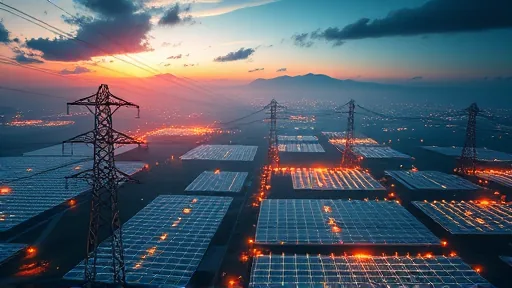
The encouraging half of the ledger is generation. Renewable sources supplied nearly 32 percent of global electricity production in 2024, the most recent IRENA data, up from just 18 percent in 2000. Installed renewable capacity grew from 0.8 terawatts in 2000 to 5.2 terawatts in 2025.
It is also, by the yardstick governments themselves set, less than half the job. The COP28 pledge commits UN member states to 11 terawatts of renewable capacity by 2030.
Here is the subtlety that separates the two targets. The 35 by 35 goal counts electricity regardless of how it is generated. Hecke points out that a country could therefore post progress on electrification while still leaning heavily on coal and gas in its power sector. Electrification, in this framing, is a measure of how much of the economy plugs in — not of how cleanly the plug is fed. The two numbers, 35 percent and 11 terawatts, measure different things, and a country can satisfy one while failing the other.
Where the Current Actually Flows
Jan
Rosenow of the University of Oxford judges the 35 by 35 target “broadly the right level of ambition.” [1] His case rests on cost: electric vehicles, electrical industrial heat and heat pumps are now often the cheapest options available. “Most new electricity generation built today is renewables and batteries,” he says. “And electric technologies are so much more efficient that they cut fossil fuel use even on today’s grids, [which] are getting cleaner every year.” That progress is distributed unevenly across the economy. The share of energy supplied by electricity varies widely by sector, with transport trailing far behind buildings and industrial applications.
Politics supplies the counterweight. Many governments appear unwilling to commit to ambitious targets, and the United States has withdrawn from the global climate framework entirely, making it the only major economy absent from COP31 negotiations this week. Even countries that have voiced support carry contradictions: the UK, which has set a legally binding net-zero target for 2050, has been reported this week as expected to weaken its electric vehicle targets. The Lancet Countdown for 2026, the annual report on climate change and health, recorded global preparedness for the transition to a net-zero economy falling from 0.48 in 2024 to 0.38 in 2025, on a scale where 1 is the highest score achievable. The score is based on a country’s capacity for the transition compared with its dependence on fossil fuels, and its decline indicates that the gap between climate ambition and delivery has widened.
Sources