Leg Muscle Mitochondria Injection Shows Promise for Treating Blindness
For decades, the medical world treated the eye as an isolated organ, a delicate sphere walled off from the rest of the body. When the retina failed, doctors looked only at the eye itself, searching for solutions within its tiny confines. The idea that a solution might come from somewhere as distant and mundane as a leg muscle seemed almost absurd. Yet that is exactly where researchers have now turned, extracting the energy-producing powerhouses of muscle cells and delivering them directly into the eye’s inner chamber. The approach inverts an old assumption: the cure for blindness may not reside in the eye at all, but in the body’s most robust tissues.
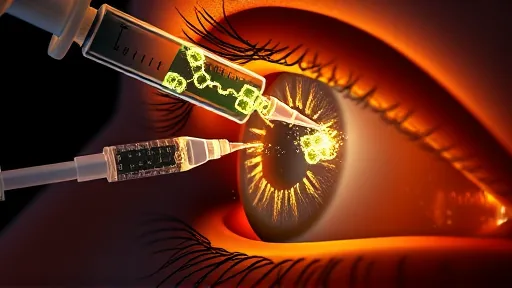
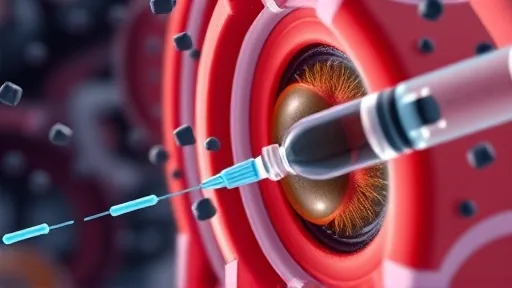
The procedure centers on mitochondria, the tiny structures inside nearly every human cell that convert food into usable energy. When retinal cells lose their mitochondria or those mitochondria fail, the cells die, and vision fades with them. The logic of the new treatment is elegantly simple: take healthy mitochondria from a patient’s own leg muscle and inject them into the eye’s vitreous fluid, the clear gel that fills the space between the lens and the retina. Once there, the hope was that these fresh energy factories would be absorbed by damaged retinal cells and revive them.
The clinical case, reported in a preprint posted on ResearchSquare, involved a woman with severe blindness who received this experimental therapy. Scientists extracted mitochondria from her leg muscles and injected them into both of her eyes. The procedure itself was a technical success in one crucial regard: it caused no inflammation and produced no side effects, demonstrating what mitochondria biologist Temurkhan Ayupov called a ‘relatively safe’ approach to injecting a person’s own mitochondria into ocular tissue
However, the results were more measured when it came to actual vision restoration. The treatment produced only a limited effect on restoring responses to light in the woman’s eyes. Her vision itself was not restored. The study does not claim a cure, but it opens a door that was previously closed, proving that the human eye can tolerate the presence of foreign mitochondria delivered in this manner. For a field that has struggled to find any way to replenish dying retinal cells, that alone represents a meaningful step forward.
A Muscle Cell’s Energy
Gift to the Eye
The choice of leg muscle as a mitochondrial donor is not arbitrary, and understanding it requires a shift in perspective on how the body allocates its resources. Muscle tissue is among the most mitochondria-dense tissues in the human body, packed with these organelles because muscles demand enormous energy for contraction. The eye, by contrast, is metabolically demanding in its own right but has limited capacity to regenerate its own mitochondrial population. By harvesting from a place of abundance and delivering to a place of scarcity, the procedure mirrors a principle found throughout biology: the body constantly moves resources from surplus regions to deficit regions.
This is not the first time mitochondria have been moved between tissues, but the eye presents unique challenges. The vitreous fluid is a carefully balanced environment, and any disturbance risks triggering inflammation that could further damage an already compromised retina. The fact that the patient experienced no inflammatory response suggests that the eye may be more receptive to such interventions than previously believed. It also raises the possibility that the procedure could be repeated, with higher doses or different delivery methods, to achieve a stronger therapeutic effect.
The study was conducted as a single patient case, which means the scientific community will treat its findings as preliminary until larger trials confirm the results. The work has not yet undergone peer review, a standard checkpoint in scientific publishing that helps catch errors and validate methodology. Still, the case provides the first human evidence that autologous mitochondrial transplantation into the eye is feasible, and it gives researchers a baseline of safety data on which to build future studies.
For the woman who underwent the procedure, the outcome was undoubtedly disappointing on a personal level, as her vision did not return. Yet her participation has generated knowledge that could benefit countless others in the years ahead. Clinical medicine advances through such incremental steps, where each failed or partial success maps the terrain for the next attempt. The absence of harm, combined with a glimmer of biological response, suggests that this avenue deserves further exploration rather than abandonment.
From Safety Milestone to Vision Restoration
The gap between demonstrating safety and achieving meaningful vision restoration is vast, and the researchers are under no illusion about the distance that remains. The limited light response observed in the patient’s eyes indicates that the injected mitochondria did interact with retinal tissue in some way, even if that interaction was insufficient to produce functional vision. This partial response offers a biological signal that the approach has merit, and it provides a measurable outcome that future trials can aim to improve upon.
Mitochondrial biologist Temurkhan Ayupov framed the results primarily as a safety milestone rather than a therapeutic triumph. The field of mitochondrial medicine has long wrestled with how to deliver these organelles to tissues that need them most, and the eye’s accessibility makes it an attractive target. Unlike the brain or the heart, which require invasive surgery to reach, the eye can be accessed through a straightforward injection, a fact that could accelerate clinical testing if the approach proves viable.
The preprint publication means the data is available to the global research community immediately, allowing other teams to scrutinize the methods and potentially replicate or refine the technique. Scientific progress in this area will depend on multiple groups working in parallel, each testing variations in mitochondrial dosage, injection timing, and patient selection. The woman in this case had severe blindness, but future trials might target patients with earlier-stage retinal disease, where remaining cells could be rescued more effectively. .
What makes this approach particularly intriguing is its use of the patient’s own tissue, which sidesteps the immune rejection problems that plague donor-based therapies. Because the mitochondria come from the patient’s leg, her body recognizes them as self, eliminating the need for immunosuppressive drugs that carry their own risks. This autologous strategy, if it proves effective, could be scaled across different muscle groups and different target organs, potentially offering a general method for boosting cellular energy in tissues that are failing. .
Sources
2. Mitochondria from Leg Muscles: A New Pathway to Treat Blindness