
Global optimism gap splits prosperous West from rising East
The dominant narrative about our collective future has hit a wall. For years, the assumption held that modern societies, especially wealthy Western ones, would naturally feel more secure and hopeful about tomorrow. Yet, the data now tells a different story, revealing a profound disconnect between perception and reality. The prevailing model of societal progress fails to account for the deep-seated pessimism found in some of the world’s most stable and prosperous nations.
This gloom is not universal. In Indonesia, a majority of young people believe each generation will be better off than the last — a direct inversion of the Western pattern. [1] The divergence suggests that a nation’s economic trajectory and its citizens’ psychological outlook are not always aligned.
The source of this Western pessimism remains an open question. The cited research does not isolate a single cause, though it points to a cluster of pressures — geopolitical instability, the disruptive reach of artificial intelligence, and the accumulating effects of climate change — as plausible drivers of a pervasive uncertainty about the coming decades.
Prosperity Without Reassurance
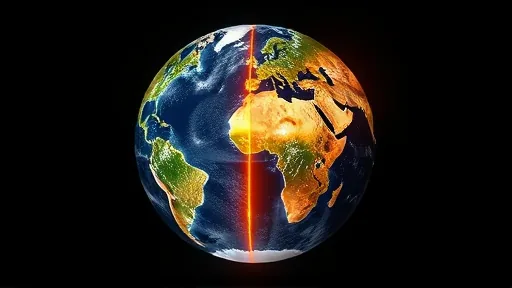
The pattern runs counter to economic logic. The anxiety is not born of scarcity but persists within societies that have achieved significant wealth and stability. Affluence does not automatically translate into collective security about the future. The complexity and pace of change in advanced economies may contribute to the unease, creating a sense that the ground is shifting even when economic indicators appear sound.
The expectation that one’s children will not be as well off is most prevalent in nations that have historically offered the greatest opportunities. The pessimism appears less about present resources than about a loss of confidence in the institutions meant to guarantee future prosperity.
Indonesia’s young population appears to be riding a wave of forward momentum. Their optimism is likely fueled by a tangible sense of national progress and opportunity. A society’s collective mood may depend less on its absolute level of development than on its perceived direction of travel.
A Split in Global Outlook
The difference between Western and Indonesian outlooks is not a minor statistical blip. It is a chasm in perception that demands a new framework for understanding global sentiment. The old model linking higher GDP directly to higher levels of societal contentment no longer holds.

This divergence is occurring even as global challenges are shared. Climate change and the disruptive potential of artificial intelligence are not confined by national borders. Yet the lens through which these challenges are viewed differs fundamentally: for a young person in a rapidly developing nation, they may be problems to be solved within a story of progress; for a young person in a Western nation, they may be existential threats to an established way of life.
The data reveals a world where the emotional and psychological states of populations are diverging as quickly as their economic ones. The tools used to measure national well-being may need to be reconsidered to capture this more complex picture of human experience.