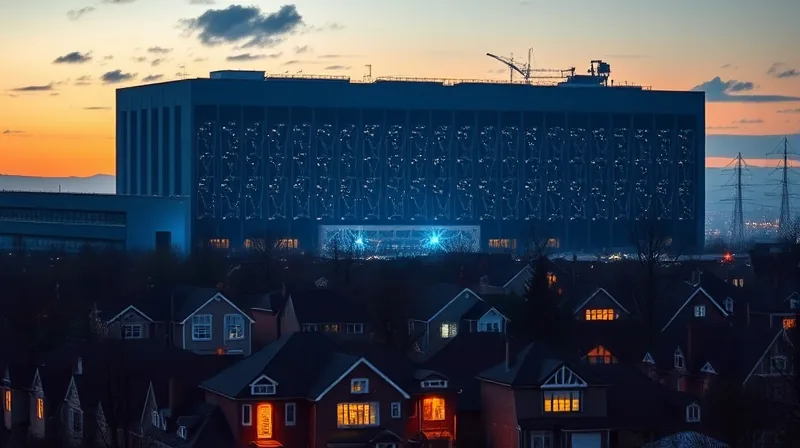
Microsofts AI infrastructure promises clash with community trust
There is a number that should trouble anyone watching the artificial intelligence boom: $3.6 trillion. That figure, reported by financial analysts in early 2025, represents the current market capitalization of Microsoft, a company whose AI ambitions now depend on something far less tangible than its balance sheet — the patience of the people who live near its data centers. The gap between what AI promises and what it actually delivers has never been about the technology itself. It is about the physical reality that the technology must occupy, and the quiet deception that happens when corporate narratives collide with community skepticism.
The Performance of Transparency
Microsoft’s recent announcement that it will scrap non-disclosure agreements and certain tax break arrangements tied to new facilities sounds like a genuine concession. The company is introducing what it calls a “community-first AI infrastructure policy,” a phrase designed to signal a new era of corporate accountability. But look closer at what is actually being offered. The NDAs being dropped were never about protecting trade secrets — they were about controlling the story. When a community signs an NDA, they surrender the right to speak publicly about what is being built in their backyard, including legitimate concerns about water usage, energy consumption, and noise pollution. Removing the legal gag order is a gesture, not a guarantee. The deeper question is whether Microsoft is genuinely changing how it operates or simply changing how it appears to operate.
This is where the deception becomes structural rather than incidental. The campaign launched jointly with Oracle and Meta, announced in February 2025, is not a spontaneous act of corporate conscience It is a coordinated response to rising community backlash and legislative pushback across the United States. The timing matters. When three tech giants launch a public campaign simultaneously, they are not listening to communities — they are managing them. The language of “community-first” is itself a form of misdirection, because it implies that communities were ever second in the first place. They were never considered at all, until the backlash became expensive enough to warrant attention.
The Narrative Gap
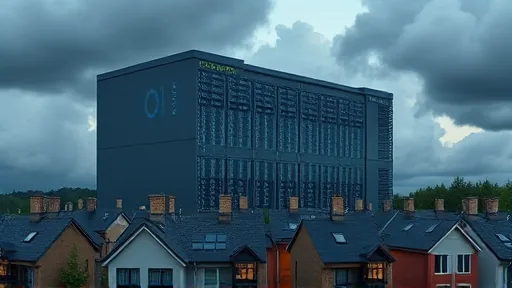
The gap between what AI claims to do and what it actually does has a name in corporate strategy: the narrative. This article focuses on one dimension of that gap — how AI deceives communities about its physical costs Microsoft’s narrative assumes that heavy AI and cloud infrastructure spending will convert into durable, high-margin demand for Azure and Copilot. That assumption rests on a foundation of social acceptance that has never been tested at this scale. The company’s own risk disclosures, filed with the SEC in its 2024 annual report, acknowledge this: massive capital expenditures for AI infrastructure could pressure free cash flow and operating margins if revenue growth slows or if AI adoption does not meet expectations What those disclosures do not say is that the risk is not purely financial. It is political, social, and ultimately existential for the AI buildout.
The deception here is subtle but profound. Microsoft presents its infrastructure spending as a bet on the future, but it is actually a bet on the present — on the willingness of local governments to approve projects, of communities to tolerate disruption, and of regulators to look the other way. When the company scraps tax break arrangements, it is not sacrificing profit for principle. It is acknowledging that tax breaks have become a liability, a visible symbol of the extractive relationship that communities have come to resent. The real product being sold is not AI services. It is permission.
The Ethics of Building
There is an ethical dimension to this that cannot be solved with better technology or more transparent policies. It is the question of who bears the cost of AI’s physical footprint. Data centers consume enormous amounts of electricity and water, and they generate heat, noise, and visual blight. The communities hosting them rarely see the benefits — the jobs are often temporary construction work, and the ongoing operational employment is thin. Meanwhile, the companies building these centers reap the rewards of a technology that is still searching for its killer application.
This is the deception at the heart of the AI boom: the promise is intelligence, but the reality is infrastructure. Every conversation about AI’s capabilities, its potential to transform industries, its ability to write code or diagnose diseases — all of it is grounded in the physical reality of servers humming in buildings that someone had to approve, somewhere. That bet is increasingly being questioned, as town councils from Virginia to Ohio begin demanding binding commitments on water usage and grid capacity before granting permits. The communities that approve these projects are making a bet on a future they cannot see, based on promises from companies that have historically treated local concerns as obstacles to be overcome rather than stakeholders to be respected.
The Responsibility Question
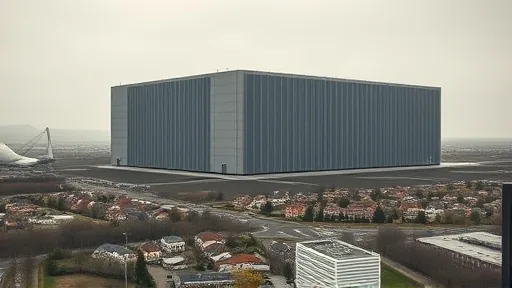
When a system gets it wrong, who is responsible? The question sounds abstract, but it has a concrete answer in the context of AI infrastructure. In 2024, a data center in Chandler, Arizona, drew so much power that local residents faced rolling blackouts during summer peaks — and neither the operator nor the utility accepted blame. If Microsoft builds a data center in a community, and that data center consumes so much water that local wells run dry, who is accountable? The company will point to its permits and its compliance with regulations. The regulators will point to the company’s promises about efficiency and innovation. The community will be left with the consequences. This is the final layer of the deception: the diffusion of responsibility across so many actors that no one is ultimately responsible for anything.
Microsoft’s shift away from NDAs and tax breaks is an acknowledgment, however reluctant, that the old model of quiet deals and legal silencing is no longer viable. But it is not a solution. It is a recognition that the social license to operate must be earned, not purchased. The question that remains is whether Microsoft and its peers are capable of earning that license honestly, or whether they will simply become more sophisticated in their performance of transparency.
The data point that should worry investors is not the market cap or the capital expenditure figures. It is the growing gap between what AI claims to be and what it actually is: a physical industry that needs land, water, and electricity, and that must compete with other needs for those resources. The communities that host data centers are beginning to understand this gap, and their understanding is the greatest risk to the AI buildout. Microsoft can scrap its NDAs and its tax breaks, but it cannot scrap the fundamental tension between its promises and its physical footprint. That tension will persist, and it will define the next decade of AI infrastructure — not the technology, but the social contract that makes it possible. The question is not whether communities will push back; they already are. The question is whether Microsoft will listen before the backlash becomes impossible to manage.
Sources
1. Oracle
2. Meta