
Document graph format makes AI cite its sources
The Problem No One Solved
For decades, the core problem of business documents has remained stubbornly unchanged. A lease agreement, a loan contract, or a regulatory filing contains facts — rental rates, interest terms, compliance dates — but those facts are buried inside prose, tables, and fine print. To extract them, someone has to read, copy, and verify. Mistakes happen. Trust erodes. Jean Paoli, co-creator of XML and architect of Microsoft Office’s file formats, has spent his career trying to make machines understand what humans write. [1] His latest attempt, a startup called Docugami, is now open-sourcing its core technology under the Apache 2.0 license, betting that the future of AI depends not on smarter models but on data that can prove itself. The format is called DGML — Document Graph Markup Language — and it represents a subtle but profound shift in how we think about documents and the machines that read them.
Where AI Lifts Us
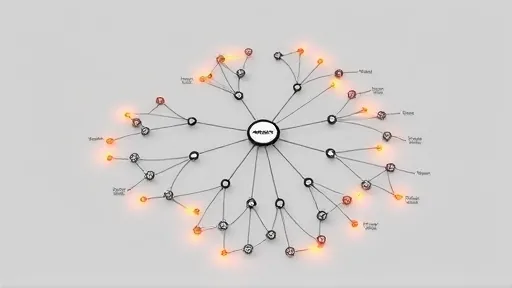
The promise of DGML is that it turns a document into a map of its own facts. Instead of treating a 200-page lease as a single blob of text, DGML breaks it into pieces: each clause, each number, each date becomes a node in a graph. An AI agent can then point to a specific fact — the renewal option on page 147 — and say, “This came from here.” That traceability is what makes the data trustworthy. Paoli’s insight is that the real bottleneck in enterprise AI is not intelligence but provenance. A model can generate plausible answers, but it cannot yet generate proof. DGML gives it a way to cite its sources, not as vague references but as precise coordinates. This lifts AI from a black box into something closer to an assistant that shows its work.
Where AI Tempts Us
The temptation is to believe that DGML solves everything. It does not. The format itself is just a container; the hard work of parsing documents accurately remains. Docugami is keeping its fine-tuned AI models private, meaning that the quality of the extraction still depends on proprietary software. A company that adopts DGML gains a standard, but not a guarantee. The blockchain fingerprint that Inveniam adds — a cryptographic hash of each piece of data — ensures that the data has not been altered after the fact, but it cannot verify that the original extraction was correct. If the AI misreads “rent due on the first of the month” as “rent due on the fifteenth,” the blockchain will happily certify the mistake. Trust in the format depends on trust in the extraction pipeline, and that pipeline remains opaque.
Where AI Makes Us Superfluous
The uncomfortable edge of this technology is what it does to the people who currently do this work. Auditors, paralegals, compliance officers, and due diligence analysts spend their days reading documents and extracting facts. DGML, combined with blockchain verification, automates that function completely. A single fact from a 200-page lease can be verified on its own, without exposing the whole document. An investor, auditor, or AI agent can trace it to the page it came from. The human reader becomes optional. The business model of Docugami and Inveniam depends on this: they are not selling better tools for human workers; they are selling the ability to bypass those workers entirely. The revenue comes from the value of trusted data, not from the people who used to produce it.
The Historical Turning Point
Paoli’s career mirrors the evolution of document technology. He co-created XML, which gave machines a way to structure data across industries. He helped build the Office Open XML format, which made Microsoft documents interoperable. Both were standards that no single company owned. DGML follows the same playbook: open-source, Apache 2.0, designed to become a shared foundation. But the context has changed. XML solved the problem of data exchange across systems. DGML solves the problem of data trust across parties. The shift reflects a deeper change in what we ask from technology. We no longer just want machines to read documents; we want them to vouch for what they read. The historical moment is when a format stops being a tool for humans and becomes a tool for machines to hold each other accountable.
The Architecture of Proof
The division of labor between Docugami, Inveniam, and Mantra reveals how trust is constructed in the age of AI. Docugami turns unstructured documents into DGML graphs. Inveniam records a digital fingerprint of each piece of data on a blockchain built by Mantra. The blockchain does not store the data itself — just a hash that changes if any bit, byte, or pixel is altered. As Inveniam CEO Patrick O’Meara put it, ‘Change one bit, one byte, one pixel, and the hash won’t match.’ [2] This means that a single fact can be verified independently, without revealing the entire document. An investor can check the rental rate without seeing the lease. An auditor can confirm a default clause without reading the fine print. The architecture of proof is lean, precise, and unforgiving.
The Business of Giving Away the Core
Docugami’s strategy is counterintuitive for a startup: give away the technology that took years to build. The company plans to make money not from the DGML format itself but from the value of the data it helps verify. Once a company converts its leases or loans into DGML and anchors the key numbers on the blockchain, investors, lenders, and auditors can pay to draw on that verified data. Docugami shares in the revenue through its partnership with Inveniam and collects a small fee each time a piece of data is recorded on the chain. This is a bet on volume over margin, on ecosystem over ownership. Paoli acknowledged the gamble: ‘The business model of everybody is changing. And if you know any company where it’s not true, you need to tell me, because I haven’t met them yet.’ [1]
The Competition That Matters
DGML enters a crowded field of document formats. Markdown is simple and widely used but lacks the structure to represent complex documents. IBM’s Docling offers a different approach, focusing on layout analysis and content extraction. DGML’s edge is its graph structure, which preserves relationships between facts — a clause belongs to a section, a number belongs to a clause, a date belongs to a number. This matters for AI agents that need to reason about documents, not just search them. An agent that reads a lease in DGML can understand that the renewal option is conditional on the default clause, because the graph links them. In Markdown, those connections are lost. In Docling, they are implicit. DGML makes them explicit, and explicit connections are what make data verifiable.
The Real Use Case That Crypto Finally Found
The partnership with Mantra, a crypto company whose OM token collapsed in April 2025, might raise eyebrows. Paoli insisted that the project uses the underlying blockchain, not the token. ‘Crypto as an industry has gone through a lot of changes in the last 18 to 24 months, and it’s growing up in a lot of ways,’ said Mantra CEO John Patrick Mullin. [2] “This is a real use case with fundamental value, not just pure speculation.” The blockchain serves as an immutable ledger of fingerprints, a public record that anyone can check. This is the use case that blockchain proponents have promised for years: not digital currency, but digital notarization. The difference is that the notarization is granular, automated, and tied to AI-generated data. A hash on a chain costs almost nothing to verify and proves that a fact has not changed since it was recorded.
The Unresolved Tension
Docugami is open-sourcing DGML but keeping its AI models private. This creates a tension at the heart of the project. The format is free, but the ability to populate it reliably is not. A company that wants to use DGML must either build its own document parser or pay Docugami for access to its fine-tuned models. This is not unusual in the open-source world — Red Hat gave away Linux and sold support — but it means that trust in the data still depends on trust in the parser. The blockchain can verify that a fact has not changed, but it cannot verify that the fact was correct in the first place. That verification requires a human auditor, or a second AI, or a legal process. The technology eliminates one layer of trust but creates another.
The Consequence That Follows
The consequence of DGML and similar technologies is not that documents become obsolete, but that the people who currently verify them become optional. The value shifts from the act of reading to the act of structuring. A paralegal who reads a lease to find the renewal option is replaced by an AI that extracts it and a blockchain that certifies it. An auditor who checks a loan agreement against a spreadsheet is replaced by a graph that links them automatically. This is where AI makes us superfluous: not in the creative or strategic aspects of work, but in the repetitive, rule-based, and document-intensive tasks that underpin modern finance, law, and compliance. The technology does not destroy the profession; it automates the part of the profession that was already mechanical. The people who remain will be those who design the graphs, train the models, and interpret the exceptions.
The Fingerprint That Cannot Lie
The elegance of the approach lies in its simplicity. A cryptographic hash of a document fragment is a string of characters that uniquely identifies that fragment. Change one comma, and the hash changes. This means that a fact can be verified without revealing the document, without trusting the verifier, and without relying on a central authority. An investor in Singapore can check a rental rate in a lease stored in Detroit, and the blockchain will tell them whether the rate has changed since it was recorded. The document itself never leaves the owner’s control. The fingerprint is public; the content is private. This is the kind of trust that AI agents need to operate in the real world, where documents are confidential, contracts are proprietary, and mistakes are expensive.
The Scale of the Bet
Docugami has raised about $13 million to date, including a $10 million seed round in 2020 that was the first investment in Grammarly’s history. The company has 30 employees. It is betting its future on a format that it gives away for free, a partnership with a blockchain company that lost billions in value, and a business model that depends on convincing large investors to trust AI-generated data. Paoli met Inveniam CEO Patrick O’Meara through a former Microsoft colleague who had become one of O’Meara’s advisers. They realized they had been working toward the same idea from different directions. Inveniam had the customers and the verification infrastructure; Docugami had the document parsing technology. The partnership was formed in months, not years, which suggests that the market is ready for this kind of integration
The Format That Changes Everything
DGML is not just another markup language. It is a bet that the future of AI depends not on bigger models or more data, but on data that can prove itself. The format gives machines a way to cite their sources, to show their work, and to be held accountable. It gives humans a way to trust what machines say, not because the machines are smart, but because the data is anchored to something immutable. This is the edge of AI that lifts us: not by replacing judgment, but by providing proof. The temptation is to think that proof alone is enough. The risk is that we forget the people who used to provide it. And the consequence is that those people become unnecessary, not because they were not good at their jobs, but because the technology made their jobs obsolete.
The Path Forward
The DGML specification, sample documents, and reference code are available at dgml.io and on GitHub. Any developer can adopt it, any company can use it, and any AI agent can read it. The format is free. The verification is open. The business model is still being written. Paoli’s career has been about making documents readable by machines. With DGML, he is making them readable by machines that need to be trusted. The question is whether the rest of the industry will follow, or whether this is another standard that dies in the gap between what researchers publish and what ends up in products. The answer will determine not just the fate of a 30-person startup, but the shape of enterprise AI for the next decade.
Sources
1. Docugami
2. Inveniam
3. IBM
4. Red Hat
5. Grammarly