
AI Watermarking Quietly Improves Text Quality
The question sounds backwards at first. We built these models to learn from us, to absorb the sum of human writing and return something useful in kind. But with every watermarked response, the machine is also teaching us something in return — not through what it says, but through the statistical fingerprint it leaves behind. That fingerprint is designed to be imperceptible. And that imperceptibility, it turns out, is where the real gain lives.
What a Watermark Actually Does to a Sentence
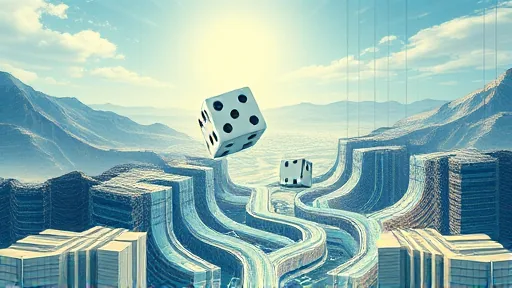
Strip away the regulatory language and the corporate announcements, and a text watermark is a small, deliberate bias in how a model chooses its next word. At each step, an LLM assigns a probability to every token that could come next. A likely word might get a 40 percent chance. A plausible alternative gets 10 percent. The model rolls weighted dice and moves on. Watermarking tilts those dice — just slightly — toward a secret subset of words the detector knows about.
The result is text that reads exactly as it would have without the watermark. Same grammar. Same tone. Same argument. The only difference is a pattern buried in the word choices, invisible to any human reader and meaningless without the key. This is not metadata stapled to a file. It is not a hidden character. It is the sentence itself, nudged by a fraction of a degree.
That nudge is the whole trick, and it is also the whole promise. A watermark that changed the meaning of a sentence would be useless. A watermark that changed nothing would be undetectable. The technology lives in the narrow space between those two failures, and the fact that it works at all is a genuine engineering achievement.
The Gain You Cannot See
Here is the counterintuitive part. The strongest evidence that text watermarking does not degrade quality comes from the same mechanism that makes it work. Because the watermark only shifts probabilities, and because the model still samples from a distribution that closely resembles its unwatermarked one, the output remains statistically almost identical to what it would have been.
Google demonstrated this at scale, according to the company. [1] When the company routed Gemini queries randomly to watermarked and non-watermarked variants, it compared user feedback across millions of responses. [1] No significant difference. Not a small difference that failed to reach significance — no meaningful gap at all. Users could not tell, and more importantly, they did not care.
That is the concrete gain. A system that labels its own output as machine-generated, at essentially zero cost to the person reading it. No degraded answers. No awkward phrasing. No telltale rhythm that screams “robot wrote this.” Just the same response you would have gotten anyway, now carrying a signature that a detector can verify.
Why Short Text Is the Hard Case
The gain is not uniform, and honesty about where it thins out matters more than cheerleading. Watermarks need room to breathe. A 200-token response gives the algorithm enough words to embed a detectable pattern. A 20-word tweet does not.
Researchers put the threshold bluntly. For a short tweet to be reliably detected, half or more of its words would need to come from the watermarked subset. [2]. That is a much heavier thumb on the scale than a long essay requires. The same tension appears in something like a short Python function generated by AI — few tokens, high stakes for correctness, and a watermark that either weakens or distorts the output.
Available data shows the curve. Detection accuracy can reach high levels in favorable conditions but drops substantially for short replies. The technology does not fail here; it simply trades strength for brevity. And that trade is the honest boundary of the gain.
The Skeptic’s Point, Taken Seriously
John Gruber, co-creator of Markdown, calls the watermark a “perversion of writing” and disputes the claim that it leaves meaning untouched. [2] His argument has force. Images contain millions of pixels. Text contains dozens or hundreds of words. There is simply less room to hide a signal without disturbing the surface.
John Kirchenbauer, co-author of a 2023 paper that helped describe the red-list/green-list method, answers with a different framing. [2] A watermark that changes nothing would be undetectable, he says. The question is not whether the distribution shifts. The question is whether the shift matters to you.
Both are right about different things. Gruber is right that any alteration is an alteration. Kirchenbauer is right that an alteration no reader can perceive, and no user experience can measure, may not be the kind of change that counts. The disagreement is not about facts. It is about what we are willing to call a cost.
What the Regulation Actually Buys
The European Union’s AI
Act requires watermarks for models released after August 2, 2026, and the major labs have largely complied. [3] Anthropic watermarks Claude. Google watermarks Gemini. OpenAI has committed to doing the same. [3]. The regulatory push is often framed as a burden — compliance costs, engineering overhead, constraints on output.
The framing misses what the rule produces. A world where AI-generated text carries a verifiable mark is a world where the default assumption about any piece of writing can be tested rather than guessed. That is not a restriction on AI. It is a public good that AI companies are being asked to fund, and the cost of funding it, by every available measure, is close to zero for the end user.
The gain is not that watermarks make AI better. The gain is that they make AI accountable without making it worse. That combination is rare enough to be worth naming plainly.
The Contradiction That Remains
None of this resolves the deeper tension. A watermark works by making the model’s output slightly different from what it would otherwise have been. The difference is imperceptible. The imperceptibility is what makes the watermark acceptable. But imperceptibility is also what makes the watermark fragile — easy to weaken under pressure, easy to strip with enough paraphrasing, easy to lose entirely in short text.
So we arrive at the contradiction. The technology improves precisely to the degree that it disappears. The better the watermark, the less it changes. The less it changes, the harder it is to detect. And the harder it is to detect, the more it depends on a detector that only the watermarker controls.
That is not a reason to abandon the effort. It is a reason to be precise about what has been gained. AI text watermarking does something genuinely useful: it labels machine output without degrading it. It does not solve the problem of AI deception. It does not make detection universal. It does not work equally well on a tweet and a term paper. What it does is quietly raise the floor — and that, for now, is the gain worth having.
Sources
1. Google
2. Anthropic