AI replaces professional judgment while raising costs
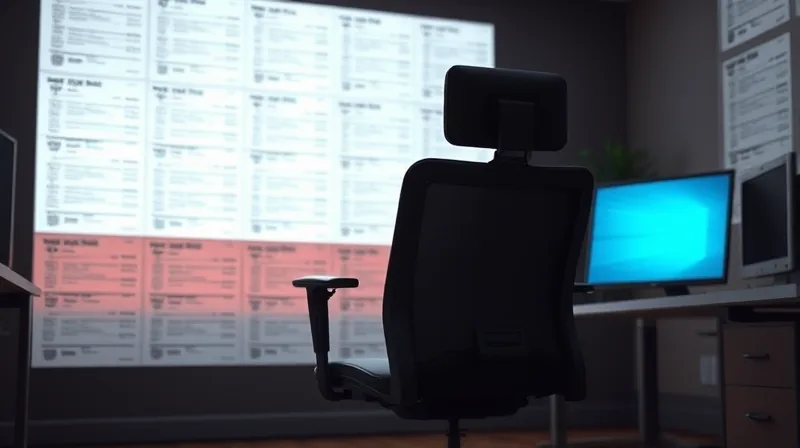
The tax return was flawless. Every deduction claimed, every credit applied, every number in its correct box. The software had done in four minutes what a professional might take an hour to complete, and it had done it without a single error. And yet, the human who reviewed it felt a cold certainty settle in their stomach: this was the last season they would be paid for this work.
The arithmetic was perfect. The judgment was not.
That gap, between computational accuracy and human discernment, is where the quietest job losses are happening. Not in dramatic factory floor replacements or dramatic algorithmic trading floors, but in the unglamorous middle of professional work, where competence was never the question. The question was always whether a machine could be trusted with the messy, contradictory, context-dependent decisions that professionals make dozens of times a day, and the answer, increasingly, is yes.
Consider the tax preparer who catches the deduction the client forgot to mention, the one that requires a follow-up question about a home office that was never formally registered. The AI does not know to ask. It simply processes what is given. But the human who used to ask those questions is no longer needed, because the client, fed the right prompts by the same system, has already provided everything the software requested. The tacit knowledge, the instinct for what might be missing, has been outsourced to the interface itself.
The economic picture sharpens the stakes. The machines that are replacing judgment are themselves making everything more expensive, and the people whose judgment is being replaced are the ones least able to absorb those rising costs.
The irony compounds. The very infrastructure that makes these systems possible, the data centers humming in Virginia and Ohio and Texas, consumed about 4.4% of the nation’s electricity in 2023, according to the Department of Energy’s Lawrence Berkeley National Laboratory. [3] That share could rise to between 6.7% and 12% by 2028. The cost of running the systems that displace workers is being paid, in part, by those same workers’ monthly utility statements.
The displaced professional does not see it that way, of course. They see a pink slip, not a power plant. But the connection is structural. The AI buildout is not an abstract technological revolution; it is a physical, material demand on resources that have finite supply. The consumer electronics that once seemed like necessities are becoming luxury items, priced by the same forces that eliminated the jobs that used to buy them.
The judgment being replaced is not just in tax preparation. It is in legal document review, where associates once spent thousands of hours examining contracts for inconsistencies. It is in medical imaging triage, where radiologists once prioritized urgent cases from routine screenings. It is in underwriting, where loan officers once weighed the story behind a credit score. In each of these fields, the AI does not merely assist; it decides. The human remains as a formality, a liability shield, a name on the letterhead. The actual cognitive work, the weighing of competing considerations, the application of experience to ambiguity, has been transferred to a statistical model that has never been denied a mortgage or lost a patient.
The tax preparer who survives is not the one who is faster or cheaper, but the one who can demonstrate a value that the AI cannot replicate. That value, increasingly, is not technical expertise. It is the ability to tell a client something they do not want to hear, and to do it with enough trust that the client listens.
The question of who benefits from this transition is not evenly distributed. A Reuters/Ipsos poll found that 53% of American adults fear the technology could cost them or someone in their household a job. [10] That fear is not irrational. The White House’s AI Action Plan promises that “whoever has the largest AI ecosystem will set the global standards and reap broad economic and security benefits,” and that “our Nation will win, ushering in a new Golden Age of innovation, human flourishing, and technological achievement for the American people.” But the golden age has a distribution problem. The economy is growing, and the people who own the infrastructure are capturing that growth. The people whose labor is being automated are seeing their electricity bills rise and their job prospects narrow.
The pattern is not new. Every major technological shift has produced winners and losers, and the losers have always been told that they will be retrained, that new jobs will emerge, that the transition is temporary. What is different this time is the speed and the nature of the displacement. Previous automation replaced physical labor, the repetitive motions of assembly lines and warehouses. This wave replaces cognitive labor, the judgment that was supposed to be the uniquely human preserve. The tax preparer, the paralegal, the junior underwriter, the first-year analyst: these were the entry points into the middle class, the jobs that allowed people without connections or capital to learn the tacit knowledge of an industry and rise through it. When those entry points are automated, the ladder itself is removed.
The environmental costs compound the social ones. The data centers that power these systems are not abstract server farms; they are physical facilities that require enormous amounts of water for cooling and electricity for computation. In communities where they are built, they compete with residents for resources. The people who live in those hubs are not necessarily the ones benefiting from the AI boom. They are often the ones who work in the service industries that support the tech workers, the baristas and retail clerks and maintenance staff whose jobs are not yet automated but whose cost of living is already rising.
The pledge is a public relations gesture, not a regulatory framework.
The deeper problem is that the costs of AI are concrete and immediate, while the benefits are diffuse and deferred. The productivity gains that AI promises are real, but they accrue to the owners of capital first. The theory is sound: if AI makes work faster and cheaper, the supply of goods and services should increase, and prices should fall. But the theory assumes that the gains from productivity are shared, and that assumption has not held in previous technological transitions.
The evidence from the current moment is mixed at best. The things that AI makes are getting more expensive, not less, because the demand for the components that power them is outstripping supply.
The tax preparer who reviewed the flawless return last season understood all of this intuitively, even if they could not articulate it in economic terms. They understood that the system that replaced them was part of a larger machine, one that was consuming electricity and memory chips and capital at an unprecedented rate. They understood that the cost of that consumption was being passed on to consumers in the form of higher prices for everything from smartphones to electricity. And they understood, with the particular clarity of someone who has just been told their services are no longer required, that the promise of future benefits was cold comfort when the present costs were being borne by them.
The judgment that is being replaced is not just professional judgment. It is the judgment about what kind of economy we want to build, and who should bear the costs of building it. The AI Action Plan promises a “Golden Age of innovation, human flourishing, and technological achievement,” but it does not say who will flourish, or at whose expense. The 53% of Americans who fear that AI will cost them or someone in their household a job are not Luddites; they are realists who have watched the pattern repeat itself. They have seen the productivity gains of previous technological revolutions flow disproportionately to the top, while the workers who were displaced were told to be patient, to retrain, to wait for the new jobs that would surely come.
The new jobs are coming, but they are not coming for the tax preparer who spent twenty years building a client base, or for the paralegal who knew every filing deadline by heart, or for the underwriter who could read a loan application and sense that something was off. Those jobs are gone, and the tacit knowledge they contained, the judgment that could not be written down in a procedure manual, has been absorbed into the statistical patterns of large language models. The models do not have that judgment in the human sense; they have the appearance of it, the statistical correlation that mimics discernment. But for the purposes of the employer who wants to cut costs, the appearance is sufficient.
The final consequence, the one no one draws because it leads too far, is that the automation of judgment undermines the very thing that makes judgment possible: experience. The tax preparer learned their craft by making mistakes, by catching errors, by developing the intuition that told them when a number did not add up. The AI system was trained on the accumulated wisdom of thousands of tax preparers, but it did not earn that wisdom through experience. It cannot be surprised, because it has no expectations. It cannot be wrong in the productive way that humans are wrong, the way that leads to a better question and a deeper understanding. When the entry-level jobs disappear, so does the training ground for the senior professionals who might one day challenge the system, improve it, or understand its limitations.
The system is right, and it is wrong in a way that no one has yet found the words to describe. It is right about the arithmetic, right about the patterns, right about the correlations. It is wrong about the things that cannot be quantified, the context that cannot be captured in training data, the human cost that does not appear on any balance sheet. The tax preparer who lost their job to a flawless machine is not a statistic; they are a person with a mortgage and a family and twenty years of accumulated wisdom that is now worth nothing. The economy is growing, and they are not part of it.
The judgment that is being automated is not just the judgment of professionals. It is the judgment of a society about what it values, and who it protects, and what it is willing to sacrifice for progress. The AI buildout is not a neutral technological development; it is a choice, made by people with power and capital, about how to allocate resources and who should benefit from them. The White House says that “our Nation will win,” but the question is whether the nation includes the tax preparer who is now obsolete, or only the shareholders of the companies that replaced them.

Sources
1. Bureau of Economic Analysis
2. Federal Reserve Bank of Minneapolis
4. Lawrence Berkeley National Laboratory
6. North Carolina State University
8. Simon-Kucher
9. Apple
10. Employ America