
AI Is Quietly Reshaping Entry-Level Jobs
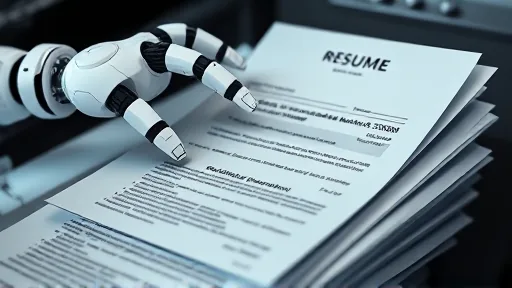
The first decision a machine makes is often invisible. It does not announce itself with a dramatic error or a system failure. It happens when an AI model sorts through hundreds of resumes and flags the ones from recent graduates as lower priority, or when a chatbot handles a routine customer complaint so effectively that the human supervisor never sees it. These are not catastrophic failures. They are quiet, structural shifts in how work gets distributed. And according to recent analysis from Goldman Sachs, these shifts are already visible in the labor market, particularly for those just starting their careers. The pressure is not uniform, nor is it a collapse, but it is measurable, and it is reshaping the pathway that generations of workers have used to climb the professional ladder.
The Structural Shift Beneath the Surface
What makes this moment different from previous waves of automation is not the technology itself, but the speed at which it has integrated into existing workflows. Goldman Sachs released research in early 2026 examining employment trends across more than 800 occupations in developed economies. The findings point to a clear pattern: industries with higher exposure to AI tools have seen weaker job openings growth since 2022. This is not a hypothetical projection about some distant future. It is a description of what has already happened. Call centers, software publishing, management consulting, and advertising services have all seen employment fall below historical trends. The adoption rate of AI across major developed economies has reached roughly 15% to 20%, a threshold that appears to be enough to alter hiring behavior in specific sectors.
The structural cause behind this visible symptom is the nature of the tasks themselves. Entry-level positions have traditionally served as the training ground for professional careers. They are where young workers learn the unspoken rules of an industry, develop judgment through exposure to real cases, and build the networks that sustain their careers for decades. But many of these entry-level tasks are also highly repetitive. They involve data entry, preliminary research, drafting standard documents, scheduling, and basic customer interaction. These are precisely the tasks that AI models have become most proficient at handling. A model does not need to understand the nuances of a client relationship to draft a first-pass report. It just needs to process the available information and produce something usable. The junior analyst who once spent their first year compiling data now faces competition from a system that can do the same work in seconds.
The Uneven Distribution of Pressure
The
Goldman research shows that the effects are not spread evenly across the labor market. Information and communication services, one of the most AI-exposed industries, have experienced slower employment growth across several developed economies since 2022. The clearest weakness appears in call centers, where employment is 39% below trend in the United States, 33% below trend in Canada, and 27% below trend in Germany These numbers tell a story about the accessibility of AI tools. In industries where the technology is mature enough to handle core tasks, the pressure on human employment becomes tangible. The pattern indicates that AI-related employment pressures are already visible where automation tools are available, not just where they are theoretically possible.
This unevenness matters because it reveals the mechanism at work. AI is not replacing entire professions at once. It is nibbling at the edges, taking over the components of a job that are most easily codified. The result is a labor market that looks different depending on where you stand. For a senior consultant with years of client relationships and specialized knowledge, AI is a productivity tool that makes their work faster. For a recent graduate hoping to enter that same field, AI is a barrier that removes the first rung of the ladder. The Harvard Business School and INSEAD study of AI-native startups found that these companies are about 25% smaller than comparable traditional startups They employ roughly 15% fewer entry-level workers and managers, while the share of senior workers is about 20% higher. These companies are not failing. They are operating with leaner teams and maintaining similar valuations to their traditional counterparts.
The Changing Meaning of Experience
The trend toward smaller, more senior-heavy teams raises a fundamental question about how professional experience is acquired. If companies increasingly use AI to handle tasks traditionally assigned to junior employees, then the on-the-job training that once happened organically must happen somewhere else. The young worker who never gets the chance to make mistakes on low-stakes projects may never develop the judgment that comes from those mistakes. The wisdom that senior professionals carry is not just the accumulation of facts. It is the ability to recognize patterns, to know when to trust a gut feeling, and to understand the context that data alone cannot provide. These are skills that develop through practice, and practice requires opportunities.
The Goldman analysis found that AI-related headwinds were strongest among entry-level workers, which aligns with the startup research. This is not a coincidence. It is the logical outcome of a technology that excels at the tasks that juniors have historically performed. The question is whether the pipeline of future senior talent will thin out as a result. If fewer people enter the profession at the bottom, the middle and top will eventually feel the effects. The labor market has a memory, and the decisions made today about who gets hired will shape the available talent pool for decades.
The Counterargument of Cost
Not everyone agrees that AI will reshape the labor market so dramatically. Economist Steve Hanke has argued that replacing workers with AI on a massive scale remains difficult because the technology requires significant amounts of electricity, water, computing power, and physical infrastructure. In his view, the cost of deploying AI at scale will limit how quickly businesses can substitute machines for people. “Businesses will not be firing everybody and replacing them with AI,” he said. This argument provides a necessary counterpoint to the Goldman findings. While the investment bank sees measurable labor-market pressure in certain industries, the economist sees practical constraints that will slow the transition.
The cost argument is not just about the price of hardware and electricity. It is also about the hidden costs of integration. AI systems need to be trained on relevant data, monitored for errors, and updated as conditions change. They require human oversight to handle edge cases and to ensure that outputs meet quality standards. A company that replaces its entire entry-level workforce with AI would still need people to manage the systems, to interpret the outputs, and to handle the exceptions that the models cannot process. The savings from eliminating junior positions may be partially offset by the need for new types of technical and supervisory roles.
The Middle Ground of Augmentation
A recent Bank of America analysis found little evidence that AI has so far caused a broad employment collapse across the U.S. economy Industries with the highest AI exposure have seen employment largely move sideways since ChatGPT launched, while less-exposed industries grew about 2%. Bank of America economist Stephen Juneau offered a useful framing: “AI replaces tasks not occupations This suggests that workers may use AI to complete parts of their jobs faster without eliminating the entire position. The distinction between tasks and occupations is crucial for understanding what is actually happening in the labor market.

The task-based view of AI adoption explains why some companies are hiring alongside their AI investments. Alphabet expects to continue hiring in AI and cloud computing. CSX expects its train and engine workforce to increase modestly. Booz Allen Hamilton plans to accelerate hiring after cutting thousands of jobs last year These companies are not uniformly replacing workers with AI. They are using the technology to change how work gets done, which sometimes means fewer people for certain tasks and more people for others. The labor market is not heading toward a binary outcome where humans are either fully replaced or completely unaffected. It is moving toward a more complex arrangement where the mix of skills changes, and the value of different types of work shifts.
The Path Forward Without a Map
What makes this moment particularly challenging is the absence of a clear roadmap. Previous technological transitions, from the steam engine to the computer, followed patterns that economists could study and policymakers could address. The AI transition is happening faster and with less warning. The entry-level workers who are feeling the pressure today did not choose to enter a labor market shaped by generative models. They prepared for a world that was already changing before they arrived. The companies that are adopting AI are not doing so out of malice. They are responding to competitive pressures and to the genuine productivity gains that the technology offers. The challenge ahead is not to resist the technology but to rebuild the pathways that allow new workers to gain the experience that seniority once guaranteed. Without such pathways, the cost of efficiency may be measured not in quarterly reports but in the hollowing out of an entire generation’s professional future.