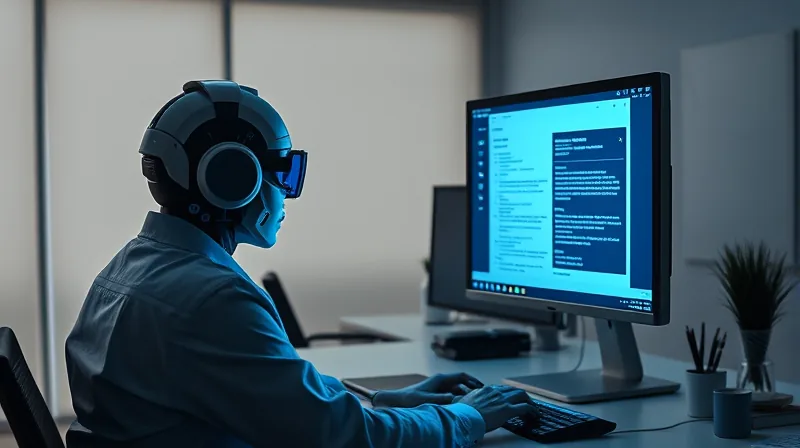
AI hiring bias demands human oversight
The Victorian government’s recent announcement about regulating AI in hiring is not about technology. It is about the quiet, invisible moment when a machine decides you are not worth a human’s time. That moment happens thousands of times a day, and nobody watches it happen. The government’s proposal to require a human to have the “final say” in automated hiring decisions sounds like common sense. But it reveals something deeper: we have allowed systems to make judgments about people without understanding what those judgments actually mean.
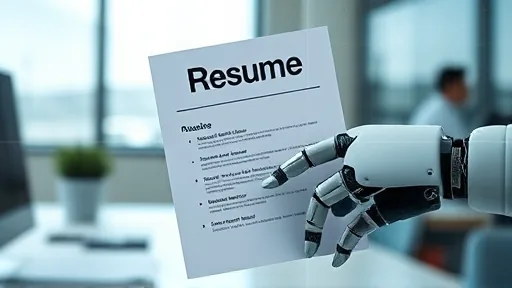
When an AI screens a resume, it does not read. It matches patterns. It looks for keywords, employment gaps, specific university names, and writing styles that correlate with past successful hires. The problem is that these correlations often encode historical biases. A 2023 analysis of three million job applicants in the United States found clear racial discrimination against Black and Asian applicants, according to research cited by the Victorian government Victorian Government. [1] When one software vendor’s algorithm is used by multiple employers, entire demographic groups can be systematically locked out of employment. This is not a future problem. This is happening now.
The gap between what these systems can measure and what actually matters is enormous. An AI can count the years since someone graduated. It cannot assess the resilience gained from a non-linear career path. It can flag a two-year employment gap. It cannot understand that gap was caused by illness, caregiving, or discrimination. Research has highlighted how AI hiring systems may exclude job seekers with disabilities, older workers, women, and those who speak English as a second language European Union. [2] All these groups are protected by discrimination legislation. Yet the tools that filter them out are not designed to recognize them.
The Victorian Equal Opportunity Act was written before AI existed. It clearly applies to discrimination during hiring, but it leaves gaps. For example, it does not currently require employers to make reasonable adjustments for people with disabilities in hiring processes. Adding third-party AI systems makes this even messier. If a software vendor builds a biased algorithm, who is responsible? The developer who wrote the code, or the employer who deployed it? A hiring manager may never notice the bias because the system only presents them with a shortlist of “qualified” candidates. The discrimination happens before any human gets involved.
This is where the international comparison becomes illuminating. The European Union’s AI Act bans AI systems used to infer emotions of a person in the workplace, except for medical or safety reasons European Union. [2] The Victorian government has indicated it plans to do the same. This matters because emotion recognition technology has been scientifically discredited. There is evidence it may discriminate on the basis of race, gender, and disability. Yet some companies still use it to analyze job candidates’ facial expressions or vocal tones during interviews. The technology does not work, but it is being deployed anyway.
New South Wales recently passed its own laws to regulate AI in the workplace Fair Work Commission. The federal Labor government is considering giving the Fair Work Commission a role in AI governance. This patchwork approach is not ideal, but it reflects a vacuum left by the federal government’s abandonment of mandatory guardrails for high-risk AI systems. Those guardrails would have required testing, transparency, and accountability before deployment. Without them, states are stepping in to protect their citizens.
The business groups and some employment lawyers who call this proposal “unnecessary overreach” miss the point. Clear rules are not a burden on employers. They are a shield. When an employer can point to a regulatory framework and say, “We followed the guidelines,” they reduce their own legal risk. The current uncertainty is worse for everyone. No one knows what “reasonable and proportionate measures” means in practice. No one knows how to audit an AI system for bias because there is no standard methodology. The Victorian government’s plan to require regular independent audits is a step toward answering those questions.
The greatest barrier to fair AI hiring is not technical. It is the assumption that technology is neutral. AI systems are built by humans, trained on human data, and deployed in human organizations. They inherit our biases, amplify our blind spots, and operate at a scale that makes individual complaints nearly impossible. Less than a third of Australians view current regulations as sufficient to protect against AI harms Fair Work Commission. That is a clear mandate for action.
The Victorian government’s proposal to reverse the burden of proof is one way to address the evidence problem, ensuring employers must prove their systems are fair rather than forcing job candidates to prove discrimination Currently, if a job candidate suspects they were discriminated against by an AI system, they must gather evidence from inside a black box. That is nearly impossible. Shifting the responsibility to employers to demonstrate their systems are fair would change the incentive structure. Companies would have to audit their tools before using them, not after a complaint is filed.
But even this is not enough. The goal of making AI hiring systems “free from bias and discrimination” may never be achievable. As a product of humans and based on human data, complete neutrality is a fantasy. At a technical level, there is no generally accepted methodology for identifying discrimination by an AI hiring system. The Victorian Equal Opportunity Act should be reviewed to close gaps in protection. We need to focus on preventing harm before it occurs. If an employer is unsure whether an AI hiring system encodes discrimination, it should not be used.
The recognition that the greatest barrier is not technical is uncomfortable, but it forces a necessary reckoning with our own biases It means we cannot engineer our way out of this problem. We cannot build a better algorithm that finally achieves perfect fairness. The barrier is our willingness to admit that we do not fully understand the tools we have built, and our courage to slow down until we do. The Victorian government’s proposal is not about regulating technology. It is about regulating ourselves.