AI Coding Tools Inflate Hospital Costs Without Care
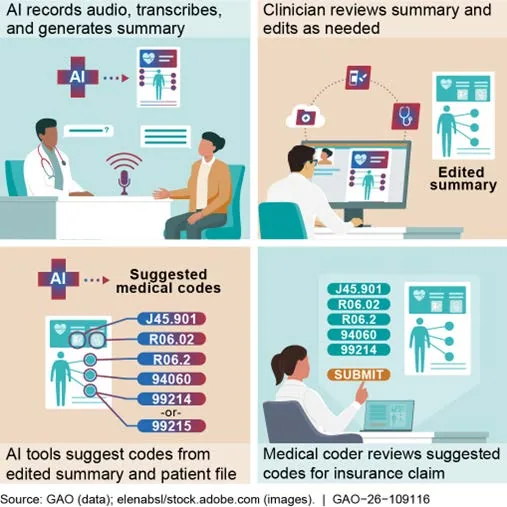
A hospital system buys a coding tool. The pitch is simple: it reads the chart, finds the diagnoses a human might miss, and submits a more complete claim. Two years later, an industry association adds up the invoices and finds $942 million in additional spending that bought no additional care.
The prediction fulfilled itself. Not because anyone lied, but because the tool was asked to find complexity and complexity is what it found.
The Gap Between Documentation and Disease
Blue Cross Blue Shield’s analysis, reported by TechCrunch, found that hospital use of AI tools led to an additional $942 million in healthcare spending over a two-year period. [1] The spending rose. The care did not. The codes changed. The medicine did not.
This is the quiet version of AI deception — not a chatbot inventing a citation, not a deepfake, but a system that optimizes the record of care rather than care itself. The output is technically accurate. The chart really does support the code. What the chart no longer supports is any claim that the code means what it used to mean.
A diagnosis code is a compression. It stands in for a clinical judgment, a treatment plan, a human being in a bed. When software is pointed at the compression rather than the thing compressed, it gets very good at producing codes. That skill looks like insight from a distance. Up close, it is pattern completion on a form.
Who Decides What Counts as Real
Every claim of AI value rests on a standard someone chose. The hospital’s tool was not evaluated on whether patients got better. It was evaluated on whether the documentation was more complete. By that standard, it succeeded. By the standard of the $942 million, it failed.
The two standards never met, because they were never in the same room.
Insurers run their own systems on the other side of the same transaction, flagging claims, predicting risk, denying payment. Both sides now use machines to argue with each other’s machines
Neither side can point to a patient who received something different because of it.
The Honest Version of the Warning
The tool is not deceptive. The deployment is. A system that could reduce administrative friction is instead being used to generate friction, because friction is what the payment model rewards. The deception is not in the software. It is in the claim that using the software settles the question of whether it helps.
What the Number Actually Measures
The $942 million figure is not a measure of AI’s cost. It is a measure of a gap — between what the record says happened and what happened. That gap existed before the software arrived. Coders under pressure have always stretched documentation toward reimbursement. What changed is the scale and the speed, and the fact that the stretching now arrives with the appearance of clinical authority.
A human coder who inflates a chart can be asked why. A model that surfaces a plausible diagnosis cannot be asked anything. It has no reason. It has a probability. And a probability, presented to a billing department, reads like a finding.
This is where the deception lives: not in a false statement, but in a true statement detached from its meaning. The chart says the patient has a complex condition. The chart is not lying. The chart has simply stopped being about the patient.

The Moment the Standard Becomes Visible
The clarity arrives when you stop asking whether the AI is accurate and start asking accurate about what. Accurate about the documentation? Yes. Accurate about the illness? Unknown, and increasingly unasked. The two were once the same question. Software that treats them as separate has quietly separated them.
Once you see the gap, the $942 million stops looking like a malfunction. It looks like the bill for a measurement nobody agreed on. The tool did what it was told. The trouble is that what it was told was never the thing that mattered.
Sources
2. MSN (Original laut Text: The New York Times) — Portal copy