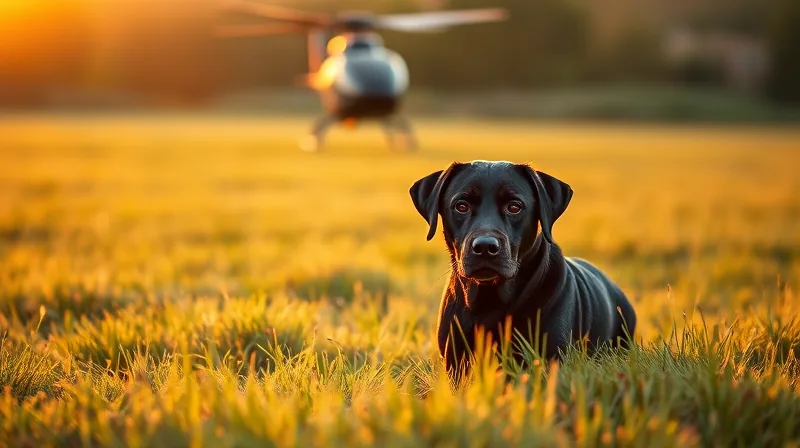
Why Dogs Ignore Low-Flying Aircraft
The Absent Upward Glance
Pam Lunn, a reader from Kenilworth, Warwickshire, UK, notices a consistent gap in canine behavior. She has watched dogs during walks and near roadsides. Not once has she seen a dog raise its head to track a low-flying plane or helicopter. .
Birds That Fear the Ground
Richard Maddra, from Queensbury, West Yorkshire, UK, responds with an observation that deepens the mystery. He describes Rauer Island in Norway, a military site with significant natural importance. Near the shoreline, atop a tall tree, an osprey nest is located. The birds there display significant and prolonged alarm when boats approach the shore. They react similarly when people walk near the tree on foot. In stark contrast, low-flying military helicopters in their airspace provoke not the slightest concern. This behavior from the ospreys surprises anyone expecting a raptor to respond to overhead threats. Maddra notes that his contribution is not an answer. It is a deepening of the original puzzle.
The Dog Who Looked Up

Richard Maddra also describes his most recent dog, named Blu. Blu regularly looked up when a low-flying aircraft passed overhead. He would stand still and turn his head to track the plane or helicopter across the sky. When the aircraft disappeared from sight, he would resume whatever he had been doing before. According to Maddra, Blu was the most intelligent dog he has ever known. The dog taught himself how to open doors. He would let himself out of the veterinary consulting room. Whether Blu’s behavior is typical or exceptional remains an open question, as no systematic study has been conducted on how dogs respond to low-flying aircraft