Four Astronauts, One Stylus, and the Notebook That Beat the Camera
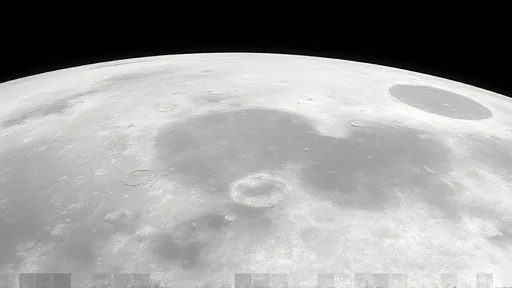
The most valuable science from Artemis II did not come out of a camera. It came out of a stylus, a tablet, and four people trained to describe what they saw before the memory of it faded The mission itself is worth stating plainly: four astronauts — Reid Wiseman, Victor Glover, Christina Koch and Jeremy Hansen — traveled around the moon in April 2026, spending roughly seven hours in close proximity to the lunar surface. This was the first time humans had been anywhere near the moon in more than 50 years. The event was livestreamed almost entirely. But the crew also generated thousands of photographs, handwritten notes and audio recordings that stayed private for six months. On October 7, the science team released three reports and a large data archive, meeting the deadline set at splashdown on April 10 with three days to spare. The release date was not arbitrary: it fell on the 67th anniversary of the Soviet Luna 3 spacecraft taking the first photograph of the moon’s farside.
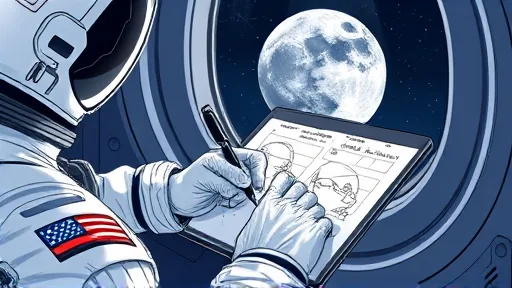
Here is the counterintuitive part. The gorgeous images were not the scientific jackpot, according to the science team. The astronauts’ verbal and written descriptions were. Before launch, the crew had trained extensively in lunar geology and science observation techniques. Field geologist Cindy Evans of NASA Johnson Space Center in Houston, one of the astronauts’ instructors, put it simply: you could hear the training in their voices, because they understood the language of geology. [1] Flight science operations lead Kelsey Young framed the design goal as giving the crew high-tech field notebooks. [1] Any geologist with field experience knows the notebook is a best friend, she noted, because it captures nuance and context in words and sketches that no sensor records on its own.
The crew worked in pairs during the flyby. Two astronauts spoke to mission control, relaying periodic updates to the science team. The other two recorded themselves describing observations and reactions, annotating specially prepared lunar maps uploaded to their tablets during flight. Christina Koch sketched her view of the Orientale basin, detailing differences in texture and layers around the crater. Young called such sketches powerful precisely because they are quick and dirty — the right approach, she said, because you capture nuance before it leaves your brain. The camera waits for perfect conditions. The human hand does not.
The Moon’s Palette Is a Mineral Map
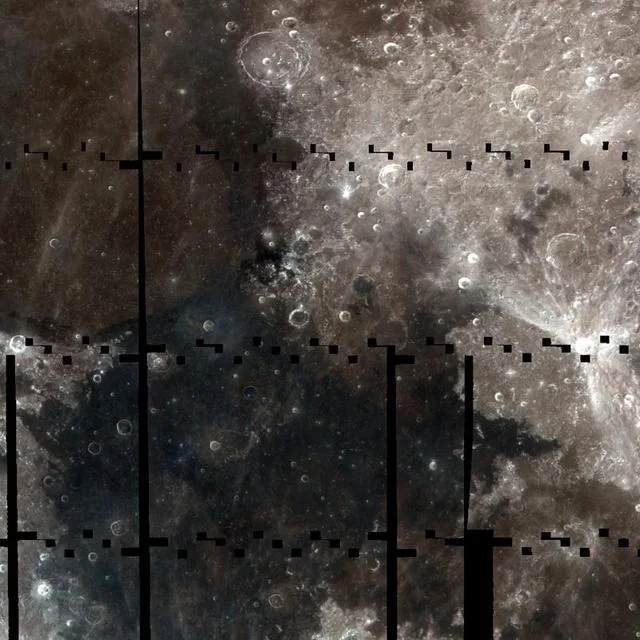
Lunar color is not decoration. It is a chemical signature, and the crew’s eyes turned out to be better at reading it than the cameras were. This matters because hues and brightness on the moon shift with terrain roughness, surface temperature and mineralogy — variables that matter enormously to anyone trying to locate specific materials on the surface.
Planetary scientist Ariel Deutsch of NASA Ames Research Center called the crew’s color work ‘such a cool demonstration of the value of human eyes as scientific sensors. Combining the astronauts’ observations with data going back to the 1970s let scientists connect colors to composition. Blues tracked titanium-rich volcanic rocks. Browns reflected different iron levels. Greens came from glass formed during volcanic eruptions or asteroid impacts. That is a translation table from color to chemistry, and it has a practical use: future astronauts could build terrain maps from it and identify specific materials for sample collection or resource extraction.
The crew also fixated on the terminator — the boundary between lunar light and dark. Along that line, topography reveals itself in a way that flat overhead illumination hides. A mountain casts a shadow that tells you its height. A depression shows its depth. The terminator is the moon’s own relief map, drawn in shadow, and the astronauts watched it change as the viewing angle and light levels shifted.
Planetary scientist Jennifer Heldmann of NASA Ames called it a favorite moment, not only for the data but for the audio. The recordings captured sheer joy and amazement, she said — the crew was blown away by what they were seeing while simultaneously taking relevant science observations. The most affecting moments, though, were the ones where language failed. When Victor Glover and Christina Koch watched Earth rise from behind the moon, Glover’s tablet recorded him saying he guessed he should be describing it, but, in his words, good grief. Koch agreed it was impossible. Her formulation: you might be able to fly a spaceship and talk, but if you can see that and talk, you just ain’t right.
Pinpricks of
Light on a Dark Moon
The 54-minute solar eclipse did something else. It turned the crew into a meteor-detection network. Against the darkened lunar surface, the astronauts could see impact flashes — brief pinpricks of light where bits of rock struck the moon. Jeremy Hansen described it in his recorded observations as a pinpoint of light, not like a meteor, nothing else visible, just a bloop.
Before launch, the science team had ranked impact flashes at the top of its priority list. Seeing them would let scientists estimate how often the moon gets struck and how large the incoming rocks are — knowledge that directly bears on protecting future crews who will walk the surface or build a long-term base. Nobody knew whether the astronauts would see any at all. They saw five.
Heldmann described the flashes as pinpricks of light lasting less than a second, with no color associated with the flash. Comparing the flash rate per minute against theoretical models of lunar impacts, scientists determined the incoming rocks were tiny: about 8.5 grams and just over 4.5 centimeters across, roughly the size of a golf ball. With these observations, Heldmann said, the Artemis II crew set a record for the smallest meteorites ever optically observed to impact the moon. The craters left behind are probably less than a meter wide — too small for the cameras on NASA’s Lunar Reconnaissance Orbiter to spot from orbit.
That result is a safety clearance with numbers attached. Artemis IV, planned for 2028, is supposed to put astronauts on the lunar surface for the first time since Apollo, as a two-week mission using landers from Blue Origin or SpaceX, and the probability of a dangerous impact during such a mission is less than 1 in 10 million, Heldmann said. The probability of a dangerous impact during such a mission is less than 1 in 10 million, Heldmann said. For a larger moon base meant to last a decade, the probability is higher but still low. Earth scientist Sara Schmidt of NASA Johnson Space Center noted that after six months of hard work, the data release is enabling science to happen for the next 60 years, if not more. The archive is open to anyone who wants to study it. The moon, it turns out, was never short of information. It was short of trained eyes willing to write down what they saw — and Artemis II supplied four of them.