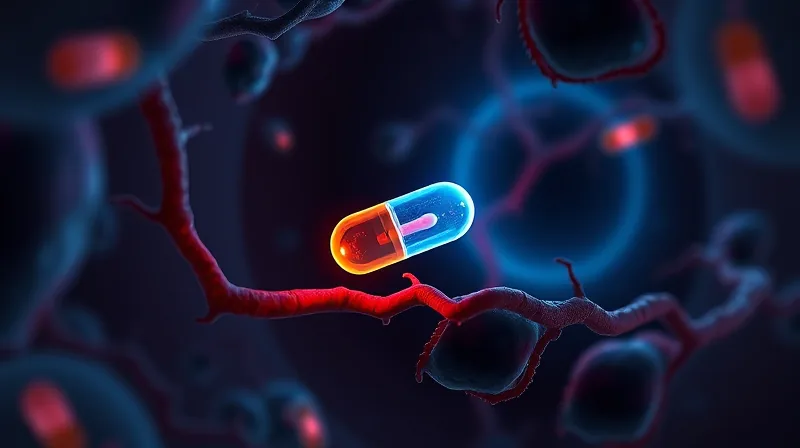
Six ways to get drugs where they need to go
The Gap Between Potency and Arrival
A drug can be perfect in the test tube and useless in the body. That is the uncomfortable arithmetic at the center of a special collection published by Nature The best medicines go exactly where they are needed in the body — and nowhere else
The logic is almost painfully simple. For a drug to have a positive effect, it must reach its target. Even the most potent agent will be rendered useless if the biochemical headwinds prove too great — or if a person simply chooses not to take their medicine. Two failure modes, one outcome: the molecule never arrives.
This is where an established model of drug development breaks against its own data. For decades, the pipeline optimized for binding affinity, for potency, for the elegant lock-and-key fit. Yet a compound that binds beautifully in a dish can still fail in a patient — not because the chemistry was wrong, but because the journey was. The body is not a beaker. It is a series of barriers, and the drug must cross every one.
A Map of Where the Field Is Heading
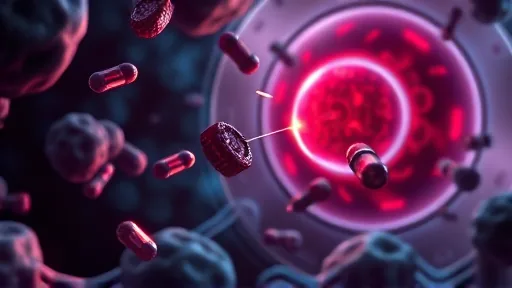
Six distinct lines of work could change how drugs are delivered. Each attacks a different segment of the same journey. Together they form a map of where the field is heading.
The first is the blood-brain barrier. Drug-delivering particles are being designed to breach it — a structure that has frustrated neurologists for as long as they have tried to treat the brain directly. The second is the nasal route. Vaccines delivered through the nose could stop pandemics before they begin, intercepting a pathogen at the point of entry rather than waiting for it to spread.
The third is bacterial. Bacteria are being recruited as couriers, smuggling drugs into cancers — using the tumor’s own microenvironment as the delivery address. The fourth is behavioral. Medicines do no good if people do not take them, and that simple fact has become a research problem in its own right. The fifth pushes beneath the cell. Drug delivery is getting subcellular, targeting compartments inside the cell rather than the cell as a whole. The sixth stretches time. Drugs are being engineered to last much longer — dose once, treat forever.
These are not variations on a single theme. They are six answers to the same question: how does a molecule get from the outside to the exact place it must act?
Where Biology Meets Engineering
The bacterial courier work sits at an intersection that neither oncology nor microbiology would have reached alone. Bacteria already know how to navigate the body. They already know how to find a tumor. The engineering problem is not how to build a vehicle from scratch — it is how to ride one that evolution already built.
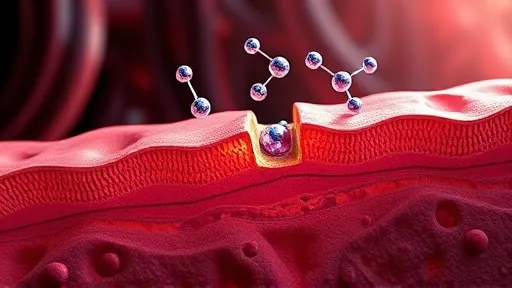
That intersection opens questions the field has not yet answered. If bacteria can be directed into cancers, other vehicles may follow. If particles can breach the blood-brain barrier, other barriers may become reachable. If a single dose can last, the entire schedule of treatment changes?
The special collection was produced with financial support from Taiho Oncology, Inc., which had no role in editorial decisions.
What remains is the gap between the six advances and the clinic. Each is a path, not a destination. A drug that arrives exactly where it is needed, and nowhere else, is still the hardest part of the journey.
Sources
1. DOI: 10.1038/d41586-026-02653-8
2. Nature