Serology Standard Pandemics Forgot
When Biology Learned to Compare Itself
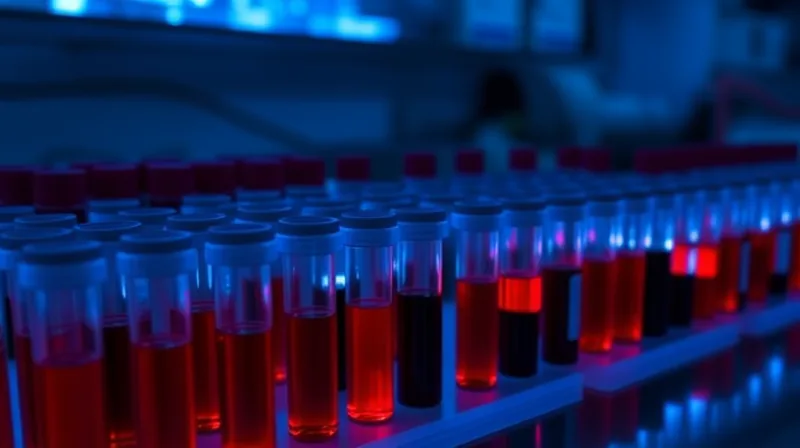
Polina Brangel, a research-and-development data-innovation lead at the Coalition for Epidemic Preparedness Innovations (CEPI), headquartered in Oslo, encountered this problem at its sharpest during the COVID-19 pandemic. [1] As serology technical officer at the World Health Organization, she was trying to understand the immune response elicited by the virus. The method was standard sero-epidemiology: draw blood from a small cohort, look at immune-response antibodies, work out how many individuals had been infected, extrapolate to derive prevalence in the population. The results, however, refused to hold still. Estimated infection numbers swung from almost zero to around 90% between different countries. [1] The tests were all accurate. The set-ups were not comparable.
This is a distinction that reads like trivia and is not. An accurate test tells you whether a specific person has antibodies. A comparable test tells you what proportion of a population has them. The first is a clinical tool. The second is an instrument of governance — the thing that tells a health ministry whether to open schools, close borders, or order more vaccines. Without comparability, a country can be simultaneously correct and blind.
Before this standard, each laboratory chose its own assay and the results could not be compared. After it, a measurement taken in one country could be set beside a measurement taken in another. Sound, strong science, she notes, is not enough.
The parallel here is not to any other scientific field but to the same problem in a different guise. CEPI’s methodological programme on Disease X — the WHO’s term, coined in its 2018 Research & Development Blueprint for Epidemics, for a hypothetical pathogen that infects humans — faces the identical challenge at the level of viral families. The WHO maintains a list of priority pathogens deemed likely to cause a pandemic and lacking countermeasures such as vaccines, diagnostics and therapeutics. That list includes the viruses that cause Ebola, Lassa fever and Rift Valley fever. CEPI works with the 25 known families of virus that can infect humans, most of which come from animals. These include filoviruses (the family containing Ebola), coronaviruses (such as SARS-CoV-2, which causes COVID-19) and orthoflaviviruses (including those that cause dengue, yellow fever and Zika). Developing vaccines for all 25 is not possible. Prioritization is forced. And prioritization, like serology, only works if the underlying data can be compared across sources.
The Engine That Reads Fragments
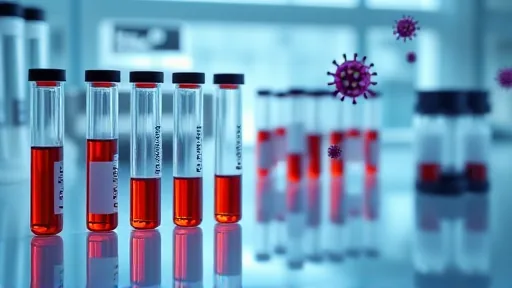
The second collaboration is more speculative in form but concrete in ambition. CEPI’s Pandemic Preparedness Engine for Disease X is conceived as a collaborative scientific tool that will integrate fragmented knowledge bases — information on genomic sequences from various sources — and enable researchers around the world to build vaccines and medical interventions. The design metaphor is deliberately familiar: it will work a bit like a chatbot. The AI agent could suggest how to create or tweak specific molecules (antigens) to trigger the correct immune response.
The first is speed, which she calls extremely important in a pandemic response. [1] The second is the ability to integrate data from disparate sources — the same harmonization problem that serology faced, now applied to genomic sequences rather than antibody titres. [2] The third is federated access, which enables learning from source information even when it is retained by the owner, whether that owner is a government agency or a commercial company. [2] The method behind the prioritization is itself a form of prediction under uncertainty. Pathogens must mutate to jump from animals to humans. Computer simulations are used to predict which ones will undergo mutation. The most likely candidates are fed into AI tools, which enables researchers to start developing and testing vaccine sequences and designing clinical trials. This is not surveillance in the traditional public-health sense — it is not watching for outbreaks that have already begun.
Brangel’s own trajectory illustrates how the two problems — comparability and prediction — converged in one career. She began studying biotechnology engineering at Ben-Gurion University of the Negev in Israel in 2007, graduating from her combined programme with both bachelor’s and master’s degrees in 2012. Later that year, she began her PhD in bioengineering and biomedical engineering at Imperial College London. Her role was originally focused on biosensor development for oncology diagnostics, and she became involved in developing rapid diagnostic (lateral flow) tests to detect various cancer biomarkers. When Ebola broke out in West Africa in 2014 and the WHO called for rapid, simple and accurate tests for the disease, she realized that she had the right tools but was using them for a different purpose. [2] The decision to repurpose her work to tackle Ebola led to a career in pandemic preparedness. She joined CEPI in 2023. She has developed tests to understand the immunological biomarkers found in people who have recovered from Ebola, has studied the immune response elicited by COVID-19, and now focuses on protecting people from Disease X.
The through-line is not the technology. Lateral flow tests, serology assays, AI models — these are different instruments. The through-line is the problem of making one measurement speak to another. A cancer biomarker and an Ebola antibody are not the same thing. But the engineering challenge of building a test that a health worker in a low-resource setting can use, and whose result a ministry can trust, is the same challenge in both cases.
Sources