Scientists turn hookworms into living medicine factories
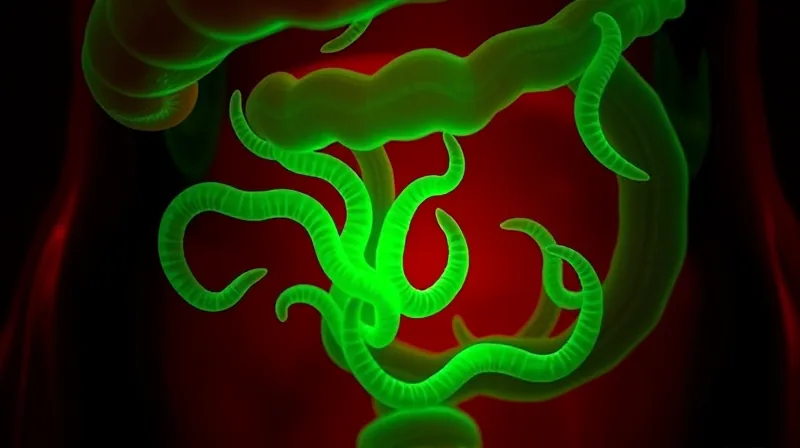
In a future shaped by ongoing research, chronic disease treatment could look radically different. Instead of daily pills or injections, patients might carry their own internal pharmacy — a population of genetically modified hookworms living in the gut, producing therapeutic proteins on demand.
Makedonka Mitreva and her team at Washington University School of Medicine in St. Louis have taken a significant step toward that vision.
On June 3, in the journal Nature Communications, Mitreva’s group reported that they genetically modified hookworms — parasites that live in the human gut — to produce a human antibody against tetrodotoxin, a deadly neurotoxin. [1] The worms produced the antibody, released it into the bloodstream of their host, and the antibody remained functional.
This is not a finished product and is not ready for human testing, but it provides proof that the concept is feasible.
What The World Would Look Like Without This Discovery
Consider the current reality of chronic disease treatment
Currently, chronic disease treatment requires daily pills, scheduled injections, constant reminders, and careful management of medication supplies, side effects, and costs.
For millions of people with chronic conditions, this is a daily burden that shapes every decision — from travel plans to social activities — with the constant risk of consequences from missed doses.
The burden is both practical and psychological, as each pill or injection serves as a reminder of the condition and the dependence on external treatment.
Mitreva asked a different question: what if we could carry our pharmacy inside us?
The Question That Started Everything
Mitreva stated: ‘What if every person at risk of suffering from chronic disease carries their own pharmacy inside of them?’ [1]
The question challenges conventional assumptions about drug delivery.
Mitreva, a molecular geneticist who studies parasites, recognized that hookworms already function as living pharmacies — they produce and secrete hundreds of molecules into their host’s bloodstream and can survive for years in the human body.
The missing element was control: instead of letting the hookworm decide what to secrete, researchers aimed to direct it to produce specific therapeutic molecules
The Journey From Parasite To Pharmacy
Achieving this required years of work, multiple failed attempts, and technical breakthroughs.
The first challenge was the hookworm’s thick outer layer, called a cuticle, which protects it from digestive juices and immune attacks but also blocks genetic engineering attempts.
Adult hookworms are nearly impossible to modify because the cuticle blocks most approaches, including direct DNA injection and virus-mediated delivery.
The team then targeted the eggs instead
Hookworm eggs lack the protective cuticle, making them vulnerable and accessible for manipulation before they develop into adults.
The technique, called electroporation, involves mixing eggs with DNA and applying an electrical pulse that creates temporary holes in cell membranes, allowing the DNA to enter and integrate.
Applying electroporation to hookworm eggs required careful optimization of voltage, timing, and DNA concentration to avoid killing the eggs while ensuring DNA entry.
After months of trial and error, the team found the optimal conditions to reliably insert new genes into hookworm eggs and have the worms carry those genes through their life cycle.
Finding The Right Place To Put The New Gene
Getting the DNA inside the egg was only half the battle; the researchers also needed to place it correctly in the hookworm’s genome.
CRISPR/Cas9, often described as molecular scissors, can cut DNA at specific locations to insert new genes with precision. However, hookworms have complex genomes with thousands of active genes, and cutting in the wrong place could kill the worm or disrupt its functions.
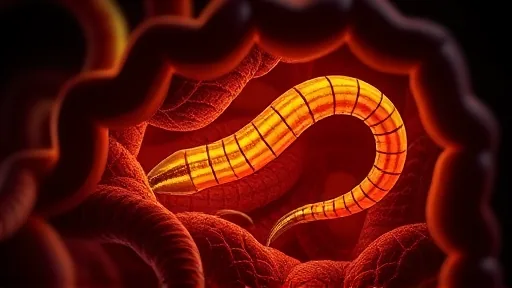
The team analyzed the hookworm’s entire genetic code — all 18,776 genes — to find a ‘safe harbor’ location where a new gene could be inserted without causing problems. They identified a region called GSH2, which sits next to genes active throughout the worm’s life but is itself unused.
Inside this safe harbor, the researchers inserted a synthetic gene carrying instructions for making a human antibody called s16-HuScFv, which targets tetrodotoxin, a deadly neurotoxin produced by pufferfish.
Why A Pufferfish Toxin?
The researchers chose tetrodotoxin for two reasons.
First, tetrodotoxin is extremely deadly, blocking sodium channels in nerve cells and causing paralysis and death with no commercial antidote available. This makes it an ideal target for a proof-of-concept study.
Second, the funding came from DARPA, the U.S. Defense Advanced Research Agency, which is interested in tetrodotoxin as a potential biochemical weapon and seeks countermeasures. [2].
Testing The Engineered Worms
To test whether the engineered worms could produce and secrete the antibody, the researchers infected hamsters with the modified worms.
Hamsters have immune systems similar to humans, can host hookworm infections, and are practical for laboratory experiments.
The team divided the hamsters into two groups: one received engineered hookworms, the other received unmodified hookworms. Both groups were monitored for several weeks.
The engineered worms survived and thrived in the hamsters’ guts, and blood tests confirmed the presence of antibody fragments, indicating the worms were producing and releasing the human antibody into the bloodstream.
The researchers then tested whether the antibody could actually neutralize tetrodotoxin. They did this in a test tube, mixing blood samples from the hamsters with the toxin. The blood from hamsters carrying engineered worms neutralized about 20 percent of the toxin. That is not enough to save someone from a lethal dose, but it is proof that the concept works.
The Limits Of The Current Approach
Cornelis Hokke, a parasitic infectious diseases researcher at Leiden University Medical Center in the Netherlands, was not involved in the study but offered a measured assessment. He pointed out that 20 percent neutralization is not enough for a toxin as deadly as tetrodotoxin. “Would the antibody then have had sufficient neutralizing capacity to save the hamster?” he asked. “The answer there might be no.” [3]
This is a fair criticism. For a toxin that causes death at extremely low doses, even a small amount of unneutralized toxin can be fatal. The engineered worms would need to produce much higher levels of antibody to provide real protection.
But the goal of this study was not to create a working antidote. The goal was to prove that hookworms can be engineered to produce and secrete human therapeutic proteins. By that measure, the study was a success.
The Bigger Picture: What This Means For Medicine
Elissa Hallem, a parasitologist at UCLA who was not involved in the work, put it in perspective. “The fact that here the team could introduce DNA to the hookworm eggs raises the possibility that you could use this technique for a wide variety of parasitic worms,” she said. “And that would be huge.” [4]
Why would it be huge? Because understanding parasites has been limited by the difficulty of manipulating their genes. There are thousands of species of parasitic worms, and they cause devastating diseases in humans and animals. But scientists have been unable to study them in detail because they cannot easily modify their DNA.
If the technique developed by Mitreva’s team can be applied to other parasitic worms, it would open up an entire field of research. Scientists could study how parasites interact with their hosts. They could identify the molecules that parasites use to suppress the immune system. They could develop new treatments for parasitic infections.
And, of course, they could turn other parasites into living pharmacies.
The Natural Advantages Of Hookworms
Hookworms have several features that make them ideal for this purpose.
First, they are long-lived. A hookworm infection can last for years inside a human host. This means that a single dose of engineered worms could provide continuous treatment for an extended period.
Second, they are stealthy. Hookworms have evolved to avoid triggering a strong immune response. They secrete molecules that dampen inflammation and prevent the host from attacking them. This is the same property that makes them useful for treating autoimmune diseases. Doctors already use controlled hookworm infections to treat conditions like celiac disease and ulcerative colitis.
Third, they are efficient secretors. Hookworms naturally pump hundreds of different molecules into their host’s bloodstream. They have a sophisticated system for exporting proteins from their bodies. By adding a new gene to this system, the researchers can piggyback on an existing infrastructure that has been refined over millions of years of evolution.
What Still Needs To Happen
Before hookworms can become internal pharmacies for humans, several problems need to be solved.
The first problem is dosage. The current worms produce relatively small amounts of antibody. For many therapeutic applications, much higher levels would be needed. Mitreva says her team is working on optimizing the worms to produce more of the desired protein. This might involve using stronger genetic promoters or inserting multiple copies of the gene.
The second problem is consistency. The engineered worms need to pass their new genes down to their offspring reliably. If the gene is lost after a few generations, the treatment would stop working. The researchers need to create a stable line of worms that always carry the therapeutic gene.
The third problem is safety. Hookworms are parasites. Even though they are generally harmless in small numbers, they can cause problems in some people. The researchers need to ensure that the engineered worms do not cause unexpected side effects. They also need to develop methods for removing the worms if the treatment needs to be stopped.
The fourth problem is regulation. Using living organisms as drug delivery systems raises questions that current regulatory frameworks are not designed to answer. How do you approve a treatment that involves infecting a patient with a genetically modified parasite? How do you monitor its long-term effects? How do you ensure quality control when each batch of worms is a living, reproducing population?
These are not insurmountable problems, but they will take time to resolve.
Parallel Developments In The Field
Mitreva’s team is not the only group working on using living organisms for drug delivery. Several other approaches are being explored.
One approach uses bacteria. Scientists have engineered probiotic bacteria to produce therapeutic proteins in the gut. These bacteria can be taken as pills and establish temporary colonies in the digestive tract. The approach is less invasive than hookworms but also less durable, since the bacteria are eventually eliminated.
Another approach uses viruses. Scientists have engineered harmless viruses to deliver therapeutic genes to specific cells in the body. This is the basis of gene therapy, which is already being used to treat certain genetic diseases. The advantage of viruses is that they can target specific tissues. The disadvantage is that they often trigger immune responses that limit their effectiveness.
A third approach uses synthetic biology. Scientists are building artificial cells that can produce and release therapeutic proteins on demand. These cells are designed to be safe and controllable, but they are still in the early stages of development.
Each approach has its strengths and weaknesses. Hookworms offer the advantage of long-term stability and natural integration with the host’s body. They are not a perfect solution, but they are a promising one.
What We Will Laugh About In Fifty Years
Let me close with a prediction.
Fifty years from now, when internal pharmacies are as common as pills are today, people will look back at our current approach to chronic disease treatment and laugh.
They will laugh at the idea of taking pills every day for the rest of your life. They will laugh at the idea of injecting yourself with insulin or other biologics. They will laugh at the idea that we accepted these burdens as normal.
But they will also laugh at something else: they will laugh at how long it took us to realize that the solution was already inside us.
We spent decades trying to build better drug delivery systems. We developed nanoparticles, implants, patches, and pumps. We spent billions of dollars on engineering solutions that were complicated, expensive, and fragile.
Meanwhile, hookworms were already doing exactly what we needed. They were already living inside humans. They were already secreting molecules into our bloodstream. They were already keeping their hosts healthy. All we had to do was ask them to make something different.
The thing that will seem most obvious in hindsight is this: evolution had already solved the problem. We just needed to read the answer.
Mitreva put it this way: “The hookworm has spent millions of years perfecting how to assure long-term survival inside a human host and how to get molecules out of its body and into ours.”
What if we could add one more molecule to the roughly 1,000 things the worm already secretes? That was the question. And now we have the answer.
It is not a finished answer. It is not a perfect answer. But it is the first real step toward a future where the pharmacy lives inside you.
And that is something worth laughing about — in the best possible way.
Sources
1. Washington University School of Medicine in St. Louis
2. DARPA
3. Leiden University Medical Center
4. UCLA