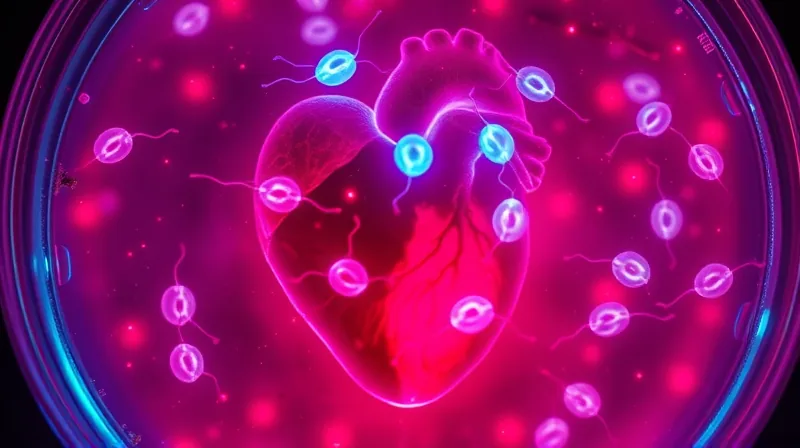
Regenerative Medicine From Lab Curiosity to Clinical Practice
Why a Salamander Heals and a Human Does Not
For most of medical history, damage to human tissue was treated as permanent. [1] A heart muscle scarred by infarction stayed scarred. Cartilage worn away in a knee did not grow back. Doctors could manage symptoms, sometimes replace whole organs, but they could not persuade the body to reconstruct what disease or injury had destroyed. This was not a gap in effort; it was a gap in understanding. The body’s own repair crews — stem cells and the signals that direct them — were poorly mapped, and the tools to intervene were crude. That unresolved problem sat at the center of medicine for decades: why can a salamander regrow a limb while a human cannot regrow a fingertip, and can that difference be changed?
The answer began to arrive through two converging approaches, both of which now have named leaders and published trial results. The first is cell therapy, in which specific cell types are transferred into a patient to treat or prevent disease. The second is tissue engineering, which uses various methods to grow or repair damaged human tissues. Neither is a single technique; each is a family of strategies. But together they define a field that has moved, over roughly thirty years, from laboratory curiosity toward clinical practice. The shift is not merely technical. It is conceptual: the body is no longer only something to be repaired from the outside, but something that can be supplied with the right cells or the right scaffold and then allowed to finish the job itself.
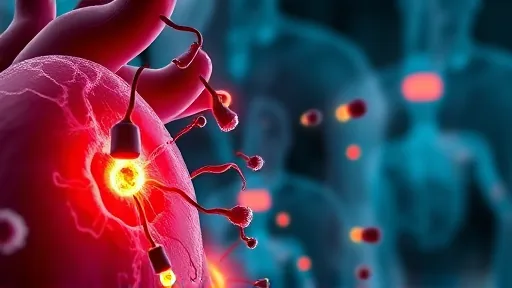
What makes this more than a slogan is the speed of accumulation. Cell therapy and tissue engineering have driven rapid advances, and regenerative medicine now spans disciplines that once barely spoke to one another: developmental biology, immunology, materials science, and surgery. [1] A developmental biologist studying how a stem cell decides its fate and a materials engineer designing a biodegradable matrix share one question: what does a cell need to hear, and in what order, to build tissue that lasts? That question is now answerable in principle, though not yet in every tissue. Whether it is answerable in practice, at scale, inside a human body, is the work of this decade.
The Limits That Define the Frontier
Knowing which cells to use is not the same as knowing how to keep them alive, on target, and functional. These are the technical limits that determine what cannot yet be known. A transferred cell must survive the journey, evade immune rejection, integrate with existing tissue, and behave as the surrounding cells expect. Each of those steps is a place where the biology can fail without warning. Tissue engineering faces a parallel set of constraints: a scaffold must be strong enough to bear load, porous enough to let cells and blood vessels in, and degradable enough to vanish once its job is done. It must do all three at once, inside a living body, without triggering a harmful immune response.
The field’s own history shows why progress has been uneven across tissues and diseases. [1] Early enthusiasm often outran the evidence. Cells that looked promising in a dish did not always help in an animal model, and results in animals did not always carry over to people. The reasons are now better understood: the local tissue environment matters, the immune system has a long memory, and a single cell type is rarely enough to rebuild complex tissue. These are hard problems rather than mysteries. They mark the boundary of what can currently be claimed with confidence, and they explain why regenerative medicine has advanced rapidly in some areas while remaining experimental in others.
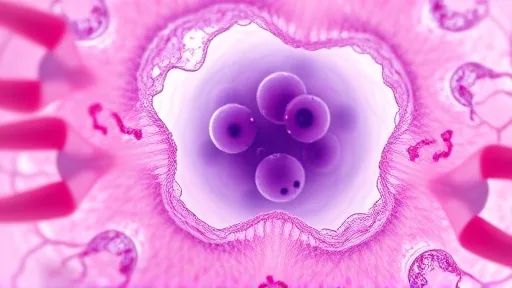
Because of these limits, the field has learned to be more precise about what it promises patients. The goal is not to regenerate every tissue. It is to identify the specific injuries and diseases where the biology is tractable: where the right cells exist, the right signals can be delivered, and the body will cooperate. That selectivity is a sign of maturity rather than retreat. It reflects a field that has replaced broad hope with testable questions, and it is why the next round of advances will likely come from narrower, better-defined targets rather than from one universal cure.
Sources
1. Nature (DOI: 10.1038/d41586-026-02854-1) — Quote source (original article)
Mentioned organisations (context, not sources)
- A Field That Learned to Rebuild Itself — Organisation (homepage)