Quantum Computing Incs Strategic Manufacturing Pivot
The Accidental Discovery That Reshaped a Company
Quantum Computing Inc. (QCi) did not start as a manufacturer. It began as a technology developer, a company that designed quantum systems and hoped others would build them. But that changed when QCi acquired Luminar Semiconductor and NuCrypt. These were not random purchases. Luminar Semiconductor brought thin-film lithium niobate expertise. NuCrypt contributed quantum photonics know-how. The combination created something the company had not planned for: the ability to make its own hardware.
Quantum Computing Inc. ended the first quarter of 2026 with a contract backlog of approximately $16 million, according to its financial filings That number is important. It means customers had already committed to buying products QCi had not yet made at scale. The company also held a strong cash position. This gave it room to invest in manufacturing without immediate pressure to sell. Before the acquisitions, QCi could not have fulfilled a $16 million backlog. After the acquisitions, it could.
Fab 1, the company’s thin-film lithium niobate foundry in Arizona, began ramping up small-batch manufacturing throughout the second quarter. Thin-film lithium niobate is a material used to build photonic circuits that manipulate light at the quantum level. It is not a standard silicon chip. It requires specialized fabrication processes. Fab 1 started generating foundry revenues through prototype chip fabrication. At the same time, engineers refined manufacturing processes and improved production recipes. This is the slow, unglamorous work of turning a laboratory invention into something a machine can repeat thousands of times.
The most significant near-term product milestone was the Dirac optimization machine. This system entered internal testing during the second quarter. Engineers reported encouraging technical results on a regular basis. The Dirac machine is not a general-purpose quantum computer. It is an optimization machine, designed to solve specific problems like scheduling, routing, or portfolio optimization. Before Fab 1 existed, QCi could not have built a prototype. After Fab 1, it could.
The Counterargument That Has Not Yet Been Refuted
QCi trades at a forward 12-month price-to-sales ratio of 65.33, compared to an industry median of 4.72, as reported by financial data providers. That is a gap of nearly 14 times. Investors are paying 65 dollars for every dollar of sales QCi expects to make in the next year. For the industry median, they pay less than 5 dollars. This valuation assumes QCi will grow far faster than its peers. But growth is not guaranteed.
Over the past year, QCi’s shares plunged 21.6%. The industry declined only 4.6% over the same period. The stock is falling faster than the sector. This suggests investors are not convinced the manufacturing pivot will succeed. A company that trades at 65 times sales while its stock drops 21% faces a credibility problem. The market is saying: “Show us the revenue.”
Manufacturing quantum hardware at commercial scale is extraordinarily difficult Rigetti Computing, a peer, has its own Fab 1 facility but does not plan to expand it, believing the existing fab is sufficient to reach the quantum advantage milestone. QCi is planning Fab 2, a large-scale manufacturing facility viewed as the foundation of its long-term strategy. Building a new fab is expensive, slow, and risky; if Fab 2 faces delays or cost overruns, QCi’s entire strategy collapses.
D-Wave Quantum Inc. announced a forthcoming gate-model quantum computing simulator, expected to be the first designed for error-aware programming, while continuing to advance its annealing platform through Advantage2 and the Leap cloud service. QCi is building a foundry, not a simulator. D-Wave sells access through the cloud; QCi sells chips. Which model wins is not yet settled.
The Institution Already Working on the Next Stage
Rigetti remains on track to deliver a 150-plus-qubit system with approximately 99.7% median two-qubit fidelity by the end of 2026, according to the company’s public roadmap. Two-qubit fidelity measures how accurately a quantum gate operates on two qubits at once. 99.7% is very high. Most current systems operate below 99%. Rigetti’s chiplet architecture serves as the foundation of its scaling strategy. Chiplets are small, interconnected chips that can be combined to build larger systems. This is similar to how modern computer processors use multiple cores. Rigetti does not need a new fab to do this. Its existing Fab 1 can produce chiplets at the required volume.
The 150-qubit system approaches the threshold where quantum computers might outperform classical computers on specific tasks. Rigetti has not claimed it will reach quantum advantage but has set a clear technical target supported by existing infrastructure, reducing execution risk.
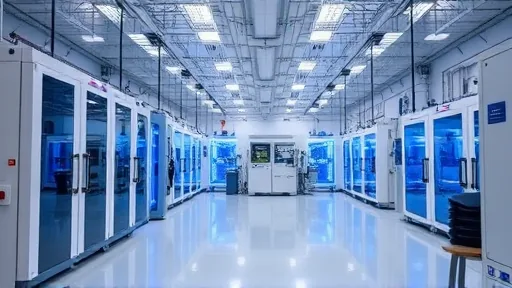
QCi’s Fab 2 plan represents a different bet: proposed, not built, and the foundation of its long-term strategy to manufacture quantum hardware at commercial scale. The company has not announced a timeline, budget, or location beyond the general Arizona area. Whether the second quarter of 2026 advanced Fab 2 is not yet public.
The next stage for QCi is proving that Fab 1 can generate consistent, profitable revenue from prototype chip fabrication. If Fab 1 succeeds, Fab 2 becomes plausible; if Fab 1 struggles, Fab 2 becomes a liability. The $16 million backlog tests whether QCi can deliver on those contracts, determining whether the 65-times-sales valuation is a bargain or a warning.