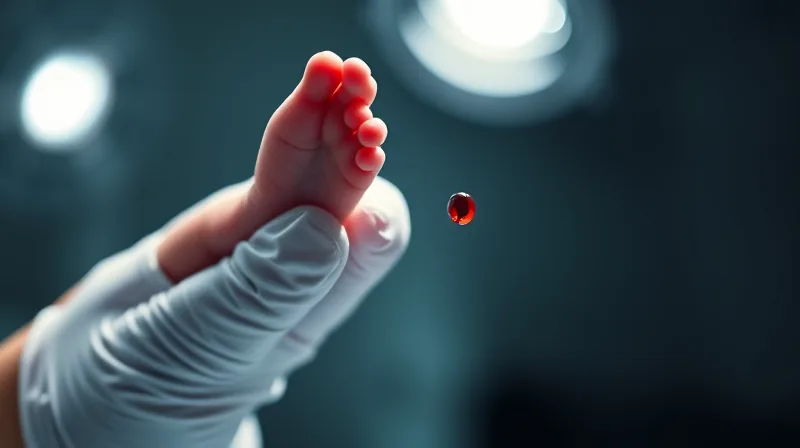
Newborn Genetic Screening Transforms Pediatric Medicine
At first glance, two-year-old Giselle Ghattas looks like any other spirited child. [1] She dives headfirst down playground slides, climbs onto anything within reach, and greets the world with fearless curiosity. Her parents, Justin Ghattas and Scarlett Morwood, describe her as funny and affectionate - a lively toddler in every sense. Yet beneath that cheerful exterior runs a rare genetic disorder that threatens to send her immune system into overdrive at any moment. Giselle is part of a growing wave of children whose lives are being transformed by a controversial approach: screening newborns for genetic disorders long before symptoms ever appear.
The established assumption in medicine has long been that genetic testing belongs in specific contexts - prenatal diagnosis, targeted testing after symptoms emerge, or family history investigations. Whole-genome screening of healthy newborns was considered impractical, expensive, and ethically fraught. The idea of scanning every baby’s complete DNA for hundreds of potential disorders challenged the medical establishment’s cautious approach. But Giselle’s case, and thousands like hers, are forcing a fundamental rethink of when and how we should look for genetic trouble.
What makes Giselle’s story remarkable is that her disorder was caught not because she showed symptoms, but because her parents enrolled her in a research study screening for genetic disorders. The study represents a seismic shift in pediatric medicine: instead of waiting for illness to strike, doctors are now hunting for genetic risks in the first days of life. [1] This proactive approach turns conventional medicine on its head - rather than treating problems as they appear, it aims to identify and prepare for them years in advance.
From Reaction to Prevention in One Generation
The traditional model of pediatric genetic medicine followed a predictable pattern: a child develops unusual symptoms, parents seek answers, doctors run targeted tests, and eventually a diagnosis emerges - often after years of uncertainty. This reactive approach meant that conditions like Giselle’s immune disorder went undetected until they caused real damage. The medical system was built around responding to illness, not anticipating it. Families often described the diagnostic journey as a frustrating maze of specialists, tests, and dead ends.
Genomic newborn screening flips this timeline dramatically. Instead of testing only when problems appear, researchers now propose scanning every baby’s complete genetic code at birth. This means disorders like Giselle’s could be identified in the first days of life, giving families and doctors a crucial head start. The technology to sequence a human genome has become fast enough and affordable enough that population-wide screening is no longer science fiction - it is a logistical possibility being tested right now.
Massive genomic newborn-screening studies are currently underway across the globe. These ambitious projects aim to determine whether screening every newborn’s genome is scalable, feasible, and ultimately beneficial. The scale of these efforts is unprecedented in genetic medicine - never before have researchers attempted to sequence and analyze complete genomes for entire populations of healthy infants. The results of these studies will determine whether genomic screening becomes standard practice or remains a research curiosity.
When the Data Refuses to Fit the Model
Giselle’s case illustrates the central tension: she appears perfectly healthy by every external measure, yet her genome carries a disorder that could suddenly and dangerously activate her immune system. The disconnect between her visible health and her genetic risk challenges the assumption that screening should only target conditions with visible early symptoms. If Giselle had not been enrolled in the study, her parents would have had no warning before a potential medical crisis.
The ethical questions surrounding this approach are equally challenging. Critics worry about the psychological impact on parents who learn their healthy baby carries a serious genetic disorder - information that might cause anxiety without offering immediate medical benefit. Others raise concerns about privacy, noting that a newborn’s genetic data contains information not just about the child, but about their entire biological family. These concerns do not have easy answers within the existing framework of medical ethics, which was developed for testing sick patients, not screening entire populations of healthy newborns.
The scalability questions are practical but no less daunting. Sequencing a single genome is one thing; sequencing millions is quite another. The studies now running globally are testing whether healthcare systems can handle the computational storage, the analytical expertise, and the genetic counseling resources that population-wide screening would demand.
A Parallel Path Confirming the Direction
Her parents enrolled Giselle in the study without knowing what it would find - they simply wanted to contribute to research that might help other families. [2] The discovery of her disorder transformed their lives, giving them knowledge that allows them to prepare for medical challenges they otherwise would have faced blindly.
Giselle is thriving. Despite her genetic condition, she is developing normally, hitting her milestones, and enjoying her childhood. The screening did not just identify a problem - it created an opportunity for her family to manage her health proactively. This outcome validates the core premise of genomic newborn screening: that knowing about a genetic risk early is better than discovering it after harm occurs.
The global studies now running will determine whether population-wide genomic screening becomes standard practice. For families like the Ghattases, the benefits are already tangible: Giselle’s disorder was identified before it could cause harm, giving her parents the knowledge to manage her health proactively. The coming years will show whether this proactive model can be scaled to every newborn, transforming pediatric medicine from a reactive discipline into a preventive one.