Frozen Sperm Stem Cells Restore Fertility After 16 Years
Two Ways to Bring Back Sperm
Two research strategies aim to restore sperm production in men whose fertility was destroyed by cancer treatment. One transplants frozen tissue back into the testicle. The other tries to mature sperm stem cells in a laboratory dish. Both chase the same goal: turning a stored piece of childhood tissue into working sperm. The first strategy has now produced a result in a human being.
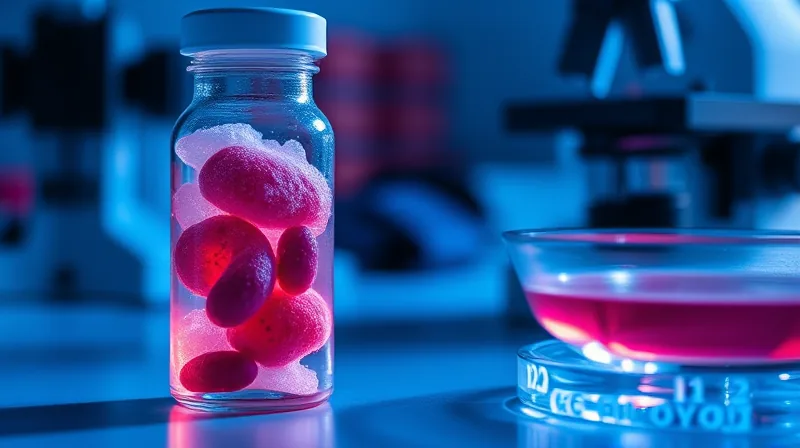
A man’s ability to make sperm has been restored after a transplant of tissue samples removed from one of his testicles and frozen sixteen years earlier, when he was ten years old. [1] The samples were taken shortly before he received chemotherapy that put his fertility at risk. The timeline runs from a childhood biopsy, through sixteen years of storage, to a surgical return.
The two approaches differ in where maturation happens. The transplant method lets the body do the work: the tissue is placed back into the testis, and the local environment supports the cells. The result reported now belongs to the transplant route.
This is not a mouse study or a proof of concept in an animal model. The tissue came from a boy, was frozen, and went back into the same person as a young man. In the microscopy image that accompanies the report, blue marks the cells filling the centre of the seminiferous tubules — the coiled tubes that form the human testis — where sperm cells develop, and orange marks the tubule walls.
Sixteen Years in Liquid Nitrogen
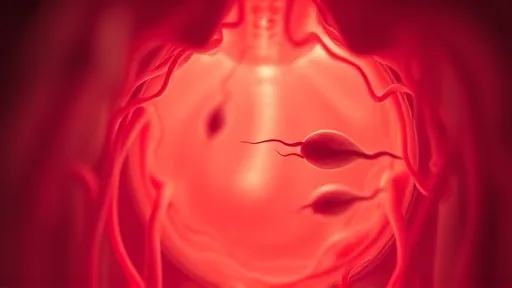
The gap between the two procedures defines the result. Tissue was removed when the patient was ten. It was frozen. It stayed frozen for sixteen years. Then it was transplanted back into the same testis it came from.
Whether the sperm collected from the transplanted tissue can fertilize an egg and produce a healthy baby remains unknown. Sperm production has returned. Fertilization has not been demonstrated. A healthy child has not been born.
The scientists behind the work say the achievement could mark the beginning of a new wave of fertility treatments. [1] They give no date for when such treatments might reach clinics and no estimate of how many patients they might serve. One man, one transplant, one restoration of sperm production.
The finding appears as a preprint on medRxiv and has not been peer reviewed. [1] A preprint is a manuscript posted publicly before independent experts have checked it, so the sperm-production result is provisional in the formal sense, even as the biological event is concrete.
What the Microscope Cannot Show
Current measurement technology sets the limit on what can be claimed. Sperm production can be observed. Sperm can be counted and examined under a microscope. What a microscope cannot show is whether a single one of those sperm can penetrate an egg, fuse with it, and drive the development of a healthy embryo. That requires fertilization, and fertilization requires either a partner or a laboratory procedure, then pregnancy, then a birth.
Everything now turns on the fertilization question. Can the sperm collected from the transplanted tissue fertilize an egg? Can it produce a healthy baby? Nothing beyond that is asserted.
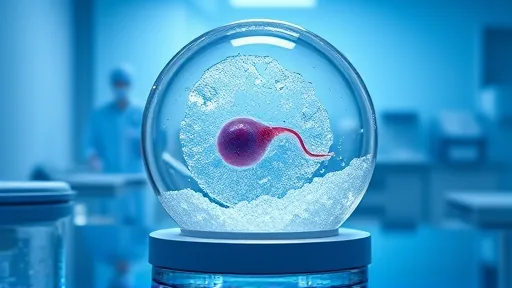
The constraint is not the freezing method, which has now survived sixteen years. The constraint is not the transplant surgery, which has now been performed. The constraint is the assay: there is no way to read fertility off a tissue sample. Fertility is only proven downstream, in an egg that divides and a pregnancy that continues. Until that happens, the achievement is restoration of sperm production — measurable, verifiable, but incomplete.
The wider context is a field watching this preprint. Researchers who work on fertility preservation for children treated for cancer have waited for exactly this kind of human result. Parallel work is under way at the University of Pittsburgh and the Magee-Womens Research Institute, where a team led by Kyle Orwig is developing testicular tissue freezing and transplantation for boys facing sterilizing treatment, and at the Free University of Brussels, where Ellen Goossens has pursued the same strategy in animal models and in human tissue. The two groups work on the same question from separate institutions, and both now have a human result to measure themselves against.
Sources
1. Nature (DOI: 10.1038/d41586-026-02285-y) — Quote source (original article)