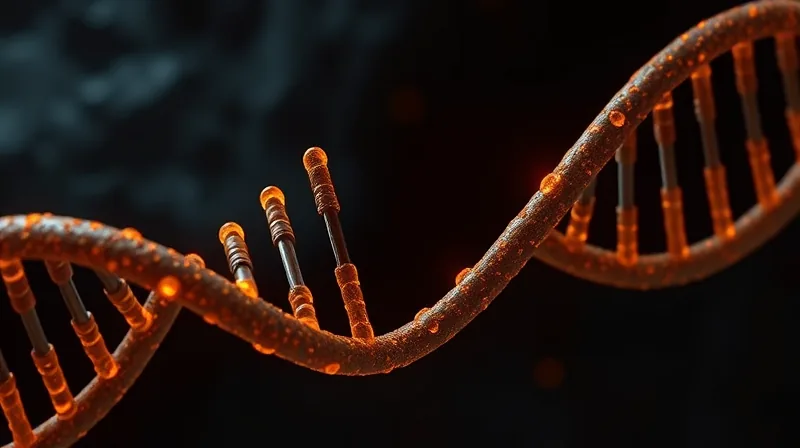
Broken DNA and the Failing Clock of Aging
Every living cell carries a genetic blueprint that must survive decades of wear. Yet each day, sunlight, chemicals, and simple biological errors inflict thousands of tiny wounds on this precious molecule. For most of a lifetime, the cell’s repair crews patch these breaks with remarkable efficiency. But as the years accumulate, some damage escapes repair or gets fixed incorrectly. Scientists now see this unrepaired genetic damage as a master switch — one that may explain why bodies age at all.
The emerging picture connects faulty DNA repair to nearly every hallmark of aging. Researchers have long known that genetic mutations accumulate over time, but the new focus is different. It is not just about changes in the code itself. The problem lies in the repair process failing, or making mistakes, which then triggers a cascade of cellular dysfunction. This shifts the question from “what goes wrong” to “what happens when the fixer itself fails.”
The Molecular Machinery That Mends Broken DNA
The cellular machinery responsible for mending broken DNA operates with remarkable precision. When a strand snaps, proteins bind to the damaged site and signal for help. Enzymes then trim, copy, and rejoin the genetic material, resolving most damage within hours. The trouble begins when these mechanisms slow down or make errors, leaving behind mutations that accumulate over time.
Evidence now links unrepaired or poorly repaired damage to several hallmarks of aging. These include cellular senescence, where cells stop dividing but refuse to die, and mitochondrial dysfunction, which starves cells of energy. Epigenetic alterations — the chemical tags that switch genes on and off — also trace back to DNA that was never properly fixed. This has led to a focused research question: can boosting DNA repair keep people healthy for longer?
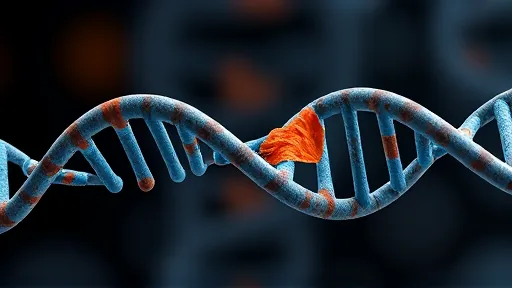
Research teams around the world are hunting for ways to enhance the body’s natural repair capacity. Some approaches target specific enzymes known to decline with age. Others explore whether lifestyle factors like diet and exercise influence repair efficiency. The goal is not immortality but extended health span — the period of life spent free from age-related disease.
The Challenge of Turning Repair Research Into Therapy
The prospect of therapies that slow aging raises questions about access and inequality, where only the wealthy might afford to extend their healthy years. There is also the question of whether intervening in fundamental aging processes is wise, given that DNA damage sometimes serves protective functions, such as preventing runaway cell division.
Aging is the greatest risk factor for most chronic diseases. Heart disease, cancer, and neurodegeneration all become more likely as repair systems falter. By targeting the root cause rather than individual diseases, this research promises a different kind of medicine — one that treats aging itself as the condition to manage. The scientific community remains cautious, knowing that manipulating such ancient biological systems could have unforeseen consequences.
The immediate aim is modest: keeping people healthier for longer, not defying death. Studies in animals have shown that enhancing repair pathways can extend lifespan and delay disease onset, but translating these findings to humans presents enormous challenges. [1] The ethical framework must evolve alongside the science, ensuring that treatments are safe, accessible, and used responsibly.
Lessons From Species That Repair DNA for Centuries
Certain species have solved the puzzle of DNA maintenance in ways humans have not. The bowhead whale can live for over two centuries, and its cells appear to repair DNA damage with exceptional fidelity. [2] Naked mole rats survive for decades, far longer than similar-sized rodents, and genetic studies in these animals are revealing why their repair systems stay robust. [2] These creatures offer living proof that effective DNA maintenance correlates with extended lifespan.
Each species represents a different solution to the same biological challenge. By comparing their repair mechanisms with ours, scientists hope to identify the critical components that keep these animals healthy into extreme old age. The findings could point to specific genes or pathways worth targeting in human therapies.
If DNA repair is truly central, then aging might be understood as a failure of maintenance rather than a programmed decline. This perspective shifts how scientists design experiments and interpret results. The current wave of research does not promise a fountain of youth, but it does offer a coherent framework for understanding why bodies deteriorate.
Sources
1. DOI: 10.1038/d41586-026-02762-4
2. Broken DNA, Broken Clock: The Repair Theory of Aging Gains Ground