Brain imaging errors reveal hidden aging patterns in mental illness
The Accidental Discovery That Reshaped Neurology
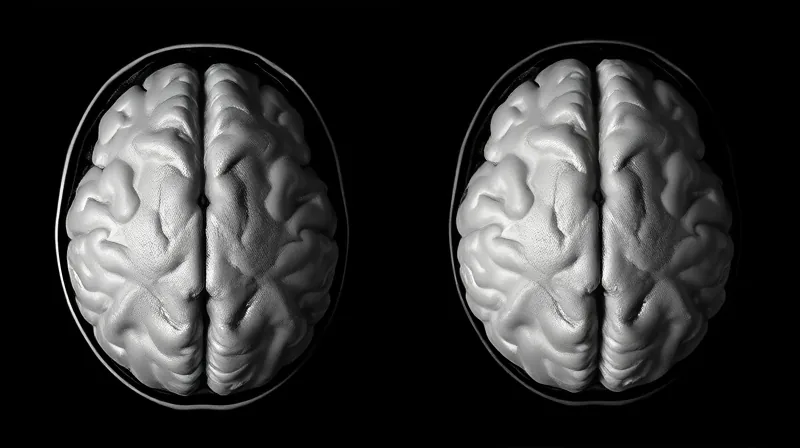
For years, researchers running structural MRI scans noticed something odd. The machine learning algorithms they used to estimate a person’s age from brain images kept producing errors. A 60-year-old patient with Alzheimer’s disease would have a brain that looked 70. A 45-year-old with schizophrenia would appear 50. These mismatches were treated as noise, as calibration problems to be corrected. But Shile Qi from the Nanjing University of Aeronautics and Astronautics in China saw them differently. Qi and her colleagues began to suspect that these miscalculations were not errors at all. They were signals.
The signal they identified is called the Predictive Age Difference, or PAD. It is a simple number. Subtract a person’s real chronological age from the age their brain structure predicts. If the result is positive, the brain is aging faster than the body. If it is negative, the brain is aging slower. The team collected structural MRI data from 45,900 healthy controls across several brain imaging banks. They compared those scans with data from 2,698 patients suffering from nine different brain conditions. This was not a small pilot study. It was one of the largest cross-disorder comparisons ever attempted under a single analytical framework.
The results ranked the conditions by how much they accelerated brain aging. Neurodegenerative disorders sat at the top. Alzheimer’s disease and mild cognitive impairment showed the highest positive PAD values. Their brains appeared structurally older than they should have been. Following closely behind came psychiatric disorders like schizophrenia, bipolar disorder, and major depressive disorder. Substance addictions to alcohol and tobacco also showed increased PAD, though not as dramatically. The ranking was clear and consistent across the massive dataset.
How a Decades-Old Question Finally Found Its Answer
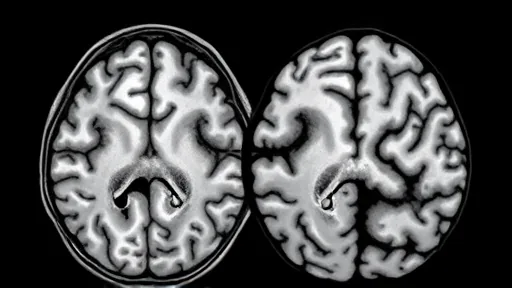
The question of whether different brain disorders age the brain in the same way has been open for a long time. Clinicians have observed for decades that patients with Alzheimer’s look different on scans than patients with schizophrenia. But no one had systematically compared them all using the same measurement tool. Previous studies had looked at individual disorders in isolation. They used different scanners, different algorithms, different sample sizes. The results could not be compared directly.
Qi’s team solved this by building a unified framework. They used the same machine learning model to predict brain age from all 48,598 scans. This allowed them to see not just that aging was accelerated, but exactly where in the brain it happened. The prefrontal cortex showed elevated PAD across almost every disorder. It was a common denominator, a region that seemed vulnerable to many forms of illness. But beyond that shared signature, each condition had its own fingerprint.
For psychiatric disorders, the accelerated aging was concentrated in the frontal and temporal lobes. These are regions involved in language, emotion, and complex decision-making. For dementia, the pattern shifted to the frontal and occipital cortex. The occipital lobe handles vision, and its involvement in dementia was a more specific marker. Addiction told a different story entirely. It showed high PAD in the default mode network, a set of brain regions active when the mind is at rest and wandering. It also appeared in the salience network, which helps the brain decide what to pay attention to. Deep structures like the putamen and thalamus were involved too, regions tied to habit formation and sensory processing.
The researchers also looked at which genes were active in these same brain regions. They found that the regional PAD maps correlated with condition-specific gene transcription patterns. This meant that the biological machinery driving accelerated aging was different for each disorder. Alzheimer’s was not just schizophrenia with more severe aging. They were fundamentally different processes, written into the genes themselves.
The Contradiction That Remains Unresolved
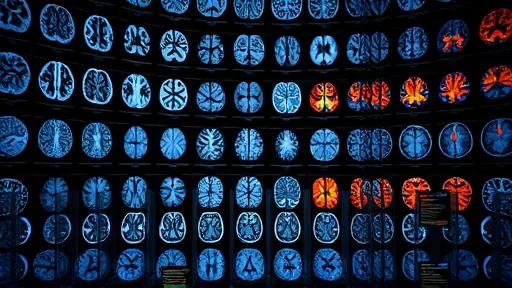
Not every condition showed accelerated brain aging. Two disorders stood out as exceptions. Attention-deficit/hyperactivity disorder, or ADHD, showed no significant increase in PAD compared to healthy controls. Neither did autism spectrum disorder, or ASD. Their brains did not appear structurally older than expected. This finding contradicts a common assumption in neuroscience. Many researchers had assumed that any brain disorder would leave a mark on the aging clock. But neurodevelopmental conditions, which begin early in life and persist throughout, seem to follow a different trajectory.
The source of this contradiction is not yet clear. It could be that ADHD and autism do not accelerate aging at all. Their structural differences may be present from childhood and remain stable across the lifespan. Or it could be that the current method of measuring brain age is not sensitive enough to capture their effects. The machine learning model was trained on healthy brains. It might miss patterns that are unique to neurodivergent development. Qi’s team acknowledges that their results are correlational, not causal. They cannot say whether the disorders cause accelerated aging or whether accelerated aging makes the brain more vulnerable to these disorders.
The co-occurrence of psychiatric disorders and addiction complicates the picture further. Many people with schizophrenia also smoke. Many people with alcohol addiction also have depression. The study tried to separate these effects, but the overlap is real and difficult to untangle. What is clear is that the brain does not age uniformly. Each disorder leaves its own signature on the aging clock. The challenge now is to turn these signatures into biomarkers that doctors can use for early diagnosis and targeted treatment.