
The Wreck That Refuses to Stay Lost
For nearly nine decades, the fate of Amelia Earhart has lived in the space between a documented fact and an open question. She vanished in 1937 during an attempt to fly around the world. [1] Her aircraft, a Lockheed Electra, was never recovered. [1] That much has not changed. What has changed, according to the reporting, is the confidence of the people still looking.
The claim is not that the plane has been found. The difference is between a search area the size of an ocean and a search area a mission can actually be planned around. That distinction is what the new reporting rests on: the question has moved from where in the Pacific to something narrower.

Eighty-nine years is long enough that every direct witness is gone, and long enough that the tools have changed completely. What was once a matter of ships scanning horizons is now a matter of instruments that read the seafloor and the water column with a precision Earhart’s contemporaries could not have imagined. The wreck, if it survives, is not hiding from better eyes. It is hiding in a place those eyes have only recently learned to look.
The Counterargument That Has Not Been Refuted
The central obstacle is not effort. It is the ocean itself. An aircraft that went down in the Pacific in 1937 has spent nearly nine decades subject to salt water, current, and the slow chemistry of corrosion. The question of whether any recognizable structure remains is genuinely open. That uncertainty is the argument no expedition has yet put to rest, and it is the reason each new lead carries a built-in caution.
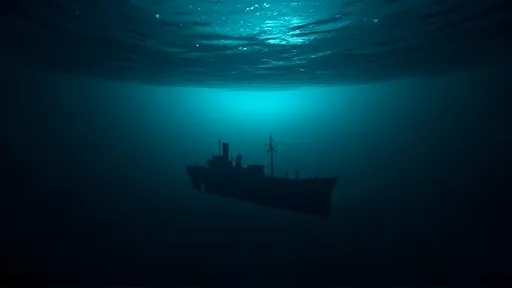
What remains to be found is the residue of one aircraft: fragments, debris fields, the patterns that survive when the object itself does not. A promising location is a hypothesis, not a result. The gap between “we know where to look” and “we have found it” is exactly where every previous attempt in this saga has stalled.
One is a map with a circle on it; the other is a photograph. Until the second exists, the first remains a plan, and plans in this particular hunt have a long history of dissolving on contact with the water.