A Voice Rebuilt From Thought Alone
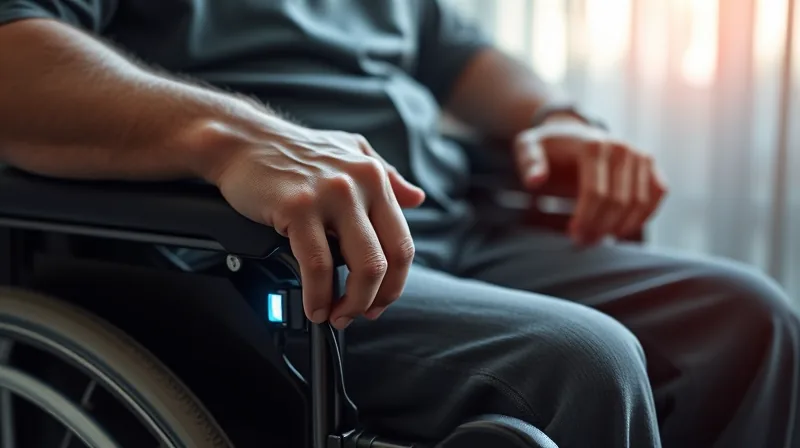
A machine has read words directly out of a human brain and handed them back as speech — not by tracking a twitching finger or a roving eye, but by listening to the electrical intent to speak itself. Casey Harrell has ALS, a progressive disease that kills the nerve cells controlling muscles. The signals his brain sent to the muscles of his throat and mouth never arrived. The computer caught them instead.
The first day of testing used a vocabulary of just 50 words. [2] Harrell’s eyebrows shot up as the words appeared on the screen in front of him. Some of the researchers began to cry. Harrell and his family became emotional. The decoder had worked.
Even though he was not choosing his words during that first test, he calls it a profound moment: \"The possibilities for the near future for me and the rest of humanity were overwhelming to realize.\” [2].
From Monkey Arms to a Working Voice
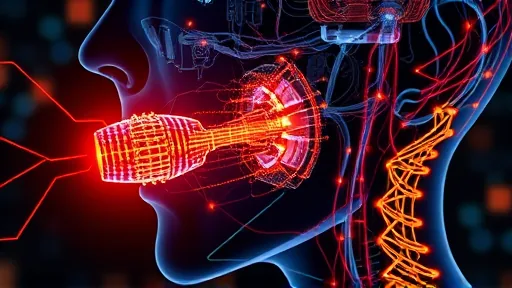
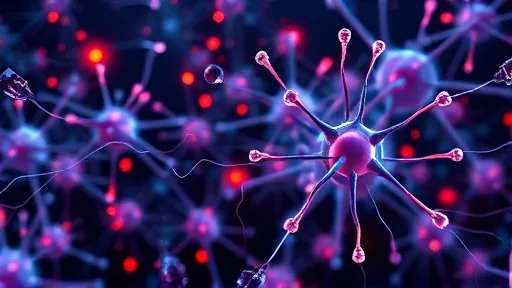
The idea that the brain’s electrical chatter could be read and turned into action outside the head is older than the implants now carrying it. Nerve cells speak to one another in tiny pulses of electricity, and those pulses can be caught with electrodes — a fact that opened the tantalizing possibility of bypassing damaged links between brain and body altogether.
The first working proof came from animals: rhesus monkeys learned to move a robotic arm using only brain signals picked up by implanted electrodes. By 2004, researchers had enough confidence to launch a clinical trial in humans called BrainGate, in which a paralyzed man named Matthew Nagle steered a computer cursor with his thoughts alone. From there, efforts to link brain activity to a physical outcome — a computer mouse, a wheelchair, a robotic arm — multiplied.
Talking proved to be the trickiest version of the same problem. A device that detects the intention to say a word and routes it around the muscles needed to say it would be a powerful workaround for people with ALS or brain injuries. The stakes are not abstract. “What does my voice mean to me? It means so much,” he says. [2] “It is the ability to parent my daughter. It is the ability to connect with my wife. It is the ability to make a wry joke with my friends.”
ALS, the disease that took his speech, affects an estimated 35,000 people in the United States; it kills the nerve cells in brain and spinal cord that control muscles. Harrell began losing his ability to talk shortly after his diagnosis in 2020, and describes what followed as \"a slow-motion car crash\” as fewer and fewer people could understand him. In 2023 he had four small electrode grids implanted on the left side of his brain, over the speech motor cortex. Today he uses the system about 10 to 14 hours a day, and a count reported in June in Nature Medicine puts his total at nearly 2 million words communicated. “It is the most important thing I have lost in this whole disease,” he says. [2]