The Meter That Became an App
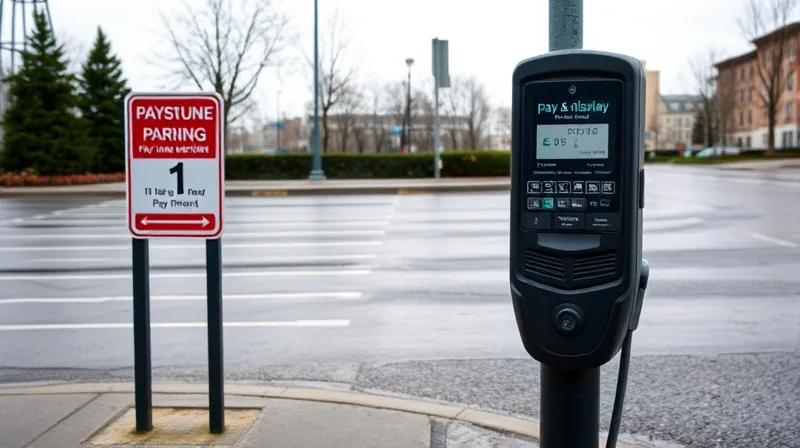
The pay-and-display machine, and the assumption that the price on the sign is the price you pay, is being dismantled across England. Many councils have taken out their pay and display machines and replaced them with payment apps, including a number of authorities in London. Most local authorities encourage drivers to pay by app, on the argument that it avoids queues at the machine. In a growing number of car parks the app is not one option among several but the only one, because the machine is gone. It is also frequently the only way to pay when a machine that remains is out of order. Either way, the tariff board stays on the wall and no longer describes the whole transaction.
The economics of the substitution are easy to state. Apps save councils the cost of installing ticket machines. They also save the cost of maintaining them. A few councils pay the app providers directly for the service. Many do not, and instead leave drivers to cover some or all of the bill. The bill arrives under two names, the convenience fee and the service fee. These charges typically run from 10p to 30p. They are not included in the advertised parking tariffs shown in the car parks. They are usually not strongly flagged inside the apps either. The amount is agreed between the local authority and the individual app provider. It can vary from one location to the next. Because of that arrangement, drivers have no way of predicting what they will be charged.
The result, for the driver, is a price that moves after the decision has been made. Drivers are unwittingly paying up to 40% more to park than the tariff they were shown. Many car park signs fail to mention that app payment may incur an additional service fee.
The Guardian booked an hour’s parking at car parks around the country and found the same sequence again and again. Of the apps tested by the Guardian, none clearly displayed its service fee until the payment stage. Even there, some required the customer to click on an information symbol to find out why the price had increased.
Small Pennies, Large Percentages
A fixed charge is a modest sum in absolute terms and a much larger one in relative terms. The smaller the tariff it is added to, the bigger the share of the final bill it takes. In Harrogate, in North Yorkshire, drivers who park in the town centre and pay by app face a mandatory 30p service charge. The tariff for that slot is 80p. The 30p on top of the 80p raises the cost of an hour’s parking by 38 %. In Chester, two hours at the council’s Christleton Road car park cost 50p. Adding the 20p convenience fee to that 50p takes the price 40 % higher. In both cases the driver was quoted one number and charged another. In both cases the tariff itself did not change. Only the method of payment did.
The charges do not stop at the payment itself. Drivers who agree to receive a booking confirmation and an expiry alert pay again, typically between 10p and 30p per text. Each text is a small amount, and each is separate from the tariff.
The services tested differ in how they disclose the charge. RingGo’s convenience fee added 20p to the £2 tariff at Kings Yard in Lancaster. To find it, a driver must click a small “see prices” link above the prominent “Next” button after choosing a location. The charge is mentioned again on the payment page, but only when the “i” symbol beside the final price is clicked. PayByPhone charged a 15p service fee on top of the £5.10 tariff at Dudley Street car park in Birmingham. The existence of the charge was not explained until the payment page, where it sat hidden behind the Apple Pay button. Customers had to scroll to the end of the page to see it. JustPark added 12p to a £3.50 charge at Charmouth Road car park in Lyme Regis, in Dorset. There the transaction fee appeared only after a click on a tiny, pale grey “i” symbol beside the final price. MiPermit listed its 10p convenience fee above the final price at the end of the booking, levied on top of the £1.90 charge in Littlehampton, in West Sussex. Four towns, four apps, four tariffs, and the same timing: the fee arrives at the last screen before payment.
Two Contracts Behind One Screen
The reason a fee can stay off a car park sign lies in how many contracts a driver enters. The Advertising Standards Authority’s rule is that quoted prices must include all mandatory fees for a contract to be valid. A driver enters a contract with the council as soon as they accept the car park’s terms and conditions and park the vehicle. That is the contract the sign speaks to, and the tariff on the sign is its price. A driver who chooses to pay online enters a separate contract with the app provider. Few drivers realise a second contract has been formed at all. Fewer still read its terms. App fees, as a consequence, may not legally have to be displayed on the council’s parking signs. The advertised tariff and the charged total belong, in legal terms, to two different agreements. That is the mechanism by which the number on the board and the number on the statement can both be correct. The driver is the only party to both.
The companies involved reject the suggestion that they conceal anything. RingGo’s account is that the fee funds the service it provides. Whether the charge appears on car park signs is, in RingGo’s account, a decision for the councils it works with. Adam Dolphin, at RingGo’s parent company Arrive, said: “In line with existing regulations, wherever pricing information is shown in the RingGo app, we also display any additional fees JustPark said: “Nothing is added at the payment stage.” In JustPark’s account, the “i” icon simply shows how the all-in price is made up, for drivers who want the detail. PayByPhone said: “The pricing elements related to parking, SMS options and service fees are presented before payment confirmation.” It adds that applicable pricing information — whether fees, parking rates or options — is available on its website and in the app. MiPermit was contacted for a comment. The Local Government Association, which represents councils, says it is up to app providers to ensure their fees are clear and upfront. The Department for Transport says parking tariffs and surcharges are a matter for councils. It adds that drivers should be able to see clearly what they will be charged before they pay for parking. Every party in that list agrees on the principle and locates the duty somewhere else.
The AA’s position is that the sign is the promise. A spokesperson for the AA said: “When a driver walks to the signs in the car park and sees £1 per hour, that’s what they should be charged, not £1 plus a 25p service charge The question of what a sign must show has already moved from complaint to legislation in one American city. In Atlanta, City Councilmember Jason Dozier backed an ordinance he calls a “Parking Bill of Rights”, aimed at changing how private parking lots operate. The ordinance passed unanimously. It requires parking lot owners to display pricing clearly through signage, so that drivers know how much they will pay before they park. It also requires owners to accept alternative forms of payment. And it places limits on the amount of data owners can collect through licence plate readers. The ordinance now heads for the mayor’s office. In Atlanta, some lots require customers to download an app before they can pay at all, which is the practice the measure addresses. Not all parking lot owners support the proposal. “As a city council member, as someone who represents nearly 50,000 Atlantans, my goal is to make sure that the people of Atlanta have an opportunity to thrive in the city,” Dozier said For some drivers there, the obstacle is less about finding a space than about operating the technology required to use one. Niketa Thompson said parking in Atlanta is relatively easy compared with cities such as Los Angeles or New York, but acknowledged that parking apps can be difficult to navigate. Regis Napolitano said she also dislikes having to use parking apps and supports the idea of providing drivers with more information. “I think if we’re getting into this type of payment for parking lots, which so many of us are not used to, that there needs to be some, at least more explanation rather than just driving up, you know, scan this code or you can’t go in and shop,” Napolitano said.” The two cities approach the same problem from opposite directions. The English arrangement resolves an apparent contradiction: a price that is published and nonetheless not the price the driver pays. The published figure belongs to the council’s contract, and the rest belongs to the app’s. What it creates is a new problem: what happens when the alternative disappears. Atlanta’s remedy is a sign, a stated price and a payment method other than the app, so that a driver who cannot or will not use the software can still park. In England the movement runs the other way: machines come out, apps go in, and in more car parks the software becomes the only way through. Both systems accept that the driver should know the price before paying. One adds a visible alternative; the other removes the alternative that made the app a choice rather than a condition.
Sources
Mentioned organisations (context, not sources)
- RingGo — Organisation (homepage)
- PayByPhone — Organisation (homepage)
- JustPark — Organisation (homepage)
- MiPermit — Organisation (homepage)
- Advertising Standards Authority — Organisation (homepage)
- Arrive — Organisation (homepage)
- Local Government Association — Organisation (homepage)
- Department for Transport — Organisation