A Loop of Wages and Prices
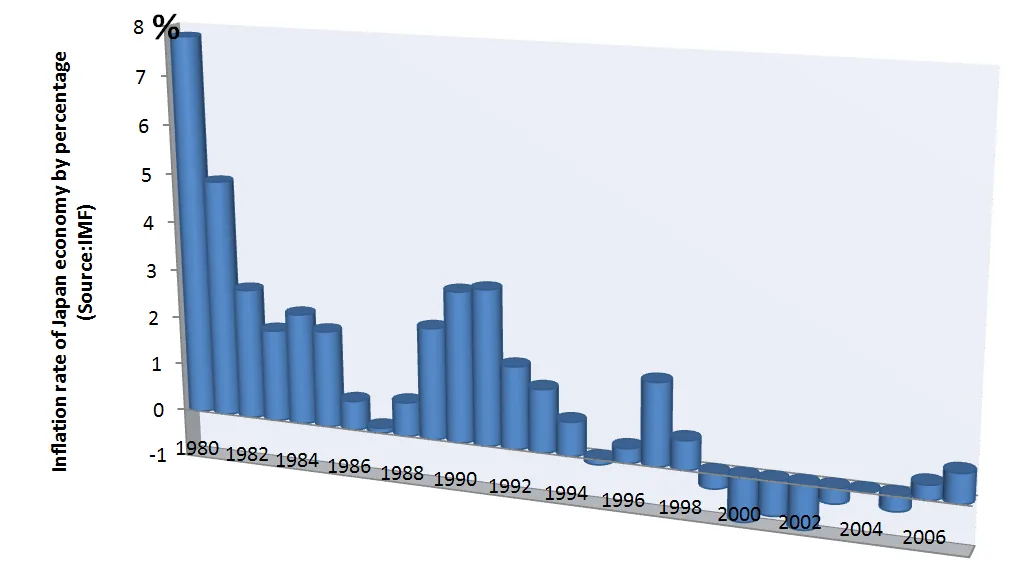
“Underlying inflation near 2% target.” [1] Five words, delivered at the start of the week by the governor of the Bank of Japan, Kazuo Ueda. [1] For a central bank that has spent more than a decade trying to generate price growth, the sentence is not a forecast. It is a description of where the country already stands — and a description is a far more awkward thing to govern than a hope.
The weight sits on the word underlying, which here means price growth with volatile items and one-off effects stripped out. Japan’s inflation rate has overshot 2% before, and an overshoot of that kind tells a central bank very little about domestic demand. What the governor now describes is a rate that sits near target on its own momentum rather than on an import bill. He attached a second claim to the first: keeping core inflation — a price index that excludes selected volatile components such as fresh food — anchored at 2% has grown more crucial. The job has changed character. In the governor’s framing, arriving was a campaign; remaining is maintenance, and maintenance is the harder discipline because it has no finish line to celebrate.
The process the governor describes is a loop that runs in both directions. Wages are increasing and prices are recovering, so that each supports the other. That circuit is precisely what the Bank of Japan has been trying to close since it launched its ultra-loose stance in 2013. The governor now describes it as running — a modest sentence that took more than a decade of stimulus to earn.
Two kinds of inflation are running side by side, and the statement separates them deliberately. On the supply side, conflict in the Middle East is pushing up energy costs and other supply-driven pressures. On the demand side, robust global demand is lifting domestic capital expenditure, exports and a range of goods prices. The distinction carries policy consequences that the numbers alone do not.
Rates That Rise Steadily With Policy

The transmission the governor sketched is a straight line. If the bank raises the short-term policy rate — the interest rate a central bank sets for very short-term lending between banks — long-term interest rates are likely to rise steadily in line with policy. Steadily is the operative word. The bank is not describing a jump; it is describing a slope, and a slope can be walked down if the weather turns.
The reassurance attached to that slope is explicit: financial conditions stay accommodative — money kept cheap on purpose, with low rates and ample liquidity. This can be read as the sentence a central bank writes when it wants to raise rates without being heard as tightening. Japan’s policy rate remains low by historical and international standards, so a hike from a very low level still leaves money cheap.
What the governor refused to say matters as much as what he volunteered. There is no shift in the bank’s fundamental bond taper approach — the gradual reduction in how many government bonds it buys and holds. Nor will the bank preannounce the timing of emergency bond market measures; doing so, the statement holds, would be inappropriate. Instead it will review market conditions before acting, weighing the speed of the long-term rate rise and any signs of market instability. Review first, act second, announce never in advance. For a central bank, the sequencing is not coyness. It can be read as an admission that the central bank cannot publish its calendar in advance.
The reverse risk is stated just as plainly. If the policy rate is not adjusted properly, market concerns about inflation risk could themselves drive long-term rates higher — an uncontrolled version of exactly what the bank is trying to control. The conclusion drawn is that implementing monetary policy properly, aimed at the 2% target, is what stabilizes the government bond market. Rate rises are framed here not as the threat to Japanese government bonds but as the condition of their calm. That inverted logic can be read as the core of the governor’s argument in miniature.
Fiscal Room, and a Yen That Cuts Both Ways
The governor’s remarks hand fiscal policy two jobs that pull against each other. Fiscal spending supports demand and helps raise prices and wages — useful when an economy is short of demand, inflationary when it is not. But fiscal spending that expands Japan’s supply capacity — how much an economy can produce without prices accelerating — could help tame inflation over time. The same budget line can therefore add to price pressure or subtract from it, depending on whether it buys a transfer or a factory. The bank does not adjudicate between the two; it simply notes that both exist, which is a polite way of placing the question in the finance ministry’s in-tray.
The market’s reading was comparatively mild. At the time of writing the dollar was down 0.13% against the yen at 157.80, a move small enough to be noise and large enough to register. [1] A speech-tracking score of 7 out of 10 against a historic average of 7.4 put the tone slightly below the governor’s usual register — yet the content scored as mildly hawkish (leaning toward higher interest rates), because emphasising inflation near target and a positive wage-price loop marks a break with Japan’s long disinflation narrative. Softer delivery, harder substance.

The history behind that shift explains why the market did not move more. The bank began quantitative and qualitative easing in 2013, buying government and corporate bonds to inject liquidity. In 2016 it doubled down, introducing negative interest rates and then directly controlling the yield on ten-year government bonds. Only in March 2024 did it lift interest rates, retreating from the ultra-loose stance it had held since 2013. The stimulus had pushed the yen down against its peers, and the gap widened sharply in 2022 and 2023 as other major central banks raised rates to fight multi-decade inflation. That divergence partly reversed in 2024. A governor who has already made one historic turn is not in a hurry to make a second.
For households, the arithmetic is unforgiving in both directions. A weak yen raised import costs and helped push inflation past target once before; a stronger yen would ease that pressure and squeeze exporters at the same time. A tight labor market is finally delivering wage gains and simultaneously making it harder for smaller firms to fund them. The positive loop the governor describes is real, and it is also a set of bills arriving at different addresses.
That leaves one question the governor’s remarks cannot answer from inside themselves: how fast is steady — and who decides on the day that steady has become disorderly?